Combed vs Carded Cotton: Which Fabric Is Best for You?
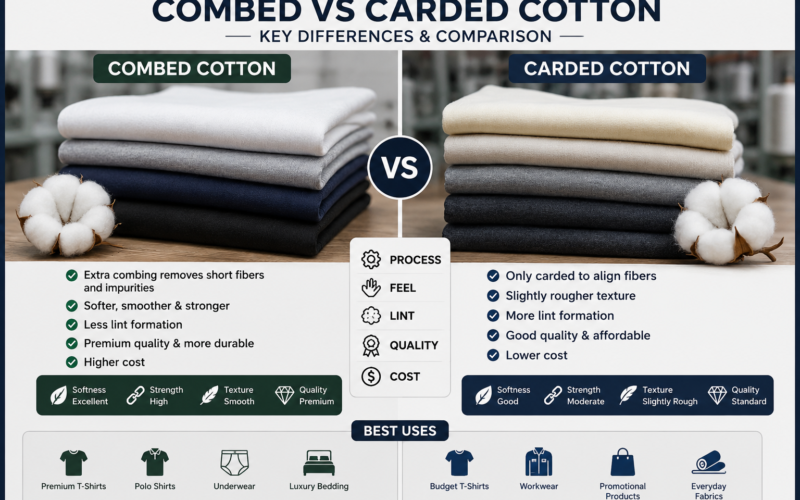
Ever wondered why some shirts feel super soft while others are a bit rough? The answer is in the cotton yarn manufacturing process. We often don’t think about how raw fibers turn into our daily clothes. Knowing what is combed cotton and what is carded cotton helps you make better choices. By comparing cotton fabric quality, we see how these methods affect the feel and durability of our clothes. Combed vs Carded Cotton Ring spun combed cotton gives a smooth, premium cotton fabric feel. On the other hand, carded cotton uses are in heavier, more casual items. Knowing the difference is key, whether you want luxury or practicality. Let’s dive into how these techniques shape your wardrobe. Key Takeaways Combed fibers get extra processing to remove short strands and impurities. Carded materials are usually more affordable and have a thicker, rustic texture. Premium garments often use refined spinning techniques for better softness. Choosing the right material depends on your comfort and durability needs. Understanding textile production helps you find better value when shopping. Understanding the Basics of Cotton Fiber Every high-quality shirt starts as a simple, raw cotton fiber from the field. Before diving into textile manufacturing, we must first understand the raw material. These natural fibers are the base for everything from heavy denim to lightweight summer tees. Cotton fibers differ in length, strength, and fineness, affecting yarn quality. Longer fibers make smoother, stronger threads. The harvest process separates lint from seeds, preparing it for spinning. Understanding the Basics of Cotton Fiber…