Introduction
Few textile fibers have a history as rich and fascinating as flax.
Long before cotton became the world’s most widely used natural fiber, civilizations across Egypt, Europe, and Asia relied on flax to create clothing, household textiles, ropes, sails, and countless other products. Even today, despite the dominance of synthetic fibers and mass-produced fabrics, flax continues to hold a special place in the textile industry.
The fabric produced from flax fibers is known as linen.
Renowned for its durability, breathability, moisture absorption, and timeless elegance, linen remains one of the most premium natural textiles available in the market. From luxury fashion brands to sustainable clothing manufacturers, linen continues to gain popularity among consumers seeking environmentally responsible alternatives to conventional fabrics.
In recent years, growing awareness of sustainability and eco-friendly fashion has renewed interest in flax fiber. Consumers increasingly want fabrics that are natural, biodegradable, durable, and produced with minimal environmental impact. Linen checks all these boxes.
This article explores everything you need to know about flax fiber, including its properties, cultivation, manufacturing process, applications, advantages, disadvantages, and care requirements.
What Is Flax Fiber?
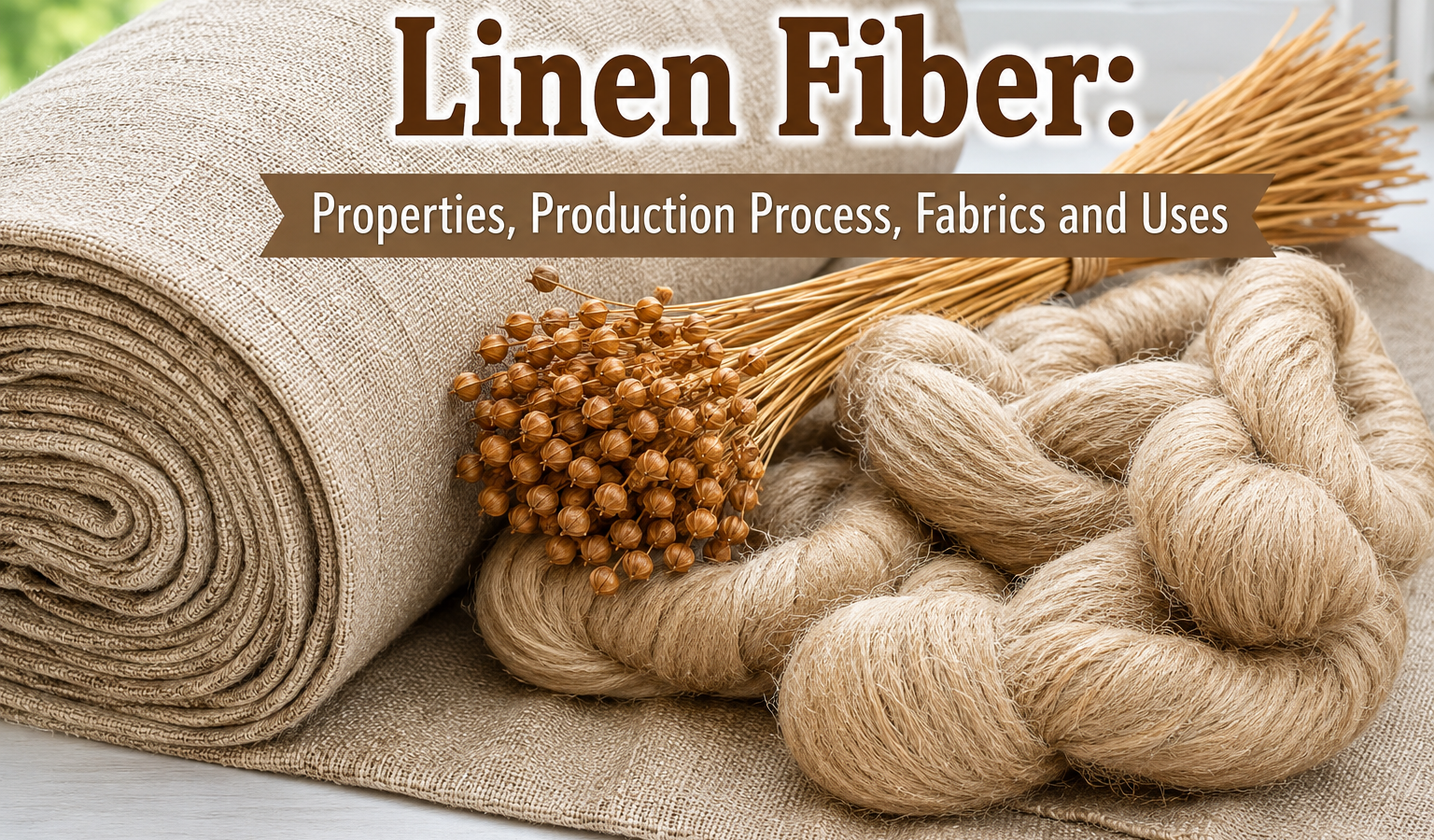
Flax fiber is a natural bast fiber obtained from the stem of the flax plant.
The botanical name of the flax plant is:
Linum usitatissimum
The term “usitatissimum” translates roughly to “most useful,” highlighting the plant’s historical importance.
Flax is the raw agricultural material.
Linen is the textile product manufactured from flax fibers.
Many people use these terms interchangeably, but technically they refer to different stages of the same material.
Quick Definition
Flax Fiber: Natural fiber extracted from the flax plant stem.
Linen Fabric: Textile produced from processed flax fibers.
Why Linen Is Becoming Popular Again
For many years, cotton dominated the natural fiber market.
However, modern consumers are increasingly searching for sustainable alternatives.
Several factors have contributed to the resurgence of linen:
Sustainability Concerns
Consumers are becoming more conscious of environmental impact.
Flax requires:
- Less irrigation
- Fewer pesticides
- Lower fertilizer usage
compared to many conventional crops.
Comfort
Linen fabrics are exceptionally breathable and comfortable in warm climates.
Durability
Linen is one of the strongest natural fibers available.
Premium Appeal
Luxury brands frequently use linen because of its natural texture and elegant appearance.
As sustainability becomes a key purchasing factor, linen’s popularity continues to grow worldwide.
History of Flax Fiber
Flax is one of the oldest textile fibers known to mankind.
Archaeological evidence suggests flax was used thousands of years ago.
Ancient Egyptians used linen extensively for:
- Clothing
- Burial cloths
- Household textiles
Linen was considered a symbol of purity and wealth.
Throughout history, flax played an important role in:
- Sailing ships
- Military equipment
- Household fabrics
- Agricultural applications
Before cotton became widely available in Europe, linen was the primary fabric used for everyday clothing and household textiles.
The words “bed linens” and “table linens” still survive today, even though many such products are now made from cotton or synthetic fibers.
The Flax Plant
Flax is an annual plant grown primarily for fiber and seed production.
Botanical Characteristics
The plant typically grows:
- 2 to 4 feet tall
- Thin, straight stems
- Blue or white flowers
- Long bast fibers inside the stem
Fiber-producing varieties are generally taller and have fewer branches.
The usable fibers are located beneath the outer bark layer.
Because the fibers are embedded within the stem, significant processing is required before they can be converted into yarn.
Major Flax-Producing Countries
Several countries dominate global flax production.
Leading producers include:
- France
- Belgium
- Netherlands
- Poland
- Czech Republic
- Belarus
- Russia
France remains one of the world’s largest producers of high-quality flax fiber.
European flax is particularly valued for its consistency and premium quality.
Cultivation of Flax
Flax thrives in temperate climates with adequate rainfall.
Growing Conditions
The crop performs best in:
- Cool temperatures
- Well-drained soil
- Moderate rainfall
- Long daylight hours
Unlike some other crops, flax generally requires fewer chemical inputs.
This contributes to its reputation as an environmentally friendly fiber source.
Sowing
Flax seeds are planted densely.
Dense planting encourages:
- Taller stems
- Fewer branches
- Longer fibers
which are desirable characteristics for textile applications.
Harvesting of Flax
Harvesting typically occurs approximately 80 to 100 days after planting.
Unlike many crops that are cut, flax is usually pulled from the ground.
Why Flax Is Pulled Rather Than Cut
Pulling helps:
- Preserve maximum fiber length
- Maintain fiber quality
- Prevent discoloration
Long fibers produce stronger and more valuable linen yarns.
After harvesting, the plants are dried and seeds are removed.
The seeds may later be used for:
- Replanting
- Animal feed
- Linseed oil production
Manufacturing Process of Flax Fiber
Converting flax plants into linen yarn is a complex process involving several stages.
Step 1: Retting
Retting is the most critical stage.
The purpose is to dissolve the natural substances that bind fibers to the stem.
Without retting, fiber extraction would be impossible.
Several retting methods are used.
Dew Retting
This is the most common modern method.
The harvested flax is spread across fields where:
- Rain
- Dew
- Natural microorganisms
gradually break down the binding materials.
Advantages:
- Low cost
- Environmentally friendly
- Easy to mechanize
Disadvantages:
- Weather dependent
- Variable fiber quality
Water Retting
Flax is submerged in water for several days.
Advantages:
- Produces finer fibers
- Lighter color
- Better quality
Disadvantages:
- Higher cost
- Wastewater generation
- Strong odor
Chemical Retting
Chemical agents accelerate fiber separation.
However, environmental concerns have limited its widespread use.
Enzyme Retting
One of the newest technologies.
Special enzymes selectively dissolve binding materials.
Benefits include:
- Cleaner processing
- Better fiber quality
- Reduced pollution
Many experts believe enzyme retting may become increasingly important in sustainable textile production.
Mechanical Fiber Extraction
Once retting is complete, mechanical processing begins.
Breaking
Flax stems pass through rollers that crush the woody core.
Scutching
Broken woody fragments are removed.
Hackling
Fibers are combed and aligned.
Hackling separates:
- Long fibers (Line fibers)
- Short fibers (Tow fibers)
Long fibers are used for premium linen yarns.
Short fibers are often blended with cotton or other fibers.
From Fiber to Linen Yarn
After hackling, fibers are prepared for spinning.
Unlike cotton, flax requires specialized spinning equipment.
The resulting yarn can vary significantly depending on:
- Fiber quality
- Fiber length
- Processing techniques
- Intended application
Linen yarns range from ultra-fine counts used in luxury apparel to coarse yarns used for industrial applications.
Part 2: Properties, Advantages, Disadvantages and Applications of Flax Fiber (Linen)
Physical Properties of Flax Fiber
The popularity of linen is largely due to its exceptional physical properties.
Few natural fibers offer the same combination of strength, comfort, durability, and aesthetic appeal.
Color
Natural flax fibers vary in color depending on:
- Growing conditions
- Harvesting methods
- Retting process
- Fiber maturity
Typical colors range from:
- Cream
- Light beige
- Golden tan
- Grayish brown
Water-retted flax usually appears lighter, while dew-retted flax often exhibits a darker shade.
Fiber Length
One of flax’s greatest advantages is its long fiber length.
Typical fiber bundles range from:
- 5 inches to 30 inches
Premium line fibers may exceed 20 inches in length.
Long fibers contribute significantly to:
- Yarn strength
- Durability
- Smooth fabric appearance
Luster
Linen possesses a naturally elegant sheen.
Unlike cotton, flax fibers are smoother and straighter, allowing them to reflect light more effectively.
This creates the distinctive luxurious appearance associated with high-quality linen fabrics.
Density
Flax has a specific gravity of approximately 1.54.
As a result:
- Linen fabrics feel substantial
- Garments drape well
- Fabrics maintain structure
Mechanical Properties of Flax Fiber
High Strength
Flax is among the strongest natural textile fibers available.
In fact, linen fibers are often significantly stronger than cotton.
This exceptional strength contributes to:
- Long product life
- Better durability
- Improved wear resistance
One unique characteristic is that flax becomes stronger when wet.
This property makes linen highly suitable for:
- Towels
- Kitchen textiles
- Home furnishings
Stiffness
Flax has a relatively high modulus.
This means the fiber resists stretching under load.
Historically, this property made linen ideal for:
- Ship sails
- Tents
- Ropes
- Industrial fabrics
Even today, the stiffness of flax contributes to the crisp appearance of linen garments.
Low Elasticity
Unlike wool or synthetic fibers, flax has limited elasticity.
As a result:
- Linen wrinkles easily
- Creases become visible
- Recovery from deformation is limited
This characteristic is often considered both a disadvantage and a unique aesthetic feature.
Many consumers appreciate the relaxed, natural look created by linen wrinkles.
Flexibility
Coarser flax fibers can feel somewhat stiff.
However, modern spinning and finishing technologies have significantly improved softness.
Premium linen fabrics can feel surprisingly smooth and comfortable.
Chemical Properties of Flax Fiber
Flax belongs to the cellulose fiber family.
Its chemical behavior closely resembles that of cotton.
Moisture Absorption
One of linen’s most impressive characteristics is its moisture management ability.
Linen can absorb substantial amounts of moisture without feeling damp.
Benefits include:
- Better comfort
- Reduced stickiness
- Improved breathability
- Enhanced cooling effect
This makes linen one of the most comfortable fabrics for hot climates.
Thermal Conductivity
Linen conducts heat efficiently.
As a result:
- Body heat dissipates quickly
- Fabrics feel cool against the skin
- Summer comfort improves significantly
This is one of the primary reasons linen remains a favorite for warm-weather clothing.
Static Resistance
Unlike synthetic fabrics, linen rarely develops static electricity.
Benefits include:
- Greater comfort
- Reduced dust attraction
- Improved wearability
Resistance to Chemicals
Linen performs reasonably well when exposed to many common chemicals.
However:
- Strong acids can damage fibers
- Prolonged chlorine exposure weakens the material
Proper care helps preserve fabric strength.
Environmental Properties of Flax Fiber
Environmental sustainability has become one of linen’s strongest selling points.
Natural Biodegradability
Flax fibers naturally decompose over time.
Unlike synthetic materials, they do not contribute to long-term plastic pollution.
Lower Water Requirements
Compared to cotton, flax generally requires less irrigation.
This makes it a more sustainable agricultural crop.
Reduced Chemical Inputs
Flax cultivation often involves:
- Lower pesticide usage
- Reduced herbicide application
- Lower fertilizer requirements
This minimizes environmental impact.
Carbon Footprint Reduction
Flax plants absorb carbon dioxide during growth.
Combined with biodegradable properties, this makes linen an environmentally responsible textile choice.
Advantages of Flax Fiber
Exceptional Durability
Linen products often last for many years.
Properly maintained linen garments can remain usable for decades.
Superior Breathability
Air flows easily through linen fabrics.
This improves comfort during hot weather.
Excellent Moisture Management
Linen quickly absorbs and releases moisture.
The result is a cooler, drier wearing experience.
Natural Antibacterial Properties
Linen naturally discourages bacterial growth compared with many synthetic fabrics.
Eco-Friendly
Modern consumers increasingly choose linen because it supports sustainable fashion goals.
Luxurious Appearance
Few natural fabrics match linen’s distinctive elegance and timeless appeal.
Comfort Improves Over Time
Unlike many textiles that deteriorate with age, linen often becomes softer after repeated washing.
Disadvantages of Flax Fiber
No textile material is perfect.
Flax also has limitations.
Wrinkling
The most well-known drawback of linen is its tendency to wrinkle.
The fiber’s low elasticity contributes directly to this characteristic.
Higher Cost
Linen generally costs more than cotton.
Reasons include:
- Labor-intensive processing
- Lower production volumes
- Specialized manufacturing requirements
Shrinkage
Improper laundering may cause shrinkage.
Preshrunk fabrics help minimize this issue.
Lower Abrasion Resistance
Although strong in tension, linen can suffer from repeated bending and abrasion.
This is particularly noticeable at fold points.
Limited Stretch
Consumers seeking stretch comfort often prefer blended fabrics.
Modern manufacturers frequently combine linen with:
- Cotton
- Viscose
- Elastane
- Polyester
to improve flexibility.
Common Applications of Linen
Apparel Industry
Linen remains one of the most popular fibers for warm-weather clothing.
Common apparel applications include:
- Shirts
- Dresses
- Trousers
- Blazers
- Skirts
- Casual wear
- Resort wear
Fashion designers appreciate linen’s natural texture and premium appearance.
Home Textiles
Linen has been used in homes for centuries.
Popular applications include:
- Bed sheets
- Pillow covers
- Curtains
- Tablecloths
- Napkins
- Kitchen towels
Linen tea towels are particularly valued because they produce less lint than cotton.
Luxury Fashion
Premium fashion brands frequently use linen because it aligns with:
- Sustainability goals
- Luxury positioning
- Natural aesthetics
The fabric’s unique texture creates a sophisticated appearance that appeals to high-end consumers.
Upholstery and Furnishings
Heavy linen fabrics are commonly used in:
- Cushion covers
- Decorative furnishings
- Slipcovers
- Interior décor
The natural texture adds character and elegance to living spaces.
Industrial Applications
Flax fibers are increasingly used in industrial sectors.
Applications include:
- Automotive interiors
- Composite materials
- Reinforcement products
- Eco-friendly construction materials
As sustainability becomes more important, industrial demand for flax continues to grow.
Why Linen Is Becoming Popular in Sustainable Fashion
The global fashion industry is undergoing a significant transformation.
Consumers increasingly seek:
- Natural fibers
- Sustainable products
- Ethical sourcing
- Reduced environmental impact
Linen fits perfectly into these trends.
Brands promoting sustainability often highlight:
- Flax cultivation practices
- Biodegradability
- Low resource consumption
- Long product life
As environmental awareness grows, linen is expected to remain one of the fastest-growing natural fibers in premium apparel markets.
Linen vs Cotton: Quick Comparison
| Feature | Linen | Cotton |
|---|---|---|
| Strength | Higher | Moderate |
| Breathability | Excellent | Good |
| Moisture Absorption | Excellent | Good |
| Wrinkle Resistance | Low | Better |
| Sustainability | Very High | Moderate |
| Durability | Excellent | Good |
| Cost | Higher | Lower |
| Summer Comfort | Excellent | Good |
For consumers prioritizing sustainability, durability, and premium comfort, linen often emerges as the preferred choice.
Part 3: Linen Processing, Care Guide, Market Trends and Future of Flax Fiber
Detailed Manufacturing Process of Linen Fabric
The journey from flax plant to finished linen fabric is one of the most fascinating processes in the textile industry.
Unlike synthetic fibers that are manufactured in factories, flax undergoes a series of agricultural, biological, and mechanical processes before becoming wearable fabric.
This complexity is one reason why linen remains a premium textile.
Step 1: Harvesting the Flax Plant
The quality of linen begins in the field.
Flax grown for textile applications is harvested when approximately half of the seeds have matured and the lower leaves begin to fall.
Unlike cotton, flax is not cut.
Instead, the entire plant is pulled from the soil.
Why Pulling Is Important
Pulling preserves:
- Maximum fiber length
- Fiber strength
- Uniform quality
Long fibers produce stronger and smoother linen yarns.
After harvesting, the plants are arranged in bundles and allowed to dry.
The seeds are then removed through threshing.
These seeds are valuable and are commonly used for:
- Linseed oil production
- Animal feed
- Future crop cultivation
Step 2: Retting Process
Retting is the most critical stage in flax processing.
Without retting, extracting usable fibers would be almost impossible.
The objective is to dissolve the natural substances that bind fibers to the woody stem.
Several retting techniques are used globally.
Dew Retting
Dew retting is currently the most common method.
The harvested flax is spread across fields where natural moisture and microorganisms gradually break down the binding materials.
Advantages
- Low cost
- Environmentally friendly
- Suitable for large-scale production
Disadvantages
- Weather dependent
- Variable quality
Many European flax producers rely heavily on dew retting.
Water Retting
In this method, flax is submerged in water.
Natural bacteria break down the pectin holding fibers together.
Benefits
- Produces finer fibers
- Better color
- Higher quality linen
Drawbacks
- Expensive
- Wastewater treatment required
- Strong odor generation
Water-retted flax often commands premium prices.
Enzyme Retting
Enzyme retting is one of the newest innovations in flax processing.
Specialized enzymes selectively separate fibers without damaging them.
Advantages include:
- Better fiber quality
- Reduced pollution
- Improved process control
Many experts believe enzyme retting represents the future of sustainable flax processing.
Step 3: Breaking
After retting, the stems still contain woody material.
Breaking involves crushing the stems to fracture the woody core.
Special rollers break the stalk without damaging the fibers.
The objective is to separate:
- Fiber bundles
- Woody fragments (shives)
This stage prepares the material for further cleaning.
Step 4: Scutching
Scutching removes the broken woody particles.
Mechanical beaters strike the flax and separate remaining stem fragments from the fibers.
The result is cleaner fiber bundles suitable for spinning preparation.
Quality scutching improves:
- Fiber purity
- Appearance
- Yarn quality
Step 5: Hackling
Hackling is similar to combing.
The fibers pass through fine metal combs that:
- Remove short fibers
- Align long fibers
- Improve fiber uniformity
Hackling creates two categories:
Line Fiber
Long, premium-quality fibers.
Used for:
- Luxury linen fabrics
- High-quality apparel
- Fine home textiles
Tow Fiber
Shorter fibers.
Used for:
- Blended yarns
- Industrial products
- Lower-cost textiles
This separation significantly influences the final fabric quality.
Linen Yarn Manufacturing
After hackling, fibers are converted into yarn.
Spinning flax is more challenging than spinning cotton because flax fibers are stiffer and less flexible.
Specialized machinery is used to:
- Draft fibers
- Align fibers
- Twist yarn
- Wind packages
The resulting yarn may vary from:
- Fine apparel yarns
- Medium furnishing yarns
- Heavy industrial yarns
The versatility of flax allows it to serve multiple industries.
How Linen Fabric Is Manufactured
Once yarn production is complete, fabric manufacturing begins.
Weaving
Most linen fabrics are woven.
Popular weave structures include:
Plain Weave
Simple and lightweight.
Common for:
- Shirts
- Dresses
- Handkerchiefs
Twill Weave
Produces stronger fabrics.
Used in:
- Jackets
- Trousers
- Upholstery
Damask Weave
Decorative and luxurious.
Frequently used for:
- Table linens
- Home décor
- Premium furnishing fabrics
How to Care for Linen Fabrics
Many consumers hesitate to purchase linen because they believe it is difficult to maintain.
In reality, linen is relatively easy to care for when handled correctly.
Washing Linen
Linen can be:
- Machine washed
- Hand washed
- Dry cleaned
For best results:
- Use mild detergents
- Wash in cold or lukewarm water
- Avoid excessive bleach
Because linen becomes stronger when wet, it generally tolerates washing well.
Drying Linen
To minimize wrinkles:
- Remove promptly from the washing machine
- Avoid overdrying
- Air dry when possible
Many people prefer the naturally relaxed appearance of linen after drying.
Ironing Linen
Linen wrinkles naturally.
For a crisp appearance:
- Iron while slightly damp
- Use steam
- Apply high heat settings if permitted
Professional pressing provides the smoothest results.
Linen in Modern Fashion
The fashion industry has embraced linen in recent years.
Consumers increasingly seek:
- Sustainable fabrics
- Natural fibers
- Comfortable clothing
Linen satisfies all three requirements.
Why Designers Love Linen
Designers appreciate linen because it offers:
- Unique texture
- Premium appearance
- Natural elegance
- Sustainability credentials
Luxury fashion houses frequently feature linen collections during spring and summer seasons.
Linen and Sustainable Fashion
Sustainability has become one of the strongest drivers of linen demand.
Consumers are becoming more environmentally conscious.
They want fabrics that:
- Last longer
- Generate less waste
- Use fewer resources
- Support responsible production
Linen aligns perfectly with these expectations.
Environmental Benefits
Compared with many alternatives, flax cultivation typically requires:
- Less irrigation
- Fewer pesticides
- Lower fertilizer usage
Additionally, linen is biodegradable.
At the end of its life cycle, it returns naturally to the environment.
This makes linen a key material in the growing circular fashion movement.
Global Linen Market Trends
The linen market has experienced steady growth over the past decade.
Several factors contribute to rising demand.
Growth Drivers
Sustainable Fashion
Consumers increasingly prefer eco-friendly textiles.
Luxury Apparel
Premium brands continue incorporating linen into their collections.
Home Textiles
Demand for natural furnishings remains strong.
Wellness Trends
Consumers increasingly prioritize comfort and natural materials.
These trends are expected to support continued market growth.
Future of Flax Fiber in the Textile Industry
The future looks promising for flax and linen.
Several emerging developments support growth.
Advanced Processing Technologies
Innovations such as:
- Enzyme retting
- Automated processing
- Fiber optimization
are improving efficiency and quality.
Sustainable Textile Demand
Environmental concerns continue driving adoption of natural fibers.
Technical Applications
Flax is increasingly used in:
- Automotive composites
- Aerospace components
- Construction materials
This diversification creates new opportunities beyond apparel.
Circular Economy Integration
Flax fits naturally within circular production models due to its renewable and biodegradable nature.
As brands focus on sustainability, linen’s relevance is likely to increase further.
Frequently Asked Questions
Is flax fiber the same as linen?
No.
Flax is the raw fiber extracted from the flax plant.
Linen is the finished textile produced from flax fibers.
Why is linen expensive?
Linen production involves labor-intensive cultivation, harvesting, retting, and processing.
This increases manufacturing costs.
Is linen better than cotton?
Each fiber has advantages.
Linen offers:
- Higher strength
- Better breathability
- Greater sustainability
Cotton generally provides:
- Better wrinkle resistance
- Lower cost
Does linen shrink?
Yes.
Improper washing can cause shrinkage.
Preshrunk linen fabrics help minimize this issue.
Is linen eco-friendly?
Yes.
Linen is considered one of the most sustainable textile fibers because it requires fewer agricultural inputs and is biodegradable.
Conclusion
Flax fiber has survived thousands of years because of its remarkable qualities.
From ancient civilizations to modern luxury fashion houses, linen continues to prove its value as one of the world’s most versatile and sustainable textile materials.
Its exceptional strength, breathability, moisture management, durability, and environmental benefits make it highly relevant in today’s textile market.
As sustainability becomes a defining factor in consumer purchasing decisions, flax fiber is well-positioned for continued growth.
Whether used in apparel, home textiles, technical applications, or sustainable fashion, linen remains a timeless fabric that successfully combines tradition, performance, and environmental responsibility.
Leave a Reply