Introduction
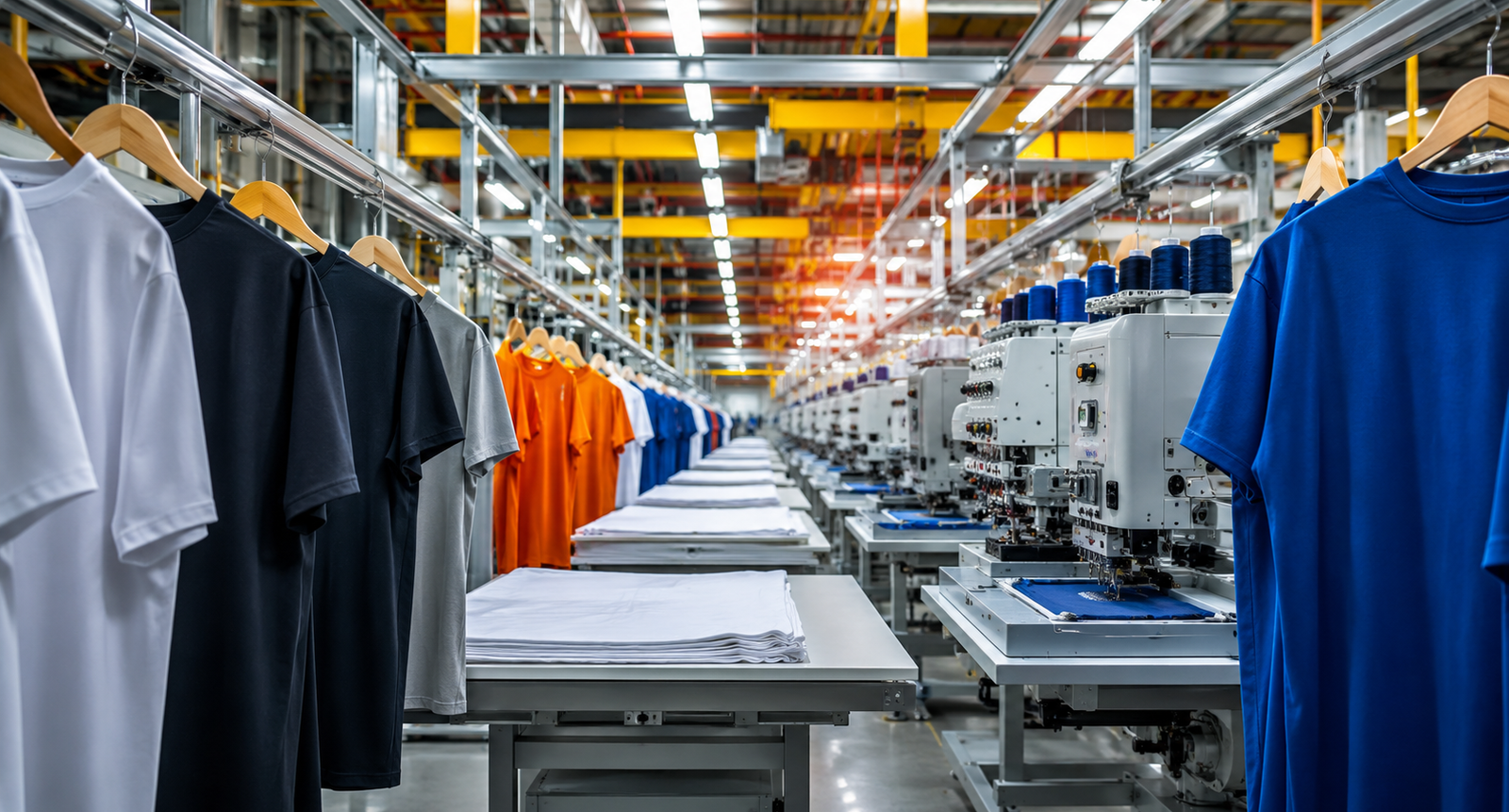
Apparel manufacturing is changing fast. For decades, garment production depended heavily on human skill, manual handling, and long production lines. Cutting, sewing, inspection, pressing, packing, and material movement all required large teams of workers.
That model is now under pressure.
Rising labor costs, faster fashion cycles, smaller order quantities, quality demands, sustainability targets, and global competition are forcing garment factories to become smarter. Automation is no longer only about replacing workers with machines. It is about building faster, cleaner, more accurate, and more flexible production systems.
The future of apparel manufacturing will not be fully robotic overnight. Fabric is flexible, unstable, and difficult to control. That is why sewing automation is more complex than automation in automobile or electronics manufacturing. Still, automation is already transforming fabric inspection, spreading, cutting, sewing support operations, embroidery, finishing, packing, warehouse movement, production planning, and quality control.
The factories that understand this shift early will survive. The factories that ignore it will struggle with high costs, delivery delays, quality complaints, and poor efficiency.
Why Automation Matters in Apparel Manufacturing
Garment manufacturing is one of the most labor-intensive industries in the world. A single garment may pass through many hands before it reaches the buyer. This creates several problems:
Labor shortage
High production cost
Inconsistent quality
Slow delivery
Fabric wastage
Human error
Low productivity
Difficulty handling small orders
Fabric cost and cut-and-sew labor are two of the biggest expenses in apparel production. Even a small improvement in marker efficiency, cutting accuracy, sewing productivity, or rework reduction can save a factory a large amount of money.
Automation helps manufacturers improve speed, consistency, quality, and cost control. It also supports mass customization, where garments are produced in smaller batches according to customer size, style, color, or design preference.
Key Areas Where Automation Is Growing
1. Automated Fabric Inspection
Fabric inspection is one of the first areas where automation is becoming practical.
Traditional fabric inspection depends on human eyes. Inspectors check fabric rolls for defects such as stains, holes, shade variation, slubs, missing yarns, broken ends, and weaving faults. But manual inspection has limitations. Workers get tired, defects are missed, and inspection results vary from person to person.
Automated fabric inspection systems use cameras, sensors, image processing, and artificial intelligence to detect defects more consistently. These systems can scan fabric at high speed and record defect type, location, and severity.
Benefits include:
Better defect detection
Lower inspection error
Digital defect records
Improved supplier evaluation
Reduced cutting losses
Faster quality decisions
In the future, AI-based inspection will become more common, especially in large factories, mills, denim units, sportswear production, and export-oriented apparel manufacturing.
2. Automated Fabric Spreading
Fabric spreading is a critical step before cutting. If fabric tension, alignment, ply height, or relaxation is not controlled properly, garment parts may come out distorted.
Automated spreading machines help control:
Fabric tension
Layer alignment
Ply count
Edge control
Spreading speed
Fabric relaxation
This improves cutting accuracy and reduces fabric waste. For large-volume production, automatic spreading is already widely used. In the future, more factories will adopt smart spreading systems that adjust settings based on fabric type, GSM, stretch, width, and order requirement.
Knitted fabrics, stretch fabrics, lightweight fabrics, and slippery materials need extra care. Smart spreading automation will be important for these categories.
3. Automated Cutting
Cutting is one of the most successful automation areas in apparel manufacturing.
Computer-controlled cutting machines can cut multiple plies of fabric with high accuracy. They are widely used for shirts, trousers, denim, uniforms, sportswear, lingerie, jackets, and technical garments.
Automated cutting improves:
Cutting accuracy
Fabric utilization
Speed
Consistency
Marker efficiency
Reduced manual dependency
Lower re-cutting
Modern cutting rooms are becoming more connected. CAD systems, marker planning software, spreading machines, and cutting machines can now work together. This creates a digital cutting workflow from pattern to fabric cutting.
Future cutting rooms will use AI to improve marker planning, predict fabric consumption, reduce end bits, and optimize cutting schedules.
4. Automation in Pattern Making and 3D Sampling
Pattern making has moved from manual paper patterns to CAD-based digital systems. This shift is one of the biggest productivity improvements in apparel product development.
Modern pattern automation allows:
Digital pattern creation
Size grading
Marker making
Pattern correction
Virtual fitting
3D garment simulation
Digital sample approval
3D garment simulation is especially important. Instead of making multiple physical samples, brands and factories can create virtual samples. Designers can check fit, drape, color, print placement, and style changes digitally.
This reduces:
Sampling cost
Fabric waste
Courier time
Development lead time
Buyer approval delays
In the future, 3D design, body scanning, AI fit prediction, and digital avatars will become standard tools for product development.
5. Sewing Automation
Sewing is the most difficult process to automate because fabric is soft, flexible, and unpredictable. Unlike metal or plastic, fabric changes shape during handling. It stretches, folds, slips, wrinkles, and reacts to humidity.
That is why complete robotic sewing is still limited.
However, partial sewing automation is already common. Many factories use automatic or semi-automatic machines for specific operations such as:
Pocket setting
Button attaching
Buttonhole making
Belt loop attaching
Collar turning
Cuff making
Placket attaching
Label attaching
Elastic joining
Bartacking
Pattern sewing
Sleeve placket preparation
These machines reduce operator skill dependency and improve consistency.
In the future, sewing automation will grow operation by operation. Instead of one robot making the full garment, factories will use many specialized machines for repeatable tasks.
6. Robotic Sewing and Fabric Handling
Robotic sewing is one of the most exciting but difficult areas of garment automation.
The main challenge is fabric handling. A robot must pick, align, fold, control, and feed fabric accurately into a sewing machine. This is much harder than handling rigid parts.
Researchers and machine makers are working on:
Soft robotic grippers
Vacuum-based fabric handling
Vision-guided sewing
AI-controlled fabric movement
Sensor-based tension control
Robotic arms for material transfer
Once fabric handling becomes more reliable, robotic sewing will grow faster. It may first become successful in simple, repeatable products such as T-shirts, towels, pillow covers, basic uniforms, jeans pockets, and home textiles.
High-fashion garments with complex shapes and delicate fabrics will still need skilled human support for a longer time.
7. AI in Production Planning
Artificial intelligence is becoming a serious tool in apparel production planning.
Traditional planning depends heavily on manual calculations, Excel sheets, and planner experience. But apparel production has many variables:
Style complexity
Machine availability
Operator skill
Line capacity
Fabric arrival
Trim availability
Buyer delivery date
Order quantity
Rework percentage
Absenteeism
AI-based planning systems can analyze these factors and suggest better production schedules.
AI can help factories:
Predict production delays
Balance sewing lines
Allocate operators
Plan machine loading
Estimate delivery risk
Reduce bottlenecks
Improve capacity utilization
This is where automation becomes more than machines. Software automation will be just as important as physical automation.
8. Smart Sewing Lines
The future sewing line will be data-driven.
In many factories today, production tracking is still manual. Supervisors collect output data from operators and enter it later. By the time management sees the report, the problem has already happened.
Smart sewing lines use digital production tracking systems to monitor real-time output, efficiency, downtime, defects, and bottlenecks.
A smart line can show:
Operator-wise production
Operation-wise target
Hourly output
Line efficiency
Quality rejection
Machine downtime
WIP movement
Bundle status
This helps managers take action immediately.
For example, if sleeve attaching is slowing down the whole line, the system can identify the bottleneck quickly. The supervisor can add manpower, adjust method, or rebalance the line.
9. Automated Material Handling
Material handling is often ignored, but it consumes a lot of time in garment factories.
Bundles move from cutting to sewing, sewing to finishing, finishing to packing, and packing to warehouse. Manual movement creates delay, confusion, missing parts, and excess WIP.
Automation can improve this through:
Conveyor systems
Overhead hanger systems
Automated guided vehicles
Barcode tracking
RFID tracking
Smart bins
Digital bundle movement
Overhead hanger systems are already used in some factories to move garment parts between workstations. They reduce handling time and improve line visibility.
In the future, RFID and IoT-based tracking will become more common. Factories will know exactly where each order, bundle, or garment is inside the plant.
10. Automation in Finishing and Pressing
Finishing is another area where automation can improve quality and consistency.
Garment finishing includes thread trimming, pressing, stain removal, measurement checking, final inspection, folding, tagging, and packing.
Automation can be used in:
Thread suction systems
Automatic pressing machines
Form finishers
Steam tunnels
Folding machines
Needle detection
Metal detection
Barcode scanning
Packing systems
For shirts, trousers, uniforms, and formalwear, automated pressing improves appearance and reduces dependency on manual ironing.
For e-commerce apparel, automated folding and packing systems can support faster dispatch and better presentation.
11. AI-Based Quality Control
Quality control is moving from manual checking to data-driven prevention.
Traditional quality control usually finds defects after they occur. The future system will predict and prevent defects before they become large problems.
AI-based quality systems can analyze:
Machine settings
Operator performance
Defect history
Fabric quality
Needle breakage
Seam defects
Measurement variation
Process deviation
If one operator or operation shows repeated defects, the system can alert the supervisor early.
Computer vision can also help detect:
Open seams
Broken stitches
Shade variation
Print defects
Incorrect labels
Measurement issues
Stains
Holes
This will reduce rework, claims, and shipment rejection.
12. Digital Twins in Apparel Factories
A digital twin is a virtual model of a real production system. In apparel manufacturing, it can represent a sewing line, cutting room, finishing section, or entire factory.
With a digital twin, managers can test production changes before applying them on the floor.
For example, they can simulate:
What happens if order quantity increases?
What happens if one machine breaks down?
What happens if two operators are absent?
What happens if a new style enters the line?
Which operation will become the bottleneck?
This helps factories make better decisions with less trial and error.
Digital twins will become more useful as factories collect more real-time data from machines, operators, ERP systems, and quality systems.
13. ERP and Automation Integration
Automation cannot work properly if factory data is scattered.
Many apparel factories still use separate systems for purchase, inventory, production, quality, costing, accounts, and dispatch. This creates confusion and duplication.
ERP integration connects all departments.
A good apparel ERP can connect:
Order booking
BOM
Fabric purchase
Trim purchase
Inventory
Cutting
Sewing
Finishing
Quality
Packing
Dispatch
Costing
Accounts
When ERP is connected with automation tools, the factory becomes more transparent. Management can see real-time cost, production status, stock, wastage, and delivery performance.
The future apparel factory will not run only on machines. It will run on connected data.
14. Body Scanning and Made-to-Measure Automation
Mass customization is a major future trend.
Customers increasingly want better fit, personalized design, and faster delivery. Traditional tailoring depends on manual measurement, which can be inconsistent.
Body scanning technology can capture accurate body measurements using scanners, mobile cameras, or AI-based measurement tools.
This supports:
Made-to-measure garments
Personalized sizing
Virtual fitting
Reduced returns
Better customer satisfaction
Digital pattern adjustment
For online fashion brands, fit-related returns are a major cost. Body measurement automation can reduce wrong-size orders and improve conversion.
In the future, body scanning may become common in premium tailoring, uniforms, workwear, sportswear, and e-commerce apparel.
15. Sustainability Through Automation
Automation is also important for sustainability.
Apparel manufacturing creates waste through poor planning, excess sampling, fabric defects, cutting loss, rework, overproduction, and rejected garments.
Automation can reduce waste by improving:
Marker efficiency
Cutting accuracy
Fabric inspection
Production planning
Inventory control
Digital sampling
Demand forecasting
Quality prevention
Sustainability is no longer just a marketing point. Buyers are asking for traceability, lower waste, lower emissions, and responsible production.
Factories that use automation to reduce waste will have a stronger position with global buyers.
16. Reshoring and Nearshoring
Automation may also change where garments are produced.
Traditionally, apparel production moved to countries with low labor costs. But brands now want faster delivery, lower inventory risk, and shorter supply chains.
Automation can make production closer to the consumer market more practical. This is called reshoring or nearshoring.
For example, instead of producing everything far away and waiting months for shipment, brands may produce some items closer to key markets using automated cutting, digital printing, robotic handling, and smart sewing systems.
This will not replace large-scale Asian production completely, but it will create new production models for fast fashion, premium apparel, uniforms, and customized products.
Challenges of Automation in Apparel Manufacturing
Automation sounds attractive, but it is not simple.
High Investment Cost
Automatic machines, robotics, ERP systems, AI tools, and digital tracking systems require investment. Small and medium factories may struggle to justify the cost.
The real question is not whether automation is good. The real question is where automation gives measurable return.
Factories should start with areas where payback is clear, such as cutting, spreading, inspection, production tracking, and quality control.
Fabric Handling Difficulty
Fabric is the biggest technical challenge. Different fabrics behave differently. Cotton, denim, chiffon, lycra, silk, wool, polyester, and knits all require different handling.
Humidity, temperature, static, stretch, surface friction, and fabric weight affect automation performance.
This is why robotic sewing is still developing slowly.
Lack of Skilled Workers
Automation does not remove the need for people. It changes the type of skill required.
Factories will need:
Machine technicians
CAD operators
ERP users
Data analysts
Automation engineers
Maintenance staff
Digital production planners
AI system operators
Workers must be trained. Otherwise, expensive machines will remain underused.
Resistance to Change
Many factories fail not because automation is bad, but because people resist new systems.
Supervisors may prefer old methods. Operators may fear job loss. Management may expect instant results. ERP data may not be entered properly.
Automation requires discipline. Without process discipline, technology becomes useless.
Will Automation Take Away Garment Jobs?
This is the uncomfortable question.
Yes, some repetitive jobs will reduce. Basic manual tasks such as bundle movement, simple inspection, repetitive sewing operations, and manual data entry will be affected.
But automation will also create new jobs.
Future garment factories will need people who can operate, maintain, program, analyze, and improve automated systems.
The workers who refuse to learn will be at risk. The workers who upgrade their skills will earn better wages and handle better roles.
The real danger is not automation. The real danger is staying low-skilled in an industry that is becoming technology-driven.
Future Outlook
The future of automation in apparel manufacturing will be gradual, not instant.
Complete lights-out garment factories are still difficult because garments are soft, variable, and style-sensitive. But partial automation will continue to grow strongly.
The biggest growth will happen in:
Automated cutting
Smart spreading
Digital sampling
AI planning
Fabric inspection
Quality control
Production tracking
Material handling
Finishing automation
ERP-connected factories
Sewing robots will improve, but they will first succeed in simple and repeatable products. Complex garments will still need skilled human involvement.
The winning apparel factories will combine human skill with smart technology. They will not blindly buy machines. They will identify bottlenecks, calculate return on investment, train workers, and build connected systems.
Conclusion
Automation is no longer a future dream in apparel manufacturing. It is already happening.
The industry is moving from labor-heavy production to data-driven, machine-supported, and digitally connected manufacturing. Fabric inspection, spreading, cutting, sewing support, finishing, packing, ERP, AI planning, and quality control are all becoming smarter.
But automation is not magic. Factories must choose the right technology, train people, control fabric quality, maintain machines, and use data properly.
The future belongs to apparel manufacturers who can produce faster, waste less, maintain quality, and adapt to smaller and more customized orders.
Factories that depend only on cheap labor will face pressure. Factories that combine skilled workers with automation will build the real competitive advantage.
Frequently Asked Questions
Will automation take away garment manufacturing jobs?
Some repetitive jobs will reduce — bundle movement, simple inspection, repetitive sewing operations, and manual data entry are the tasks most affected. But automation also creates new roles: machine technicians, CAD operators, ERP users, data analysts, and maintenance staff. Workers who upgrade their skills will get better wages; those who don’t are the ones genuinely at risk.
Why is sewing harder to automate than cutting or inspection?
Because fabric is soft, flexible, and unpredictable — it stretches, folds, slips, wrinkles, and reacts to humidity, unlike rigid metal or plastic parts. A robot must pick, align, fold, control, and feed fabric accurately into a sewing machine, which is far harder than handling rigid components. This is why sewing automation is growing operation by operation rather than as one full robotic system.
What is a digital twin in apparel manufacturing?
A digital twin is a virtual model of a real production system — a sewing line, cutting room, finishing section, or entire factory. It lets managers simulate changes, such as an order quantity increase, a machine breakdown, or operator absences, before applying them on the actual floor, which reduces trial-and-error decision-making.
Where does automation give the clearest return for a small or medium factory?
The clearest payback areas are cutting, spreading, fabric inspection, production tracking, and quality control, since these already have proven automated systems in wide use. High investment cost is the main barrier for smaller factories, so starting with these established areas rather than full robotic sewing is the recommended approach.
Which products are most likely to see robotic sewing succeed first?
Simple, repeatable products such as T-shirts, towels, pillow covers, basic uniforms, jeans pockets, and home textiles are expected to be first, since they involve less complex fabric handling. High-fashion garments with complex shapes and delicate fabrics will continue to need skilled human support for a longer time.
Leave a Reply