Introduction
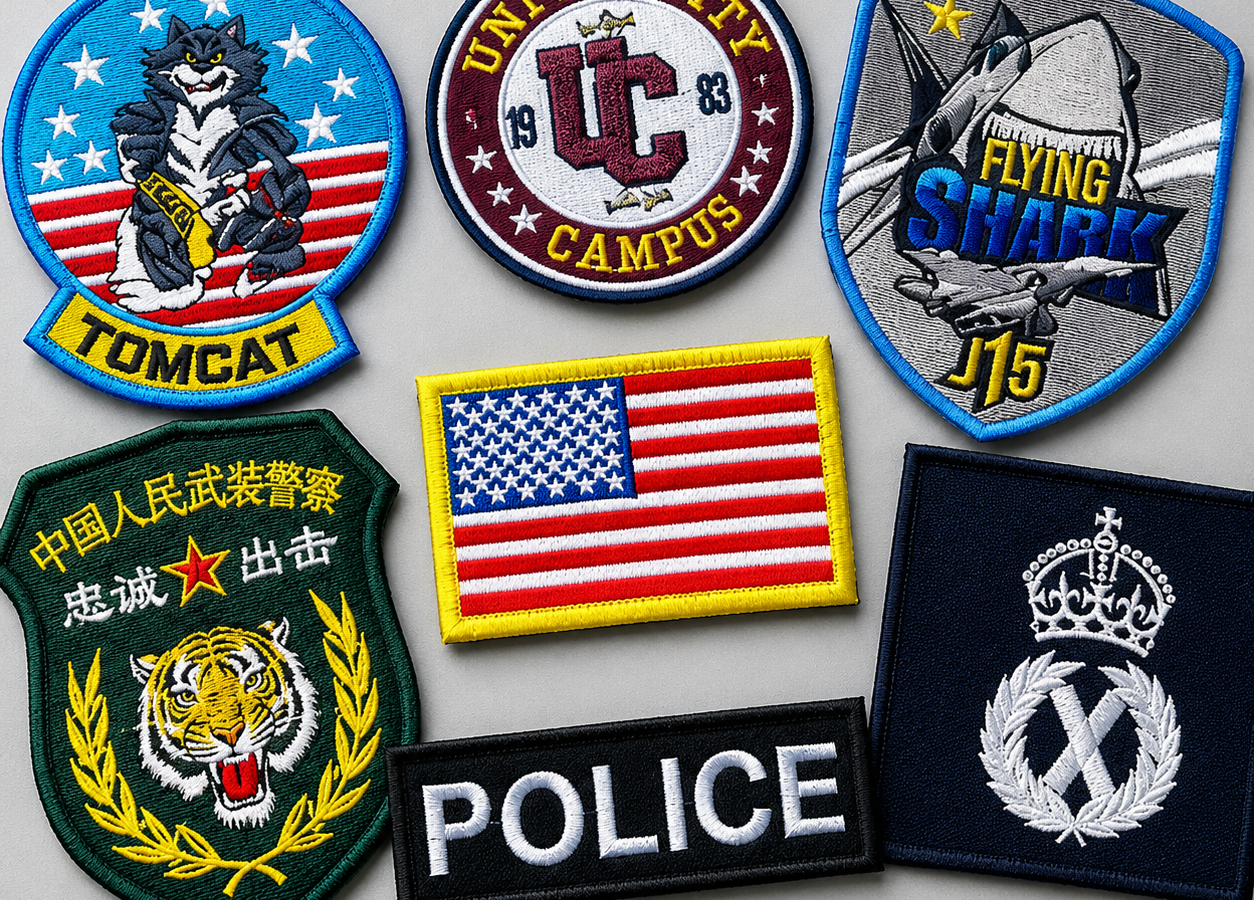
Walk into any clothing store and pick up a denim jacket, work uniform, sports jersey, backpack, cap, or premium hoodie. Chances are you’ll find a woven patch somewhere on the product.
At first glance, it may seem like a small decorative detail. In reality, woven patches play a much bigger role in modern apparel production. They help brands communicate identity, improve product recognition, enhance aesthetics, provide functional information, and even increase perceived value.
In today’s highly competitive apparel market, every design element matters. Consumers are surrounded by thousands of products competing for attention. Brands must find ways to stand out while maintaining quality, durability, and authenticity.
This is where woven patches become valuable.
Whether attached to a premium denim jacket, a corporate uniform, a school blazer, or a luxury streetwear hoodie, woven patches help transform ordinary garments into recognizable products with a clear identity.
As global apparel manufacturing continues to expand, garment brands increasingly rely on woven patches for branding, storytelling, compliance labeling, and product differentiation.
This article explores the many uses of woven patches in apparel production, their advantages over alternative trims, technical considerations, quality factors, and why they remain one of the most effective branding tools in the textile industry.
What Is a Woven Patch?
Featured Snippet Answer
A woven patch is a fabric label or decorative trim created by interlacing colored threads to form logos, text, graphics, or identification marks. Unlike embroidered patches, woven patches use tightly woven threads that allow finer detail, sharper lettering, and smoother surfaces.
Woven patches are widely used in:
- Fashion apparel
- Corporate uniforms
- Sportswear
- Workwear
- School uniforms
- Denim garments
- Outdoor apparel
- Bags and accessories
- Military products
- Promotional merchandise
Their versatility makes them one of the most commonly used garment trims worldwide.
Woven Patch vs Embroidered Patch
Many apparel buyers confuse woven patches with embroidered patches.
Although they may appear similar from a distance, they are manufactured differently.
Woven Patch
Woven patches are created by weaving threads directly into the design.
Advantages include:
- Fine detail reproduction
- Sharp text visibility
- Smooth surface
- Lightweight construction
- Thin profile
Embroidered Patch
Embroidered patches use stitched thread placed on top of a base fabric.
Advantages include:
- Raised texture
- Traditional appearance
- Bold designs
- High visibility
Which Is Better?
The answer depends on application.
For small logos, intricate artwork, QR codes, technical information, and fine typography, woven patches generally perform better.
For rugged aesthetics, vintage styling, or military-inspired products, embroidered patches may be preferred.
Why Woven Patches Matter in Apparel Production
Garment manufacturing involves much more than stitching fabric together.
Every component contributes to the final product:
- Buttons
- Zippers
- Labels
- Hangtags
- Care labels
- Decorative trims
- Woven patches
Together, these elements create brand identity and consumer perception.
A woven patch often serves as a visual shortcut that instantly communicates:
- Brand recognition
- Product authenticity
- Quality level
- Collection identity
- Product category
In many cases, consumers remember a patch before they remember a logo printed elsewhere.
Branding Applications of Woven Patches
Building Brand Recognition
Branding remains the most common application.
Apparel brands invest heavily in making their products instantly recognizable.
A woven patch helps achieve this goal.
Examples include:
- Logo patches
- Brand initials
- Collection badges
- Heritage labels
- Signature marks
Consumers often associate patches with authenticity and craftsmanship.
Think about iconic outdoor brands, denim manufacturers, sports teams, or luxury fashion houses.
Many use woven patches as part of their core identity strategy.
Premium Product Positioning
A woven patch can elevate product perception.
Consumers frequently associate woven trims with:
- Higher quality
- Better durability
- Premium manufacturing
- Greater attention to detail
This perceived value can influence purchasing decisions.
For example, two similar jackets may use identical fabric, but the one with a professionally designed woven patch often appears more premium.
Storytelling Through Design
Modern fashion is increasingly driven by storytelling.
Brands use woven patches to communicate:
- Product history
- Collection themes
- Sustainability initiatives
- Geographic origin
- Limited editions
A small woven patch can carry significant narrative value.
Consumers appreciate products that tell a story.
Woven Patches in Workwear and Uniform Manufacturing
Workwear represents one of the largest markets for woven patches.
Organizations require durable identification systems that withstand daily use.
Common Industries Using Woven Patches
- Security services
- Manufacturing plants
- Logistics companies
- Airlines
- Hospitality businesses
- Healthcare institutions
- Schools
- Government departments
Patches help identify:
- Employees
- Departments
- Job roles
- Certifications
- Company affiliation
Unlike printed graphics, woven patches maintain appearance even after repeated washing cycles.
Corporate Identity in Uniforms
Corporate uniforms are essentially walking advertisements.
Every employee becomes a representative of the brand.
A woven patch ensures consistent visual identity across thousands of garments.
For example:
A hotel chain may place woven patches on:
- Reception uniforms
- Housekeeping garments
- Concierge jackets
- Maintenance staff apparel
The result is a professional and cohesive appearance.
Durability Requirements in Workwear
Workwear often faces harsh conditions:
- Frequent washing
- Abrasion
- Outdoor exposure
- Industrial environments
Quality woven patches provide excellent durability under these conditions.
Manufacturers typically select:
Merrow Border
A thick stitched border that improves durability.
Benefits include:
- Fray resistance
- Long service life
- Traditional appearance
Laser-Cut Edge
A modern alternative with:
- Clean edges
- Minimal bulk
- Contemporary styling
Selection depends on garment requirements and brand image.
Fashion and Streetwear Applications
The rise of streetwear has dramatically increased demand for woven patches.
Today, patches function as design elements rather than simple labels.
Popular Fashion Uses
Woven patches commonly appear on:
- Hoodies
- Cargo pants
- Denim jackets
- Varsity jackets
- Caps
- Overshirts
- Bomber jackets
Fashion brands often use patches to create exclusivity.
Limited-edition drops frequently include custom woven patches that become collector’s items.
Denim Industry Applications
Denim brands have used patches for decades.
Common locations include:
- Waistbands
- Back pockets
- Coin pockets
- Jacket sleeves
- Back yokes
The patch becomes part of the product’s identity.
Many consumers can identify a denim brand simply by recognizing its patch placement and design.
Outdoor and Performance Apparel
Outdoor brands often rely on woven patches to distinguish technical product lines.
Examples include:
- Hiking jackets
- Trekking pants
- Ski apparel
- Rainwear
- Tactical garments
Patches help communicate:
- Performance level
- Product category
- Weather resistance
- Technology platforms
Consumers quickly understand product positioning through these visual markers.
Woven Patches for Sportswear
Sportswear represents another major application.
Sports teams, clubs, and athletic brands use woven patches for:
- Team identification
- League badges
- Sponsor branding
- Achievement recognition
- Tournament participation
The thin profile of woven patches makes them suitable for lightweight performance fabrics.
Athletes require comfort and flexibility.
Bulky embellishments may interfere with movement.
Woven patches solve this challenge by offering branding without excessive thickness.
School and Educational Uniform Applications
Schools frequently use woven patches as official identity markers.
Common applications include:
- School logos
- House identification
- Achievement badges
- Academic recognition
- Sports teams
Benefits include:
- Easy recognition
- Professional appearance
- Enhanced school identity
- Long-term durability
Many educational institutions view woven patches as a cost-effective branding solution.
Woven Patches in Bags and Accessories
Woven patches are not limited to apparel.
Accessory manufacturers frequently use them on:
- Backpacks
- Travel bags
- Laptop cases
- Wallets
- Caps
- Beanies
- Duffel bags
In these products, patches often serve as the primary branding element.
A small patch can transform a generic accessory into a recognizable branded product.
Product Identification Applications
Beyond aesthetics, woven patches often perform important functional roles.
Information displayed may include:
- Product size
- Collection name
- Manufacturing origin
- Safety standards
- Compliance marks
- Product series
This information helps manufacturers improve traceability and inventory management.
It also assists consumers in understanding product specifications.
Why Consumers Trust Woven Branding
Psychology plays an important role in purchasing behavior.
Consumers often associate woven elements with:
- Authenticity
- Craftsmanship
- Premium quality
- Durability
This perception explains why woven patches remain popular despite advances in digital printing and heat-transfer technologies.
Physical texture creates a stronger emotional connection than flat graphics.
This tactile experience contributes to perceived value.
Woven Patch Uses in Apparel Production (Part 2)
Quality Factors in Woven Patch Development
Not all woven patches are created equally.
Two patches may appear similar in a digital design file, yet perform very differently once attached to a garment.
The quality of a woven patch depends on several technical factors that garment manufacturers must carefully evaluate before production.
Thread Count
Thread count determines how much detail can be woven into the patch.
Higher thread density allows:
- Sharper logos
- Better typography
- More detailed artwork
- Cleaner edges
Premium fashion brands often specify high-density woven patches to maintain brand consistency.
Weave Density
Dense weaving creates:
- Better durability
- Enhanced appearance
- Greater dimensional stability
Loose weaving may reduce production cost but can negatively affect appearance and longevity.
Color Accuracy
Brand colors are critical.
A slight variation in color can weaken brand recognition.
Manufacturers should:
- Use approved Pantone references
- Request physical samples
- Conduct light-condition testing
Color consistency becomes especially important for global brands producing garments across multiple factories.
Border Types and Their Importance
The border affects both appearance and performance.
Merrow Border
A merrow edge uses overlocked stitching around the patch perimeter.
Advantages:
- Strong edge protection
- Traditional appearance
- Excellent durability
Common applications:
- Uniforms
- Military garments
- Workwear
- Outdoor products
Laser Cut Border
Laser-cut patches offer a cleaner profile.
Advantages:
- Modern appearance
- Fine shape flexibility
- Reduced bulk
Common applications:
- Streetwear
- Premium fashion
- Sportswear
- Luxury accessories
Heat-Cut Edge
This method seals synthetic fibers while creating clean edges.
Benefits include:
- Fray resistance
- Cost efficiency
- Clean aesthetics
Choosing the right border is often as important as selecting the patch design itself.
Understanding Patch Backing Types
The backing influences how the patch is attached and how it performs over time.
Sew-On Backing
The most common and reliable option.
Benefits:
- Maximum durability
- Excellent wash resistance
- Strong attachment
Ideal for:
- Uniforms
- Denim
- Workwear
- Industrial garments
Heat-Seal Backing
Heat-activated adhesive allows direct application.
Advantages:
- Faster production
- Reduced sewing costs
- Cleaner installation
However, heat-seal backing must be carefully tested on different fabrics.
Adhesive Backing
Temporary adhesive backing is useful for:
- Packaging
- Promotional products
- Sampling
It is generally not recommended for permanent garment use.
Hook-and-Loop Backing
Popular in tactical and military applications.
Allows patches to be removed and replaced easily.
Common uses include:
- Security uniforms
- Military clothing
- Tactical gear
- Emergency services apparel
Attachment Methods in Apparel Production
Selecting the right attachment method directly affects patch performance.
Direct Sewing
Direct sewing remains the industry standard.
Advantages:
- Strongest attachment
- Long service life
- Excellent laundering resistance
Most premium brands prefer sewing because of its reliability.
Heat Press Application
Heat-seal patches offer production efficiency.
Benefits:
- Faster processing
- Lower labor costs
- Consistent positioning
Challenges include:
- Fabric compatibility
- Temperature control
- Long-term durability
Manufacturers should conduct wash tests before mass production.
Combination Method
Many premium garments use:
- Heat positioning
- Followed by perimeter stitching
This hybrid method provides maximum security.
It is commonly used in:
- Premium outerwear
- Technical apparel
- Heavy-duty workwear
Sustainability Considerations for Woven Patches
Sustainability has become a major focus in apparel manufacturing.
Consumers increasingly expect brands to reduce environmental impact throughout the supply chain.
Woven patches can contribute to sustainability goals when designed responsibly.
Recycled Yarns
Many suppliers now offer:
- Recycled polyester yarns
- Recycled PET-based threads
- Eco-friendly materials
These reduce dependence on virgin resources.
Longer Garment Life
One overlooked benefit of woven patches is durability.
A durable patch can:
- Extend garment usability
- Support repair programs
- Reduce product replacement frequency
This aligns with circular fashion principles.
Upcycling and Repair Applications
Brands increasingly use woven patches to:
- Repair damaged garments
- Cover minor defects
- Support resale programs
- Extend product life cycles
This reduces waste while creating additional value.
Common Mistakes in Woven Patch Production
Even experienced manufacturers occasionally encounter problems.
Understanding common mistakes helps avoid costly production errors.
Overly Complex Artwork
One of the biggest mistakes is attempting to weave excessive detail into a small patch.
Common issues include:
- Unreadable text
- Distorted logos
- Poor clarity
Design simplification often improves results.
Incorrect Patch Placement
Patch placement affects:
- Comfort
- Appearance
- Functionality
Poor placement can cause:
- Fabric distortion
- Consumer discomfort
- Design imbalance
Always test placement on actual garments.
Ignoring Fabric Compatibility
A heavy patch may perform well on denim but poorly on lightweight jersey fabric.
Manufacturers must evaluate:
- Fabric weight
- Stretch characteristics
- Garment construction
Compatibility testing is essential.
Inadequate Wash Testing
A patch that looks perfect initially may fail after repeated laundering.
Testing should include:
- Washing
- Drying
- Abrasion
- Colorfastness
- Adhesion strength
Quality assurance prevents customer complaints.
Cost Factors in Woven Patch Manufacturing
Pricing depends on several variables.
Size
Larger patches require:
- More thread
- Longer production time
- Higher material consumption
Complexity
Detailed artwork increases:
- Setup requirements
- Production difficulty
- Manufacturing cost
Color Count
More colors generally increase complexity.
Quantity
Higher production volumes reduce per-unit costs.
Bulk production remains the most cost-effective option.
Backing Selection
Premium backing systems often increase overall patch cost but may improve long-term performance.
Future Trends in Woven Patch Manufacturing
The woven patch industry continues evolving alongside fashion and textile innovation.
Sustainable Materials
Expect increased use of:
- Recycled yarns
- Bio-based fibers
- Low-impact dyes
Sustainability will remain a major purchasing factor.
Smart Apparel Integration
Emerging technologies may combine woven patches with:
- NFC chips
- QR codes
- Digital authentication systems
These features enhance product traceability and anti-counterfeiting efforts.
Personalization
Consumers increasingly demand customized products.
Brands are responding with:
- Limited-edition patches
- Personalized branding
- Small-batch production
Digital weaving technology supports these trends.
Luxury Minimalism
Many premium brands are moving toward smaller, more refined branding.
Woven patches fit perfectly within this design philosophy.
They provide brand visibility without excessive visual clutter.
Best Practices for Apparel Brands
Brands seeking maximum value from woven patches should follow several principles:
Prioritize Function
A patch should serve a purpose beyond decoration.
Invest in Quality
Premium patches improve brand perception.
Test Before Production
Always approve physical samples.
Match Construction to Use
Different garment categories require different patch specifications.
Consider Long-Term Durability
Short-term savings often create long-term quality problems.
Frequently Asked Questions
What is the purpose of a woven patch?
A woven patch provides branding, identification, decoration, product information, and enhanced product value in apparel and accessories.
Are woven patches durable?
Yes. High-quality woven patches offer excellent durability and withstand repeated washing, abrasion, and daily wear.
Which is better: woven patches or embroidered patches?
Woven patches are better for detailed logos and fine text, while embroidered patches are better for bold designs and textured appearances.
Can woven patches be attached without sewing?
Yes. Heat-seal and adhesive backing options are available, although sewing generally provides the strongest attachment.
Are woven patches suitable for workwear?
Absolutely. Woven patches are widely used in industrial uniforms, hospitality apparel, security uniforms, and corporate workwear.
Can woven patches be made from recycled materials?
Yes. Many manufacturers now produce woven patches using recycled polyester yarns and sustainable production methods.
Why do fashion brands use woven patches?
Fashion brands use woven patches to strengthen branding, improve aesthetics, communicate identity, and increase perceived product value.
Conclusion
Woven patches may be small components, but their impact on apparel production is significant.
From branding and product identification to workwear durability and fashion storytelling, woven patches serve multiple purposes across virtually every apparel category.
Their ability to deliver sharp detail, premium appearance, durability, and versatility makes them one of the most effective trims available to garment manufacturers.
Whether used on uniforms, denim, streetwear, sportswear, accessories, or luxury fashion products, woven patches help brands communicate identity while enhancing product value.
As apparel manufacturing continues evolving toward sustainability, customization, and smart product development, woven patches will remain an essential tool for brands seeking both functionality and visual impact.
For manufacturers and apparel brands alike, investing in well-designed woven patches is not simply a decorative choice. It is a strategic decision that strengthens branding, improves product perception, and contributes to long-term business success.
Leave a Reply