Introduction
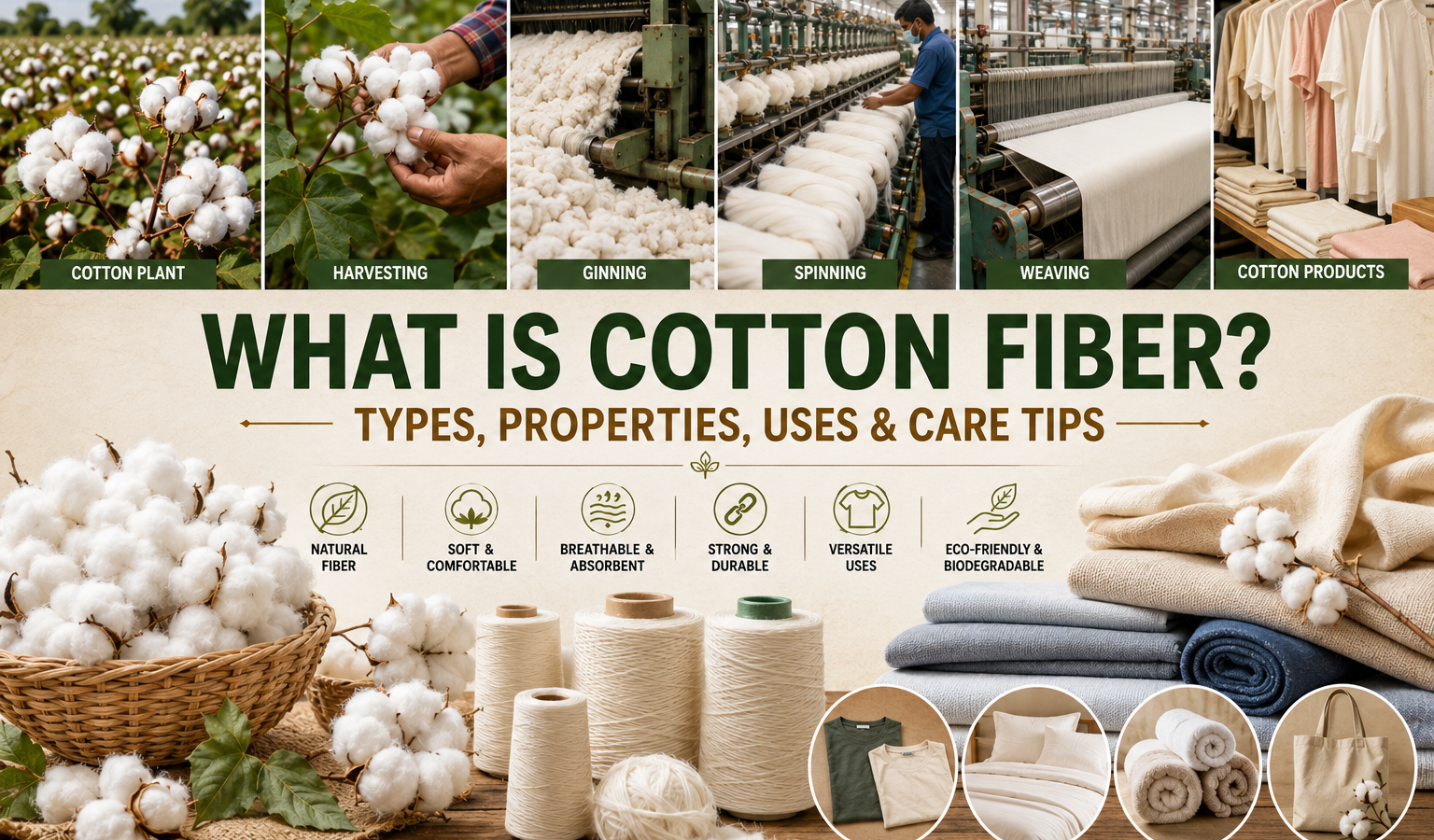
Cotton is one of the most important natural fibers in the history of textiles. From the clothes we wear every day to the bed sheets we sleep on, cotton has become an essential part of modern life. Its softness, breathability, comfort, and versatility have made it one of the most widely used fibers across the globe.
For thousands of years, people have cultivated cotton and transformed it into fabrics for clothing, household products, and industrial applications. Despite the rise of synthetic fibers such as polyester, nylon, and acrylic, cotton continues to remain one of the most trusted and preferred fibers because of its natural feel and comfort.
Cotton fiber is obtained from the seed hairs of the cotton plant. These soft fibers grow around the seeds inside a protective capsule known as a boll. Once mature, the boll opens naturally, exposing the fluffy white fibers that are harvested and processed into yarn and fabric.
Today, cotton is cultivated in more than 80 countries and supports millions of farmers, textile workers, manufacturers, and businesses worldwide. It plays a critical role in the textile and apparel industry and remains a major contributor to global trade.
This comprehensive guide explains everything you need to know about cotton fiber, including its origin, production process, types, physical and chemical properties, advantages, disadvantages, uses, and care recommendations.
What Is Cotton Fiber?
Cotton fiber is a natural cellulosic staple fiber obtained from the cotton plant, scientifically classified under the genus Gossypium. It is considered a seed fiber because it develops around the seeds of the cotton plant.
Each cotton fiber is actually a single elongated plant cell. During growth, cellulose is deposited within the fiber structure, giving cotton its strength and useful textile characteristics.
Cotton belongs to the family of natural plant fibers and is primarily composed of cellulose, which accounts for approximately 90 to 95 percent of the fiber composition.
Unlike synthetic fibers that are produced chemically, cotton grows naturally and is harvested from agricultural crops. This natural origin contributes to its popularity among consumers seeking comfort and sustainability.
History of Cotton Fiber
Cotton has a rich history that dates back thousands of years.
Archaeological evidence suggests that cotton was used in India and Peru more than 5,000 years ago. Ancient civilizations discovered that the soft fibers surrounding cotton seeds could be spun into yarn and woven into fabric.
India became one of the earliest centers of cotton cultivation and textile production. Cotton fabrics produced in India were highly valued and traded across Asia, Africa, and Europe.
The Industrial Revolution transformed cotton manufacturing dramatically. The invention of the spinning jenny, power loom, and cotton gin increased production efficiency and helped establish cotton as the dominant textile fiber worldwide.
Today, cotton remains one of the most important agricultural and industrial commodities globally.
Cotton in the Global Textile Industry
Cotton continues to play a vital role in the textile sector.
Major cotton-producing countries include:
- India
- China
- United States
- Brazil
- Pakistan
- Turkey
- Uzbekistan
- Australia
Although polyester now exceeds cotton in overall global production volume, cotton remains one of the most preferred fibers because of its comfort, breathability, and natural origin.
Many international brands continue to use cotton extensively in apparel, home furnishings, and fashion products.
The fiber supports millions of jobs worldwide, from farming and harvesting to spinning, weaving, dyeing, garment manufacturing, and retail.
Cotton Plant Structure
The cotton plant is a small shrub that thrives in warm climates.
Important parts of the cotton plant include:
Roots
The root system absorbs water and nutrients from the soil.
Stem
The stem supports leaves, flowers, and cotton bolls.
Leaves
Leaves perform photosynthesis and help the plant grow.
Flowers
Cotton flowers begin as creamy white blooms and gradually change color before falling off.
Bolls
The boll is the fruit of the cotton plant and contains the cotton fibers surrounding the seeds.
When the boll matures, it bursts open naturally, revealing the cotton fibers ready for harvesting.
How Cotton Fiber Is Produced
The production of cotton fiber involves several stages.
1. Cultivation
Cotton is planted in fertile soil under suitable climatic conditions.
The plant requires:
- Warm temperatures
- Adequate sunlight
- Sufficient moisture
- Well-drained soil
2. Growth Stage
During growth, the plant develops leaves, flowers, and eventually cotton bolls.
3. Boll Development
After flowering, the boll develops around the seeds.
Fibers begin forming on the seed surface and continue growing until maturity.
4. Harvesting
Once the bolls open, cotton is harvested.
Harvesting may be done:
- By hand
- Using mechanical harvesters
Modern cotton farming relies heavily on machine harvesting.
5. Ginning
Ginning separates cotton fibers from seeds.
This process removes:
- Seeds
- Leaves
- Dirt
- Plant debris
The cleaned fibers are compressed into bales for transportation.
6. Spinning
Cotton fibers are spun into yarn.
The yarn may be:
- Carded
- Combed
- Ring spun
- Open-end spun
depending on the desired fabric quality.
7. Fabric Manufacturing
The yarn is woven or knitted into fabric for further processing and garment production.
Types of Cotton Fiber
Different varieties of cotton are grown around the world.
1. Upland Cotton
Upland cotton is the most widely cultivated variety.
Characteristics:
- Medium staple length
- Good strength
- Affordable pricing
Most everyday cotton garments are made from Upland cotton.
2. Egyptian Cotton
Egyptian cotton is known for its extra-long staple fibers.
Benefits include:
- Exceptional softness
- High durability
- Premium quality
It is commonly used in luxury bedding and apparel.
3. Pima Cotton
Pima cotton is another extra-long staple variety.
Features:
- Smooth texture
- Excellent strength
- High resistance to pilling
Pima cotton is often used in premium fashion products.
4. Organic Cotton
Organic cotton is grown without synthetic fertilizers and pesticides.
Benefits:
- Environmentally friendly
- Sustainable production
- Reduced chemical exposure
Organic cotton has gained popularity among eco-conscious consumers.
Physical Properties of Cotton Fiber
Color
Natural cotton ranges from white to creamy white.
Special varieties may produce:
- Brown cotton
- Green cotton
- Tan cotton
Length
Cotton fibers vary in staple length.
Longer fibers generally produce:
- Better yarn quality
- Higher strength
- Improved fabric performance
Luster
Cotton possesses low natural luster compared to silk or polyester.
Mercerization can improve its shine.
Strength
Cotton exhibits moderate strength.
Interestingly, cotton becomes approximately 20 percent stronger when wet.
Flexibility
Cotton fibers are flexible and comfortable against the skin.
Softness
One of cotton’s most desirable characteristics is its natural softness.
Chemical Properties of Cotton Fiber
Absorbency
Cotton absorbs moisture effectively.
This makes cotton ideal for:
- Summer clothing
- Towels
- Sportswear
- Medical textiles
Dyeability
Cotton accepts dyes easily because of its cellulosic structure.
It can be dyed in virtually any color.
Heat Resistance
Cotton withstands relatively high ironing temperatures.
However, excessive heat can cause scorching.
Electrical Conductivity
Cotton does not generate significant static electricity.
This improves wearer comfort.
Chemical Resistance
Cotton resists many common cleaning chemicals but may be damaged by strong acids.
Advantages of Cotton Fiber
Cotton offers numerous benefits.
Comfortable
Cotton feels soft and pleasant against the skin.
Breathable
The fiber allows air circulation, reducing heat buildup.
Moisture Absorbent
Cotton absorbs perspiration effectively.
Easy Dyeing
The fiber accepts a wide range of dyes.
Hypoallergenic
Cotton is generally suitable for sensitive skin.
Biodegradable
As a natural fiber, cotton decomposes naturally.
Versatile
Cotton can be used in countless textile applications.
Disadvantages of Cotton Fiber
Despite its benefits, cotton has some limitations.
Wrinkles Easily
Cotton fabrics wrinkle more than many synthetic materials.
Shrinkage
Improper laundering can cause shrinkage.
Slow Drying
Cotton retains moisture longer than synthetic fibers.
Mildew Susceptibility
Moist cotton can develop mildew under poor storage conditions.
Lower Abrasion Resistance
Cotton wears out faster than some synthetic fibers.
Common Uses of Cotton Fiber
Cotton is used across numerous industries.
Apparel
Cotton is commonly used in:
- T-shirts
- Shirts
- Jeans
- Dresses
- Underwear
- Sportswear
- Children’s clothing
Home Textiles
Examples include:
- Bed sheets
- Pillow covers
- Curtains
- Towels
- Tablecloths
- Upholstery fabrics
Medical Products
Cotton is used in:
- Surgical dressings
- Bandages
- Cotton wool
- Medical wipes
Industrial Applications
Cotton is also utilized in:
- Canvas fabrics
- Workwear
- Technical textiles
- Protective clothing
Cotton Blends
Cotton is frequently blended with other fibers.
Popular blends include:
Cotton Polyester
Provides:
- Better wrinkle resistance
- Improved durability
- Faster drying
Cotton Spandex
Offers:
- Stretchability
- Comfort
- Shape retention
Cotton Viscose
Produces:
- Soft drape
- Enhanced comfort
Cotton Linen
Combines:
- Breathability
- Natural texture
- Premium appearance
Cotton Fabric Finishes
Several finishes improve cotton performance.
Mercerization
Enhances:
- Luster
- Strength
- Dye uptake
Sanforization
Reduces shrinkage.
Wrinkle-Resistant Finish
Improves crease recovery.
Water Repellent Finish
Provides moisture protection.
Antimicrobial Finish
Helps control bacteria growth.
Cotton Care Tips
Proper care helps maintain cotton products.
Washing
- Wash according to care labels.
- Use mild detergents.
- Separate dark and light colors.
Drying
- Avoid excessive drying temperatures.
- Remove promptly to reduce wrinkles.
Ironing
- Use medium to high heat.
- Iron while slightly damp for best results.
Storage
- Store in clean, dry areas.
- Protect from excessive moisture.
Stain Removal
- Treat stains quickly.
- Follow fabric-specific cleaning instructions.
Sustainability and Organic Cotton
Sustainability has become increasingly important in cotton production.
Organic cotton farming aims to:
- Reduce pesticide use
- Improve soil health
- Conserve water
- Support environmental protection
Many fashion brands now incorporate organic cotton into their collections to meet growing consumer demand for sustainable textiles.
Future of Cotton Fiber
The future of cotton looks promising.
Innovations include:
- Improved fiber varieties
- Better water management
- Sustainable cultivation practices
- Advanced textile finishes
- Recycled cotton technologies
These developments will help maintain cotton’s importance in the textile industry while reducing environmental impact.
Conclusion
Cotton fiber remains one of the most valuable and versatile natural fibers in the world. Its unique combination of comfort, softness, breathability, absorbency, and affordability has ensured its continued popularity for centuries.
From casual clothing and luxury bedding to industrial textiles and medical products, cotton plays a critical role in everyday life. Although synthetic fibers have gained market share, cotton continues to be the preferred choice for consumers who value natural comfort and performance.
Understanding cotton fiber, its properties, production methods, and care requirements helps manufacturers, buyers, students, and consumers make informed decisions when selecting textile products. As sustainability becomes increasingly important, cotton is expected to remain a cornerstone of the global textile industry for many years to come.
Leave a Reply