Powerful, globally proven ERP with strong financial controls. Best suited for textile companies with ₹50Cr+ turnover, multi-location operations, or significant export activity. Not the right fit for small or mid-size SME textile units due to cost and complexity.
Ratings at a glance
Textile-specific features
Ease of use
Financial & reporting
Value for money
Implementation support
Scalability
Oracle NetSuite is one of the most well-known names in cloud ERP — used by over 40,000 companies worldwide across manufacturing, retail, wholesale, and services. But is it the right choice for your textile business? The honest answer is: it depends — and it depends on factors most reviewers don’t discuss openly. This guide gives you a complete, no-fluff review of NetSuite for textile businesses in 2026: what it does well, where it falls short, how much it actually costs, and which types of textile operations should — and shouldn’t — consider it.
📋 What this review covers
01 What is Oracle NetSuite and how does it work?
02 NetSuite modules relevant to textile businesses
03 How NetSuite handles textile-specific workflows
04 Pricing — what you’ll actually pay in 2026
05 Pros and cons — honest assessment
06 Implementation timeline and cost
07 NetSuite vs alternatives for textile businesses
08 Who should buy NetSuite — and who shouldn’t
09 ROI expectations and payback period
10 FAQ
What is Oracle NetSuite?
Oracle NetSuite is a cloud-based Enterprise Resource Planning (ERP) system owned by Oracle Corporation. It was originally founded as NetSuite Inc. in 1998 — making it one of the very first cloud ERP platforms in the world — before Oracle acquired it in 2016 for $9.3 billion.
NetSuite is a unified platform that brings together financials, inventory, order management, manufacturing, CRM, e-commerce, and HR into a single cloud-based system. Unlike older on-premise ERPs, everything runs on Oracle’s cloud — you don’t buy servers, don’t manage updates, and can access the system from anywhere in the world on any device.
For textile businesses, NetSuite’s appeal lies in three areas: its exceptionally strong financial management, its ability to handle complex multi-entity and multi-currency operations, and its scalability — it can grow from a single-location fabric manufacturer to a global garment group without changing platforms.
Quick context: NetSuite is used by approximately 40,000+ organisations in 219 countries. In India, it has a growing presence among mid-to-large manufacturers, export houses, and conglomerates — particularly those with international trading operations or investor reporting requirements.
A modern ERP dashboard gives textile business owners a real-time view of financial performance and operational KPIs from a single screen.
📊 Oracle NetSuite ERP — Main Dashboard & Financial Overview
Oracle NetSuite’s unified dashboard gives textile business owners a real-time view of financial performance, outstanding orders, inventory levels, and operational KPIs — all from a single screen accessible on any device.
NetSuite modules relevant to textile businesses
NetSuite is a modular platform — you license the modules your business actually needs. Here are the modules most relevant to textile manufacturers, exporters, and traders:
💰
Financial Management
Multi-currency GL, accounts payable/receivable, bank reconciliation, period close, financial reporting, tax management including GST. The strongest module in the entire NetSuite suite — best-in-class for complexity.
📦
Inventory Management
Multi-location inventory, lot and serial number tracking, bin/shelf management, reorder point automation, landed cost calculation. Critical for managing yarn lots, dye batches, and fabric rolls across warehouses.
🏭
Manufacturing (WIP & Routing)
Work orders, bill of materials (BOM), routing, work centre management, production scheduling, WIP tracking. Handles multi-stage manufacturing — spinning to weaving to finishing — with cost tracking at each stage.
🛒
Order Management
Sales order processing, purchase order management, drop-ship, fulfillment workflows, customer-specific pricing and discount structures. Strong for export houses managing multiple buyer accounts with different price lists.
🚢
Supply Chain & Procurement
Vendor management, RFQ, purchase planning, demand planning, lead time management. Connects yarn procurement to production scheduling automatically based on order requirements.
📊
Analytics & Reporting (SuiteAnalytics)
Built-in BI with real-time dashboards, saved searches, report builder, and KPI scorecards. Can be connected to Oracle Analytics Cloud for deeper analysis. One of NetSuite’s most praised features across all industries.
🌐
Multi-entity & Subsidiaries
Manage multiple legal entities, brands, or subsidiary companies from a single NetSuite account. Intercompany transactions, consolidated reporting, and elimination entries handled automatically. Essential for textile groups.
🔗
SuiteCommerce / E-commerce
Built-in B2B and B2C e-commerce platform with ERP integration. For textile businesses selling direct-to-consumer fabric, homeware, or garments online, this eliminates the need for a separate Shopify–ERP integration.
How NetSuite handles textile-specific workflows
Here’s where the review gets honest. NetSuite is a generalised ERP — it was not built specifically for textile manufacturing the way platforms like TexBase or Aptus were. This means some textile workflows work beautifully out of the box, while others require significant customisation or add-on modules from NetSuite’s partner ecosystem.
✅
Yarn and fabric inventory tracking — works well
NetSuite’s lot tracking and matrix inventory (for tracking shade × count × construction as variants of a single item) handles yarn and fabric SKU complexity reasonably well. Multi-location warehouse management across production sites, finishing units, and bonded warehouses is a strong point.
✅
Multi-currency and export operations — excellent
For garment exporters managing USD, EUR, GBP, and AED transactions simultaneously, NetSuite’s multi-currency engine is among the best available. LC management, forward contract accounting, and foreign exchange gain/loss reporting are handled natively — a major advantage over Indian ERP platforms.
✅
Bill of materials for fabric construction — good with configuration
NetSuite’s manufacturing BOM handles multi-level bills — yarn → warp beam → grey fabric → finished fabric — reasonably well. You can define weave structure, weft/warp count, and machine routing. However, complex textile-specific parameters (like colour fastness, GSM tolerances) need custom fields.
⚠️
Loom-wise production tracking — requires customisation
Out of the box, NetSuite tracks production at the work order level — not at the individual loom or machine level. For a weaving factory that tracks production per loom per shift, you’ll need a SuiteApp (third-party module) or custom development to add loom-level granularity. This is a real gap compared to textile-specific ERPs.
⚠️
Job work (karigari) management — requires add-on
Sending yarn to an outside job worker (processing, dyeing, embroidery) and tracking material movement in and out — a very common textile workflow in India — is not natively handled well in NetSuite. This requires a custom module or a SuiteApp. Budget an additional ₹3L–₹8L for this customisation.
⚠️
GST compliance for Indian textile — works but needs localisation
NetSuite has an India localisation bundle that handles GST — GSTR-1, GSTR-3B, e-invoicing, e-way bills. However, it requires a certified Indian NetSuite partner to configure correctly, and the localisation is not as deep or intuitive as Indian-native ERP platforms. Textile-specific GST rules (HSN codes, composition scheme) need careful configuration.
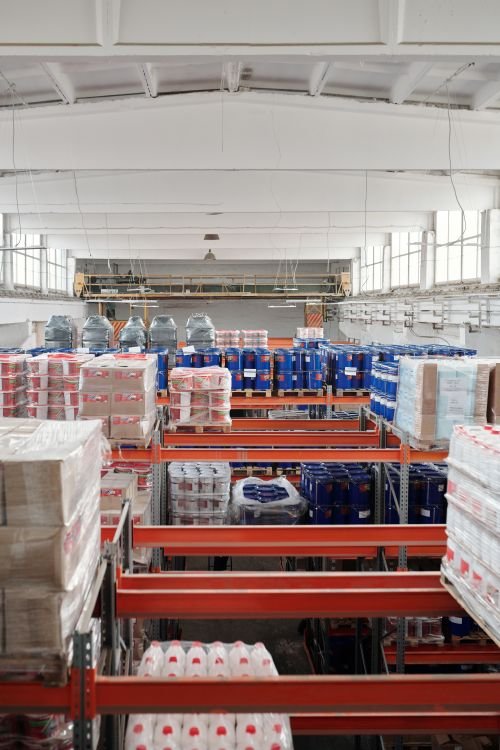
Multi-location stock tracking and lot management help textile businesses manage raw materials across several warehouses and production sites.
📦 NetSuite Inventory Management — Multi-Location Stock & Lot Tracking
NetSuite’s inventory management handles multi-location stock tracking, lot number management for yarn batches, and automatic reorder point alerts — essential for textile businesses managing raw materials across multiple warehouses and production sites.
NetSuite pricing — what you’ll actually pay in 2026
NetSuite does not publish its pricing publicly — you have to request a quote. This is a known frustration among buyers. Based on our research and conversations with Indian NetSuite partners, here’s what textile businesses in India actually pay:
Base platform
NetSuite Core
$1,099
per month base licence
→Core financials, basic inventory
→5 users included
→Additional users: $99–$129/user/month
→Annual contract, paid upfront
Manufacturing add-on
Manufacturing Module
$499
per month additional
→Work orders, BOM, routing
→WIP tracking, production scheduling
→Shop floor execution (basic)
→Required for textile manufacturing
India localisation
India Bundle (GST)
$200
per month additional
→GST, TDS, TCS compliance
→e-invoicing, e-way bill
→GSTR-1/3B generation
→Mandatory for Indian operations
Cost element
Annual estimate (INR)
Notes
Base licence (12 months)
₹11L – ₹14L
Core platform, 5 users included
Additional users (10 users)
₹10L – ₹13L
₹8,000–₹11,000/user/month
Manufacturing module
₹5L – ₹6L
Essential for production tracking
India GST localisation
₹2L – ₹2.5L
Required for Indian GST compliance
Implementation (partner)
₹15L – ₹60L
One-time; depends on complexity
Customisation
₹5L – ₹25L
Textile-specific workflows
Training
₹2L – ₹5L
Per user group, per round
Year 1 total (15 users)
₹50L – ₹1.25Cr
Ongoing licence: ₹28L–₹35L/year from Year 2
Important: NetSuite’s pricing increases annually — typically 3%–8% per year as part of the contract. Lock in a multi-year rate in your initial contract if possible. Also note that most Indian NetSuite partners charge implementation fees in INR, but the licence itself is billed in USD — meaning rupee depreciation directly increases your annual cost.
Pros and cons — honest assessment for textile businesses
NetSuite solution provider with manufacturing expertise
Large composite mill / conglomerate (1,000+ employees)
12–24 months
Full enterprise rollout, phased by entity, change management
Oracle implementation partner (Tier 1)
Partner selection is critical: The quality of your NetSuite implementation depends almost entirely on your partner. Choose a partner who has textile or apparel manufacturing experience specifically — not just a general NetSuite partner. Ask them for references from textile clients. A bad implementation partner can burn ₹30L–₹60L and still leave you with a non-functional system.
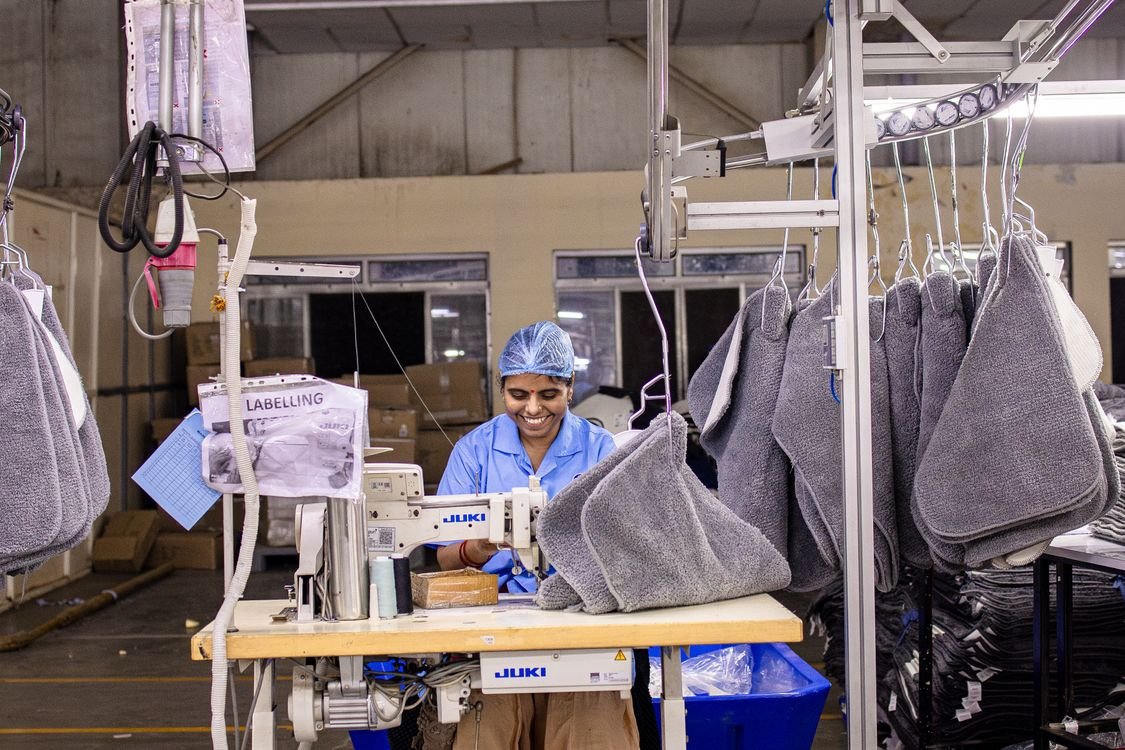
A manufacturing module tracks production work orders and routing across work centres, from raw material to finished garment.
🏭 NetSuite Manufacturing — Work Orders, BOM & Production Routing
NetSuite’s manufacturing module manages multi-level bills of materials, production routing across work centres, and real-time WIP cost tracking — enabling textile factories to track costs at every stage from raw material to finished goods.
NetSuite vs alternatives for textile businesses
How does NetSuite compare to the other ERP options available to textile businesses? Here’s an honest comparison:
SAP Business One (Textile)
Closest competitor
SAP B1 with textile add-ons is NetSuite’s most direct competitor in the ₹50Cr+ textile segment. SAP B1 has a stronger manufacturing module for textile-specific workflows and a larger Indian partner ecosystem with more textile experience. NetSuite wins on cloud architecture, analytics, and multi-entity management. SAP B1 wins on textile manufacturing depth and Indian localisation. Both are expensive — SAP B1 typically costs ₹25L–₹1.5Cr total for a textile factory.
💰 ₹25L–₹1.5Cr🏭 Better textile manufacturing🇮🇳 Stronger India presence
Microsoft Dynamics 365
Enterprise alternative
Dynamics 365 Finance + Supply Chain Management is Microsoft’s answer to NetSuite at the enterprise level. Preferred by large textile groups that are already on the Microsoft ecosystem (Office 365, Azure, Power BI). Better integration with Microsoft tools, comparable financial capabilities, but even more expensive and complex to implement than NetSuite. Typical cost for a large textile business: ₹80L–₹2.5Cr.
💰 ₹80L–₹2.5Cr📊 Better Microsoft integration🌍 Global operations
TexBase / Aptus ERP
Best for Indian SME textile
For Indian textile manufacturers with turnover below ₹50Cr, purpose-built Indian textile ERPs like TexBase or Aptus offer 80% of NetSuite’s functionality for 15%–20% of the cost. They handle loom tracking, job work, greige reconciliation, and Indian GST natively — without expensive customisation. No multi-currency or multi-entity capabilities, but most SME textile factories don’t need those anyway.
💰 ₹3L–₹25L total🧵 Textile-specific🇮🇳 India-first
Odoo (Textile modules)
Best value for customisation
Odoo is an open-source ERP with a large textile module ecosystem. Significantly cheaper than NetSuite, highly customisable, and growing rapidly in Indian textile clusters. Lacks NetSuite’s enterprise financial depth but is far more affordable (₹4L–₹35L total). A good middle ground for textile businesses that need customisation flexibility without the NetSuite price tag.
💰 ₹4L–₹35L🔧 Highly customisable📦 Open-source
Feature
NetSuite
SAP B1
TexBase
Odoo
Textile-specific modules
⚠️ Needs custom
✅ Good
✅ Excellent
✅ Good
Multi-currency / export
✅ Excellent
✅ Good
❌ Basic
⚠️ Moderate
GST / India compliance
⚠️ Works
✅ Good
✅ Excellent
✅ Good
Multi-entity / subsidiaries
✅ Excellent
⚠️ Limited
❌ No
⚠️ Moderate
Analytics / reporting
✅ Excellent
✅ Good
⚠️ Basic
⚠️ Moderate
Loom-level tracking
⚠️ Custom only
⚠️ Add-on
✅ Native
⚠️ Custom
Job work management
⚠️ Custom only
⚠️ Add-on
✅ Native
✅ Available
Total Year 1 cost
₹50L–₹1.25Cr
₹25L–₹1.5Cr
₹3L–₹25L
₹4L–₹35L
Best for
Large exporters, groups
Large manufacturers
SME textile units
Mid-size, custom needs
Who should buy NetSuite — and who shouldn’t
NetSuite IS a good fit for your textile business if:
✓Your annual turnover is ₹50 crore or above, with a growth trajectory toward ₹200Cr+
✓You operate multiple companies, brands, or entities under one group
✓You export significantly and deal with multiple currencies (USD, EUR, GBP)
✓You have PE/VC investors who require investor-grade financial reporting and transparency
✓You plan to expand internationally — sourcing, manufacturing, or selling overseas
✓Your finance function is complex — intercompany transactions, consolidation, transfer pricing
✓You have an IT team or budget to manage and customise an enterprise ERP
NetSuite is NOT the right fit if:
✗Your turnover is below ₹50 crore — the cost-to-value ratio doesn’t work
✗You need deep loom-level tracking, job work management, or shade-wise fabric reconciliation without a large customisation budget
✗Your shop floor staff has low digital literacy — NetSuite’s interface will overwhelm them
✗You want a quick 3-month implementation — NetSuite simply cannot be done well that fast
✗You have a tight budget and need something working within ₹10L–₹20L total
✗Your operations are single-location, single-currency, domestic-only
ROI expectations for textile businesses
For the right type of textile business — large, export-oriented, multi-entity — NetSuite delivers measurable ROI. Here are the typical gains reported by textile and apparel businesses after 18–24 months of stable NetSuite usage:
25–40%
Reduction in financial close time — from weeks to days
15–30%
Inventory reduction through better demand planning and real-time visibility
60–80%
Reduction in manual reporting effort for management MIS
100%
Consolidation accuracy for multi-entity groups — eliminates manual Excel consolidation
3–5%
Reduction in procurement cost through better vendor management and price benchmarking
24–36 mo
Typical payback period for a textile business investing ₹60L–₹1Cr in NetSuite
Real-world example: A composite textile group in Coimbatore with 3 subsidiaries (spinning, weaving, garment export) implemented NetSuite at a total Year 1 cost of ₹82L. By Month 20, they had eliminated 4 accounts staff positions (₹16L/year saved), reduced their financial close from 22 days to 6 days, and — crucially — used NetSuite’s clean financial data to secure a ₹25Cr working capital facility from HDFC Bank at 50 bps lower interest than their previous banker offered. The ROI became very easy to justify.
Frequently asked questions
Does Oracle NetSuite have a free trial for textile businesses?
NetSuite does not offer a self-serve free trial. Instead, you can request a personalised demo through Oracle’s website or an authorised partner. Many Indian NetSuite partners can arrange a live demo environment customised for textile manufacturing workflows. Ask specifically for a demo that includes manufacturing, inventory, and the India GST localisation.
Can NetSuite handle MSME Udyam registration and government scheme compliance for Indian textile businesses?
NetSuite’s core platform doesn’t have built-in Udyam or government scheme tracking — these are not financial transactions that an ERP typically manages. However, the financial reports NetSuite generates (P&L, balance sheet, GST returns) are exactly what banks and government schemes require for loan applications and compliance. Your GST data from NetSuite is directly usable for MSME scheme applications.
Is Oracle NetSuite available in Hindi or regional Indian languages for shop floor use?
NetSuite’s interface is available in over 27 languages but Hindi is not yet a fully supported language as of 2026. Regional Indian languages (Gujarati, Tamil, Telugu) are not available. This is a real limitation for textile factories where supervisors and store keepers are more comfortable in regional languages. Most implementations work around this with translated quick-reference training cards.
How does NetSuite handle power loom incentive schemes and cluster development programme data?
NetSuite can store this data as custom records and generate reports for compliance purposes, but it doesn’t have pre-built workflows for Indian government cluster schemes. Your NetSuite partner would need to build a custom module for this — typically ₹1.5L–₹3L additional development cost.
Can a textile business start with NetSuite and migrate to it from Tally?
Yes — Tally-to-NetSuite migrations are common for growing textile businesses. The main effort is migrating the item master (which is often complex in textile due to shade/count variants), opening balances, and customer/vendor masters. A good Indian NetSuite partner will have a structured Tally migration methodology. Expect the migration itself to take 4–6 weeks and cost ₹3L–₹8L depending on data volume.
Is NetSuite worth it for a ₹30Cr turnover garment export house?
Honestly, probably not yet. At ₹30Cr turnover, the NetSuite licence alone (₹28L–₹35L per year ongoing) represents 1%+ of turnover — a high ERP cost ratio for a company at this stage. A well-implemented Odoo or Aptus system at ₹6L–₹15L total would give you 80% of the functionality for 20% of the cost. Revisit NetSuite when you cross ₹75Cr–₹100Cr and have complex multi-entity or international expansion needs.
Final verdict
Oracle NetSuite is a genuinely excellent ERP — but it’s not the right ERP for most Indian textile businesses in 2026. Its strengths — multi-currency financial management, multi-entity consolidation, real-time global analytics — are precisely what large, export-oriented textile groups need. And for them, it’s worth every rupee.
But for the vast majority of Indian textile manufacturers — weaving units, power loom clusters, small garment factories, mid-size processors — NetSuite is expensive overkill. You’d be paying for capabilities you don’t need while missing textile-specific features that Indian-built ERPs handle natively and cheaply.
Our recommendation: If your textile business has ₹50Cr+ turnover, multi-entity operations, or significant export activity — get a NetSuite demo. If you’re below that threshold — invest in a purpose-built Indian textile ERP and save the difference for your production floor.
The best ERP is not the most expensive one. It’s the one your team will actually use — correctly, every day.
Related articles:
ERP
ERP Implementation Cost for Textile Factories – Full Breakdown 2026
ERP
Best Textile ERP Software 2026 – Compared & Reviewed
Finance
MSME Loan for Textile Business – Eligibility & Schemes 2026
Oracle NetSuite textile NetSuite review 2026 NetSuite for garment manufacturers NetSuite ERP India textile NetSuite vs SAP textile best ERP textile business India NetSuite pricing India 2026 cloud ERP textile factory
Kavita has 13 years of experience evaluating, implementing, and advising on enterprise ERP systems across textile, apparel, and consumer goods industries. She has assessed NetSuite, SAP, Microsoft Dynamics, and Indian ERP platforms for over 60 manufacturing clients across India and Southeast Asia. Previously a senior technology analyst at a leading management consultancy, she now works independently helping textile businesses make smarter technology investment decisions — without the vendor bias. She holds an MBA from IIM Ahmedabad and a certification in Oracle NetSuite administration.
Frequently Asked Questions
Does Oracle NetSuite have a free trial for textile businesses?
No, NetSuite doesn’t offer a self-serve free trial. Instead, a personalised demo can be requested through Oracle’s website or an authorised partner, and many Indian NetSuite partners can arrange a demo environment customised for textile manufacturing, inventory, and India GST localisation.
Is Oracle NetSuite available in Hindi or regional Indian languages for shop floor use?
NetSuite’s interface supports over 27 languages, but Hindi is not yet fully supported as of 2026, and regional languages like Gujarati, Tamil, or Telugu are not available either. This is a real limitation for factories where supervisors are more comfortable in regional languages; most implementations work around it with translated quick-reference training cards.
Can a textile business migrate to NetSuite from Tally?
Yes, Tally-to-NetSuite migrations are common for growing textile businesses. The main effort is migrating the item master, which is often complex due to shade and count variants, plus opening balances and customer/vendor masters. Expect the migration itself to take 4–6 weeks and cost ₹3L–₹8L depending on data volume.
Is NetSuite worth it for a ₹30 crore turnover garment export house?
Probably not yet. At ₹30 crore turnover, the NetSuite licence alone (₹28L–₹35L per year ongoing) represents over 1% of turnover, a high ERP cost ratio at that stage. A well-implemented Odoo or Aptus system at ₹6L–₹15L total gives roughly 80% of the functionality for about 20% of the cost; NetSuite is worth revisiting closer to ₹75–100 crore turnover.
How does NetSuite handle job work (karigari) management, common in Indian textile operations?
It’s not natively handled well. Sending yarn to an outside job worker for processing, dyeing, or embroidery and tracking material movement in and out requires a custom module or SuiteApp, budgeted at an additional ₹3L–₹8L.
What does loom-level production tracking look like in NetSuite out of the box?
Out of the box, NetSuite tracks production at the work order level, not the individual loom or machine level. A weaving factory that needs production tracked per loom per shift requires a third-party SuiteApp or custom development, a real gap compared to textile-specific ERPs.
Written by textile professionals with hands-on experience in fabric manufacturing, costing, weaving, and production planning across India's leading textile clusters. Our content reflects real-world application — not just theory.

Leave a Reply