Meta description: A buyer asks for a slightly higher EPI on an existing pocketing construction, expecting a quick quote — and the mill comes back with a longer lead time and a reed charge. Here’s the actual reed and denting math behind that delay, so you know what to ask before it happens.
KEY TAKEAWAYS
- Every loom is fitted with a reed — a comb-like fixture that sets the exact ends-per-inch a loom can weave. Mills stock a limited range of reed counts; they don’t have every possible reed on hand.
- When your requested EPI doesn’t match a reed the mill already owns, the mill has two options: order/make a new reed (added cost and lead time) or change the denting order (ends per dent) to hit your EPI using an existing reed — a workaround most buyers never know exists.
- This is why two orders that look nearly identical on a spec sheet — say, 96 EPI vs 100 EPI — can have very different lead times, even though the difference looks trivial to a non-technical buyer.
- Asking one specific question before finalizing a construction — “can this EPI be achieved with your existing reed stock, or does it need a new reed?” — can save weeks of unexplained delay.
The Lead-Time Question Nobody Asks Until It’s Too Late
A buyer finalizes a pocketing construction — say, 96 EPI × 72 PPI on a 58″ width — gets a quote, places the order, and everything moves smoothly. Two months later, for a repeat order, the buyer asks for a small tweak: bump the EPI to 100 for a slightly denser hand-feel. It sounds like a trivial change. The mill comes back with an extra 15–20 days added to the lead time and a one-time tooling charge that wasn’t there before.
Nothing went wrong. The mill isn’t being difficult. The 4-EPI difference simply doesn’t fit any reed the mill has in stock, and weaving physically cannot proceed without the right reed mounted on the loom. This is a structural fact of how looms work, not a negotiating tactic — but it’s rarely explained to buyers in terms they can actually plan around, which is exactly why it keeps catching merchandising teams off guard.
What a Reed Actually Does (In Plain Terms)
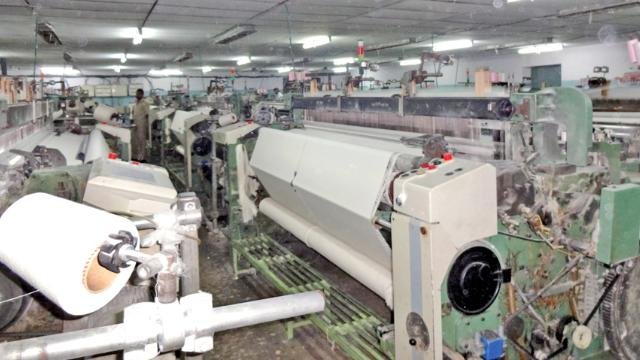
A reed is a comb-like frame with a fixed number of narrow slots, called dents, running across the loom’s width. Each dent holds one or more warp yarns as they pass through, and the reed’s job is to:
- Keep warp ends evenly spaced across the fabric width.
- Beat each weft pick into place after insertion.
Because the dents are physically fixed in number and spacing on a given reed, the reed itself sets a hard limit on how many warp ends can be packed into a given width — which is the direct physical driver of EPI (ends per inch).
The Formula: Reed Count, Denting Order, and EPI
Reed count is measured in the “stockport system” as the number of dents per 2 inches. It connects to EPI through the denting order — how many warp ends are threaded through each individual dent:
Reed Count = EPI ÷ (1 + Weft Crimp %)
Total Ends Across Width = EPI × Fabric Width (inches)
Ends per Dent (Denting Order) = Total Ends ÷ (Reed Count × Reed Width in units of 2 inches)
The critical practical point buried in these formulas: the same physical reed can produce more than one EPI, depending on the denting order used. A reed that’s “too coarse” for your target EPI at a 1-end-per-dent order might hit your exact target EPI at a 2-ends-per-dent order — which is the workaround that avoids a new reed purchase entirely, if the resulting fabric appearance and cover are still acceptable for your construction.
This same EPI/width relationship is what powers our Warp & Weft Calculator — but the calculator alone won’t tell you whether a specific EPI matches a mill’s existing reed inventory. That’s a conversation you have to have directly, armed with the right question.
Worked Example 1: When the Math Doesn’t Line Up
Say a mill’s standard reed stock for pocketing includes reeds at counts of 60, 64, and 68 (stockport system), each typically run at a 2-ends-per-dent order for these constructions.
| Reed Count | Denting Order | Resulting EPI (at 58″ width, ~4% weft crimp) |
|---|---|---|
| 60 | 2 ends/dent | ≈ 93 EPI |
| 64 | 2 ends/dent | ≈ 99 EPI |
| 68 | 2 ends/dent | ≈ 105 EPI |
If a buyer requests 96 EPI, it falls neatly between the 60-reed and 64-reed results at the standard 2-ends-per-dent order — meaning neither existing reed hits it cleanly at that denting order. The mill’s options become:
- Order a new reed at the exact count needed for 96 EPI — typically adding 2–4 weeks lead time (reed manufacturing/procurement) plus a one-time cost that’s usually passed through on smaller orders.
- Adjust the denting order on an existing reed — for instance, using a mixed denting pattern or a slightly different order on the 64-count reed — which can sometimes land close enough to 96 EPI without a new reed, if the buyer’s tolerance allows a small EPI variance.
- Negotiate the target EPI itself to 93 or 99 — the two values the mill can hit immediately with existing reed stock — if the performance difference at that EPI is negligible for the pocketing application.
Most buyers only ever hear “we need to order a new reed, add 3 weeks” — without realizing options 2 and 3 existed and could have been discussed before the order was placed.
Worked Example 2: Why a Repeat Order Can Suddenly Need a New Reed
This scenario is common with repeat orders across seasons: a buyer’s original order was placed at 93 EPI (fitting the mill’s 60-count reed cleanly). A new season’s tech pack rounds this to “approximately 95 EPI” for consistency across multiple supplier specs — a change that looks negligible on paper.
| Parameter | Original Order | New Season Request |
|---|---|---|
| Target EPI | 93 | ~95 |
| Matches Existing Reed? | Yes (60-count reed, 2 ends/dent) | No — falls between 60-count and 64-count results |
| Lead Time Impact | Standard | +2–4 weeks (new reed) or negotiation needed |
A 2-EPI rounding adjustment, made purely for documentation consistency across suppliers, can be the entire reason a repeat order suddenly takes a month longer than the previous cycle — a delay that’s very hard to diagnose after the fact if nobody asks about reed availability at the point the tech pack was revised.
Why This Rarely Gets Explained Clearly
- Mills often absorb small reed changes silently for good customers, ordering a new reed without flagging why the lead time moved — which means buyers learn there’s a delay, but not the reed-specific reason behind it.
- EPI looks like a purely aesthetic/performance spec to non-technical buyers, when it’s actually a hard mechanical constraint tied to physical tooling the mill may or may not already own.
- Denting order is almost never listed on a standard tech pack or spec sheet, even though it’s the exact lever that determines whether a given EPI needs new tooling or not.
- Merchandising teams optimizing across multiple suppliers standardize EPI targets for consistency, without realizing that a “clean” round number for documentation purposes might be an “unclean,” reed-incompatible number for a specific mill’s existing equipment.
What to Actually Ask Before Finalizing a Construction
- “Does this EPI match a reed you currently have in stock, or would it need a new reed?” — This single question surfaces the entire issue immediately, before it becomes a lead-time surprise.
- “What EPI values can you hit cleanly with your current reed inventory near my target?” — If your target has flexibility (even ±2-3 EPI), this can let the mill start immediately with zero new tooling cost or delay.
- “What denting order would you use for this construction?” — Useful mainly for technical buyers who want to sanity-check that the appearance/cover at that denting order will meet expectations, especially for fabrics where dent marks could be visible.
- For repeat orders, explicitly confirm the EPI hasn’t shifted between seasons due to rounding or tech-pack standardization — a quick construction confirmation against the previous order’s actual reed-matched EPI avoids the “silent 2-EPI drift” scenario in Worked Example 2.
Common Mistakes That Lead to This Surprise
- Rounding EPI targets for documentation neatness without checking whether the rounded number still matches available tooling at the actual mill weaving the order.
- Assuming EPI is infinitely flexible because it’s “just a number on a spec sheet,” when it’s constrained by physical reed inventory at each specific mill.
- Not asking about reed availability until after placing the order, at which point the lead-time impact is already locked in rather than negotiable.
- Standardizing a single EPI target across multiple mills without recognizing that different mills carry different reed inventories — a target that fits cleanly at one mill may require new tooling at another.
- Treating a mill’s “we need 3 more weeks” as arbitrary or a negotiating tactic, when it’s often a straightforward, verifiable mechanical constraint that could have been avoided with one clarifying question upfront.
Frequently Asked Questions
Is this only relevant for woven pocketing fabric, or does it apply more broadly?
The reed and denting mechanics described here apply to any woven fabric on a shuttle, rapier, or air-jet loom — pocketing is used as the example because it’s a common, high-volume application where buyers often assume EPI is freely adjustable. The same constraint applies to shirting, bottomweight, and technical woven fabrics.
Does this apply to knitted fabrics too?
No — knitting machines use needle beds and gauge (needles per inch), not reeds, so this specific mechanical constraint is unique to woven fabric production. Knit fabrics have their own set of gauge-related constraints, but they work differently from the reed/denting relationship described here.
How long does it actually take to get a new reed made?
This varies by mill location, reed supplier relationships, and whether a standard or custom reed count is needed, but 2–4 weeks is a reasonable general planning assumption for a new reed procurement, on top of whatever the fabric’s normal weaving lead time already is.
Can a mill always just change the denting order to avoid buying a new reed?
Not always — denting order changes are constrained by what still produces acceptable fabric appearance and cover for your specific construction. A denting order that’s too uneven can create visible dent marks or streaks in the fabric, so this workaround has quality limits, not just mechanical ones.
If I specify a wide EPI tolerance in my tech pack, does that fully solve this problem?
It significantly reduces the risk, since a wider tolerance gives the mill more existing reeds to choose from, but it doesn’t eliminate the issue entirely — if your tolerance band still happens to fall in a gap between the mill’s available reed counts, the same lead-time question can still arise.
Why didn’t my mill just tell me about this reed issue upfront?
Some mills proactively flag this; many don’t, either because they’re used to absorbing small reed changes without explanation, or because the sales/merchandising contact on the mill side isn’t always looped in on the weaving floor’s tooling inventory in real time. This is exactly why asking the direct question yourself, rather than waiting for the mill to volunteer it, is the more reliable approach.
Does this reed constraint affect fabric cost as well as lead time?
Yes, typically as a one-time tooling charge for the new reed, which is separate from the ongoing per-meter fabric cost. On large-volume repeat orders, mills sometimes absorb this cost since it pays for itself over future orders using the same reed; on smaller or one-off orders, it’s more commonly passed through directly to the buyer.
Is there a way to check reed compatibility before even approaching a mill?
Not with full certainty, since reed inventory is specific to each individual mill and isn’t typically published. However, once you have a working relationship with a mill and know their typical reed counts for your product category, you can use the reed count formula above to sanity-check whether a new target EPI is likely to land cleanly on their existing tooling before raising it with them — turning a potential surprise into a quick internal check.
Should this be tracked in an ERP system rather than handled ad hoc?
Ideally yes, for mills managing many looms and construction types — maintaining a simple reed inventory register (reed counts on hand, by width) linked to the construction/costing module means a new EPI request can be checked against actual tooling availability automatically, rather than relying on someone on the weaving floor remembering what’s in the reed store. This is a straightforward addition for any textile ERP system already tracking loom and construction data.
Working out a new construction and want to sanity-check your EPI and width numbers? Try our Warp & Weft Calculator — and when you’re ready to check the cost side, our Fabric Cost Calculator picks up right where this one leaves off.
Leave a Reply