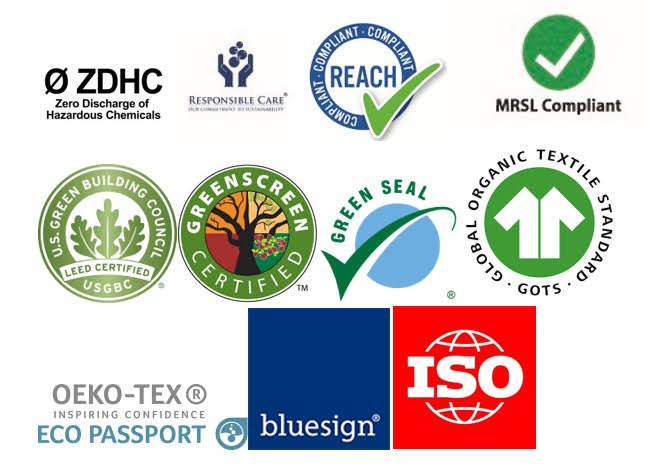
Certifications & Compliance · Updated 08 July 2026
I’ve sat across the table from mill owners who spent four lakh rupees on a certification no buyer on their books ever asked for, and I’ve watched other mills lose a genuine order because they didn’t hold the one certificate a buyer’s compliance team required as a baseline. Both mistakes come from the same root cause: treating certification as a checklist to complete rather than a business decision to make against your actual buyer mix.
This isn’t another explainer that lists four certifications and tells you they’re “all important for sustainability.” You already know that much if you’ve been in a buyer meeting in the last three years. What’s actually useful is a way to decide, for your specific mill, in what order, and whether the next certificate on your list is worth the money — before you sign the cheque, not after.
Start with the question each certification actually answers
The four certifications that come up most often in fabric sourcing conversations don’t compete with each other — they answer completely different questions a buyer’s compliance team is asking. Confusing what each one proves is where most over-certification (and under-certification) mistakes start.
OEKO-TEX STANDARD 100 — “Is this fabric safe to touch and wear?”
This is a chemical safety test, not a sustainability claim in the environmental sense. It checks the finished fabric against a catalogue of regulated and non-regulated substances — dyes, formaldehyde, heavy metals, pesticide residues — and the limits often sit stricter than statutory requirements like EU REACH. It’s product-specific: every distinct fabric quality needs its own testing, not a blanket mill-level pass. For 2026, OEKO-TEX tightened several limits (notably a five-fold reduction on certain bisphenol substances) effective 1 June 2026, with a three-month transition window — if your last certificate predates this, don’t assume it still reflects current scope when you present it at a PO sign-off.
GOTS — “Is the organic content genuine, all the way back to the farm?”
Global Organic Textile Standard covers the entire chain of custody from fibre harvesting through processing, manufacturing, and labelling, and requires a minimum 70% certified organic fibre content plus environmental and social criteria across the mill. It’s the most demanding of the four to prepare for — expect 6 to 12 months of groundwork covering documented environmental management, wastewater testing protocols, and labour compliance aligned with ILO conventions before your first audit. Version 8.0, released in March 2026, added mandatory due diligence and expanded circularity requirements, so if your GOTS preparation plan is based on older guidance, it’s worth a fresh read of the current version before you budget the project.
One nuance that surprises a lot of buyers: a GOTS-certified item can still legally contain up to 20% recycled polyester and up to 10% virgin synthetic fibre. GOTS is not a claim of “100% organic” — it’s a claim about verified chain-of-custody on the organic portion and how the rest of the mill operates.
GRS — “Is the recycled content genuine, and can you prove it?”
Global Recycled Standard does for recycled fibre what GOTS does for organic fibre: chain-of-custody verification, from the recycled input through to the labelled product, plus baseline social and environmental criteria at the certified facility. If your mill runs recycled polyester pocketing or lining fabric — a segment that’s grown considerably as bottomwear brands push recycled-content minimums into their sourcing contracts — GRS is usually the certificate your buyer’s compliance team is actually asking for when they say “sustainable,” not GOTS.
BCI (Better Cotton) — “Was the cotton grown more responsibly?”
Better Cotton operates on a mass balance system rather than a physical chain-of-custody — certified and non-certified cotton can be mixed in the supply chain, with the “better cotton” credit tracked administratively rather than fibre-by-fibre. It has no mill-level audit component of its own and doesn’t substitute for any brand’s own social audit. It’s the fastest and cheapest of the four to register for, which is exactly why it’s usually the first certification a cotton-consuming mill should pick up, not the last.
The question that actually matters: what does your buyer mix ask for?
Every certification guide tells you these are all important. What they don’t tell you is that “important” is relative to a buyer segment you may or may not be selling into. Before spending a rupee, map your current and target buyers against these rough categories:
- Mass-market and fast-fashion buyers: Usually require OEKO-TEX as a baseline chemical safety proof, plus their own social audit (commonly Sedex SMETA or BSCI). Rarely ask for GOTS or GRS unless a specific SKU is marketed as recycled or organic.
- Mid-market brands with a sustainability line: Typically want GRS for their recycled-content SKUs and BCI cotton for their mainstream cotton lines, alongside OEKO-TEX across the board.
- Premium and sustainability-led brands: Often require GOTS for organic lines and are willing to pay a genuine price premium — commonly cited in the 15–25% range above market average — specifically because GOTS compliance is expensive and reduces their own supplier pool.
- Government, institutional, and public-tender buyers: Requirements vary widely and are usually spelled out explicitly in tender documents rather than inferred — check the specific tender rather than assuming a standard portfolio applies.
If you don’t currently supply premium sustainability-led brands and have no live conversation with one, GOTS is very likely the wrong first certificate to chase, regardless of how often it comes up in industry conferences. If half your order book is already recycled-content pocketing fabric for bottomwear brands, GRS should probably already be on your wall, and if it isn’t, that’s the gap actually costing you orders.
Cost and timeline reality, not marketing-page numbers
These figures vary by certifying body, facility size, and how much of the required documentation you already have in place — treat them as planning ranges, not quotes, and get a firm number from your chosen certification body before committing.
| Certification | Typical prep time | Approx. first-year cost (India, MSME scale) | Renewal cycle |
|---|---|---|---|
| BCI (Better Cotton) | Weeks | Low — registration-based, minimal audit cost | Annual |
| OEKO-TEX Standard 100 | 1–3 months | ₹1.5–3 lakh (per product scope) | Annual |
| GRS | 3–6 months | ₹4–6 lakh incl. documentation setup | Annual |
| GOTS | 6–12 months | ₹6–10 lakh incl. EMS & social compliance setup | Annual |
Notice the pattern: cost and preparation time roughly track how deep into your operation the standard reaches. BCI barely touches your mill floor. GOTS reaches into your wastewater treatment, your labour records, and your entire supply chain’s paperwork. That’s also roughly the order in which most consultants recommend building a certification portfolio — cheapest and fastest first, funding the next tier from the orders it unlocks.
A phased approach that doesn’t front-load your entire compliance budget
For a mid-sized composite mill without unlimited certification budget, the sequencing I’d actually recommend looks like this:
- Months 1–3: BCI (if you consume cotton) plus OEKO-TEX. Combined, these typically cover chemical safety and sustainable fibre sourcing for a large share of mainstream buyer requirements, at the lowest combined cost and shortest timeline of the four.
- Months 4–9: GRS, funded by the order volume the first two certifications unlock. This is the right moment if any part of your product mix already includes recycled polyester or recycled cotton blends — pocketing and lining fabric mills increasingly fall into exactly this bucket.
- Months 10–18: GOTS, only if you have a genuine, funded reason. That reason should be an actual buyer conversation or a clear strategic move into the premium organic segment — not a sense that “serious mills have GOTS.”
Mills that follow something close to this sequence generally report the programme becoming close to self-funding by around month nine or ten — the new order volume from the first tier of certifications pays for the next. Front-loading GOTS as your first certification, without that order volume already flowing, is the single most common way I’ve seen MSME mills overextend their compliance budget for a certificate that ends up sitting mostly unused for a year or more.
A worked example: is GRS worth it for a mid-sized pocketing fabric mill?
Take a composite mill running roughly 40,000 metres a month of PC blend and pocketing fabric, average realised price ₹180 per metre. A specific buyer — a bottomwear brand’s sourcing office — has indicated they’d place a recurring order of 8,000 metres a month specifically for GRS-certified recycled-content fabric, at a price reflecting their standard sustainability-line premium.
Against a ₹5.5 lakh first-year investment, this one buyer relationship alone pays back the entire certification cost in a little over three months, before accounting for the subsequent, much lower renewal cost of roughly ₹1.5–2 lakh a year, or the additional buyers a GRS certificate typically opens once it’s listed on your mill’s supplier profile. This is the calculation that should drive the decision — not the number of competitor mills in your cluster who already display the logo on their letterhead.
The same arithmetic run without an identified buyer already in hand looks very different, and considerably riskier: you’d be spending ₹5.5 lakh against a hope that certification alone generates demand, rather than against a specific, quantifiable order. That distinction — certifying because a named buyer asked, versus certifying speculatively — is the difference between a good compliance investment and an expensive logo on your letterhead.
The over-certification and mis-claim mistakes I see most often
- Chasing GOTS for marketing reasons alone. If no buyer in your current or realistically near-term pipeline has asked for organic chain-of-custody, GOTS’s cost and preparation burden rarely pays for itself.
- Assuming one certification covers a claim it doesn’t. A mill that holds only BCI cotton certification but markets its fabric as “fully traceable and transparent” is overstating what a mass-balance system actually proves. Buyers’ compliance teams increasingly catch this at audit stage, not before the PO is signed.
- Letting certificates lapse silently. All four expire annually. A 2024-dated OEKO-TEX certificate shown against a 2026 order is not valid scope, and a buyer’s compliance team checking the public database will catch it immediately.
- Certifying the mill but not tracking transaction certificates per shipment. Facility-level certification doesn’t automatically prove a specific shipment’s content — GRS and GOTS claims need shipment-linked Transaction Certificates, and gaps here are a common reason certified batches get flagged during a retailer’s own audit.
- Ignoring the audit-fatigue benefit when justifying the cost internally. GOTS and GRS on-site audits are accepted by many brands as a substitute for a chunk of their own social and environmental audits — mills holding both often report eliminating roughly half to two-thirds of standalone brand audits. That saved time and disruption rarely makes it into the cost-benefit conversation, but it should.
What’s changing in 2026 that affects this decision
- OEKO-TEX tightened chemical limits effective 1 June 2026, with a three-month transition period — renewal applications after this date need to reflect the new criteria, particularly around certain bisphenol substances.
- GOTS Version 8.0, released March 2026, introduced mandatory due diligence and expanded circular-economy requirements — mills preparing for GOTS on older guidance should revisit the current version before finalising a preparation budget.
- The EU’s Digital Product Passport is moving from proposal to deadline territory for textiles, alongside the EU’s ban on destruction of unsold textile goods (effective July 2026) — both increase the practical value of having verifiable, digitised chain-of-custody documentation in place, which GOTS and GRS mills are generally better positioned for than mills relying on paper records.
None of this changes the underlying framework in this article, but it does mean a certification plan drafted even a year ago is worth a quick review against current versions before you commit budget.
A short checklist before you sign the next certification cheque
- Named at least one specific buyer or buyer segment that has actually asked for this certification, not a general market impression that “brands want it”
- Compared the first-year cost against a quantified, realistic order volume — not a hoped-for one
- Confirmed which version of the standard is current (GOTS 8.0, OEKO-TEX’s 2026 chemical limits) rather than budgeting against older guidance
- Checked whether this certification reduces existing buyer audit burden, and included that saved cost in the justification
- Set a calendar reminder for annual renewal well before expiry, not after a buyer flags a lapsed certificate
- Confirmed your team knows the difference between mill-level certification and shipment-level Transaction Certificates for GRS/GOTS claims
Frequently asked questions
Which certification should a small mill get first?
For most mills, OEKO-TEX Standard 100 combined with BCI (if you consume cotton) is the lowest-cost, fastest-to-obtain combination, and together they cover chemical safety and sustainable fibre sourcing for a large share of mainstream buyer requirements.
Can a fabric be GOTS certified and still contain synthetic fibre?
Yes. GOTS requires a minimum 70% certified organic fibre content, but the standard permits up to 20% recycled polyester and up to 10% virgin synthetic fibre within a certified item. It’s a chain-of-custody and mill-practice standard, not a 100% organic guarantee.
Does GRS require the entire fabric to be recycled content?
No, GRS certifies and verifies whatever recycled content percentage is actually present and declared — the standard requires accurate chain-of-custody documentation and disclosure of the exact recycled percentage on the label, not a 100% threshold.
Is BCI the same as organic cotton?
No. Better Cotton certifies more sustainable farming practices — reduced water and pesticide use, fair labour conditions — but the cotton is not necessarily organic, and BCI operates on a mass balance system where certified and non-certified cotton can be mixed in the supply chain.
How long does GOTS certification take from a standing start?
Most mills need 6 to 12 months of preparation before the first audit, covering documented environmental management systems, wastewater testing protocols, waste segregation records, and labour compliance documentation aligned with ILO standards.
Do GOTS and GRS certifications reduce the number of separate buyer audits a mill has to host?
Often, yes. Many brands accept GOTS and GRS on-site audits as a substitute for a significant portion of their own social and environmental audits, and mills holding both frequently report eliminating roughly half to two-thirds of standalone brand audits — though some brands still require their own social audit, commonly Sedex SMETA or BSCI, regardless of certifications held.
What changed with OEKO-TEX in 2026?
New, stricter chemical safety limits took effect on 1 June 2026, with a three-month transition period. Notably, limits on certain bisphenol substances classified as endocrine disruptors were tightened significantly. Certificates issued or renewed after this date need to reflect the updated criteria.
What’s new in GOTS Version 8.0?
Released in March 2026, Version 8.0 introduced mandatory due diligence requirements, enhanced chemical and climate criteria, and expanded circular-economy requirements, extending the standard’s scope beyond its previous focus.
Can I claim my fabric is “sustainable” with just one certification?
You can make a specific claim tied to what that certification actually verifies, but a broad “sustainable” label based on a single narrow certification is the kind of overclaiming that increasingly draws scrutiny from buyers’ compliance teams and greenwashing-focused regulation. Match your marketing language precisely to what your certification actually proves.
Do certifications expire, and how often?
Yes, OEKO-TEX, GOTS, and GRS all operate on annual certification cycles. A certificate dated from a previous year is not valid scope for a current order — buyers should always request the current-year document, and mills should track renewal dates well ahead of expiry.
What is a Transaction Certificate and why does it matter separately from mill certification?
A Transaction Certificate links a specific shipment to its certified material source, proving the chain-of-custody for that particular order rather than just for the mill in general. GRS and GOTS claims on an invoice typically need a corresponding Transaction Certificate — mill-level certification alone doesn’t automatically substantiate every shipment’s claim.
Is it worth getting GRS certified without an identified buyer asking for it?
It’s considerably riskier. Certifying against a specific, quantified buyer requirement — as in the worked example in this article — gives you a payback timeline you can actually calculate. Certifying speculatively, hoping the certificate itself generates demand, is a much weaker bet, especially for an MSME with a constrained compliance budget.
How does the EU’s Digital Product Passport affect certification strategy?
As the EU moves toward mandatory digital, verifiable product data for textiles, mills that already maintain digitised chain-of-custody documentation under GOTS or GRS are better positioned to meet these requirements than mills relying on paper-based records. It’s a reason to prioritise digitising your certification documentation now rather than waiting for the deadline to force the issue.
Where certification tracking actually breaks down operationally
Getting certified is the visible half of this problem. The half that actually causes buyer disputes and failed audits happens afterward, inside the mill’s day-to-day paperwork — and it’s worth naming specifically because it’s rarely covered in certification marketing material.
- Batch-to-certificate linkage gets lost between departments. A GRS Transaction Certificate is issued against a specific lot of recycled input, but by the time that input has moved through spinning or blending, weaving, dyeing, and finishing, the paper trail linking the finished fabric roll back to that specific certified lot often exists only in someone’s memory or a handwritten register. When a buyer’s auditor asks for it eighteen months later, reconstructing it is close to impossible.
- Renewal dates live in one person’s calendar, not the system. In mills without a structured tracking mechanism, certification renewal is usually one compliance manager’s personal responsibility. When that person is on leave, changes roles, or simply loses track during a busy season, certificates lapse quietly until a buyer catches it — usually at the worst possible moment, mid-order.
- Multiple certifications get tracked in separate, disconnected files. A mill holding OEKO-TEX, GRS, and BCI often ends up with three different spreadsheets, three different renewal cycles, and three different people responsible — multiplying the chance that one slips through unnoticed.
If your mill already runs any kind of ERP or structured production tracking, the fix is to treat certification data the same way you’d treat a batch or lot number — as a field attached to the production record itself, not a parallel system maintained separately by the compliance team. A fabric roll’s record should carry its certification scope and the linked Transaction Certificate reference the same way it carries its GSM, width, and shade number. That single change — certification as a production data field rather than a compliance-department side project — is usually what separates mills that sail through a surprise buyer audit from mills that spend three anxious days reconstructing paperwork.
How buyer expectations differ by export destination
The certification portfolio worth building also shifts depending on which markets your buyers are shipping into, and it’s worth being deliberate about this rather than assuming a single “global” certification set covers every destination equally.
- European Union buyers represent the most demanding compliance environment currently, with REACH chemical compliance and OEKO-TEX functioning as near-prerequisites for most B2B buyers, and the incoming Digital Product Passport and deforestation-linked regulations (EUDR) adding traceability expectations on top of the certifications themselves.
- United States buyers generally recognise OEKO-TEX strongly, value GOTS but weight it less heavily than European buyers do, and widely accept BCI cotton for mainstream product lines. Price sensitivity tends to be higher, which is exactly why the BCI-plus-OEKO-TEX starting combination tends to travel well for mills primarily serving US mass-market accounts.
- Middle Eastern buyers, particularly in the UAE and Saudi Arabia, increasingly treat OEKO-TEX as a baseline expectation for premium retail channels, with growing but still developing demand for GOTS and GRS outside the luxury segment specifically.
- Domestic Indian and price-sensitive regional buyers often don’t require any of the four as a purchase condition at all — which is precisely why certifying speculatively, without an export buyer or specific domestic premium-segment account already in view, carries the most risk for mills whose order book still leans heavily domestic.
Mapping your actual buyer geography against this list before finalising a certification roadmap avoids the common trap of building a European-grade compliance portfolio to serve a buyer base that’s mostly domestic and price-driven — or the opposite trap, under-certifying for a European pipeline you’re actively trying to grow.
What to do if certification genuinely isn’t affordable yet
Not every mill reading this has ₹5–10 lakh sitting free for a certification programme, and it’s worth saying plainly: certification is one differentiation lever, not the only one. Mills that can’t yet fund even the BCI-plus-OEKO-TEX starting combination still have real options worth pursuing in parallel, while building toward certification as volume allows.
- Documented technical specification depth. A mill that can hand a buyer precise, consistent GSM tolerances, shrinkage data, colourfastness ratings, and construction specifications for every fabric quality — backed by your own in-house test records — competes credibly on demonstrated quality control even without a third-party logo. Several buyers, particularly smaller and mid-market accounts, weight this more heavily than sourcing teams often admit.
- Voluntary transparency ahead of certification. Sharing your factory’s actual wastewater treatment setup, your effluent test reports, or your labour policies proactively — even without a certifying body’s stamp attached — builds the kind of trust that shortens the gap to a first order while you save toward formal certification.
- Targeting buyers whose requirements match what you already hold. If you’re not certified yet, the more productive move is often to pursue buyer segments that don’t require it — domestic premium retail, regional export markets with lighter compliance expectations — while you build the order volume and cash flow to fund certification for the segments that do.
None of this replaces certification where a buyer genuinely requires it as a purchase condition — no amount of voluntary transparency substitutes for a GOTS certificate when a buyer’s compliance team has made it non-negotiable. But for a mill still building toward that first certification, these are legitimate, lower-cost ways to compete in the meantime rather than either overspending prematurely or losing every conversation with a compliance-conscious buyer.
The honest summary
There’s no universal “best” certification, and any consultant who tells you otherwise is selling you their own audit services. The right certification is the one a real, identified buyer segment is asking for, at a cost your current or realistically near-term order volume can justify, in the sequence that lets each certificate’s returns fund the next one. Start cheap and fast with BCI and OEKO-TEX, add GRS the moment recycled content becomes a genuine part of your order book, and save GOTS for when a premium organic buyer relationship — not a general industry trend — makes the case for you.
Leave a Reply