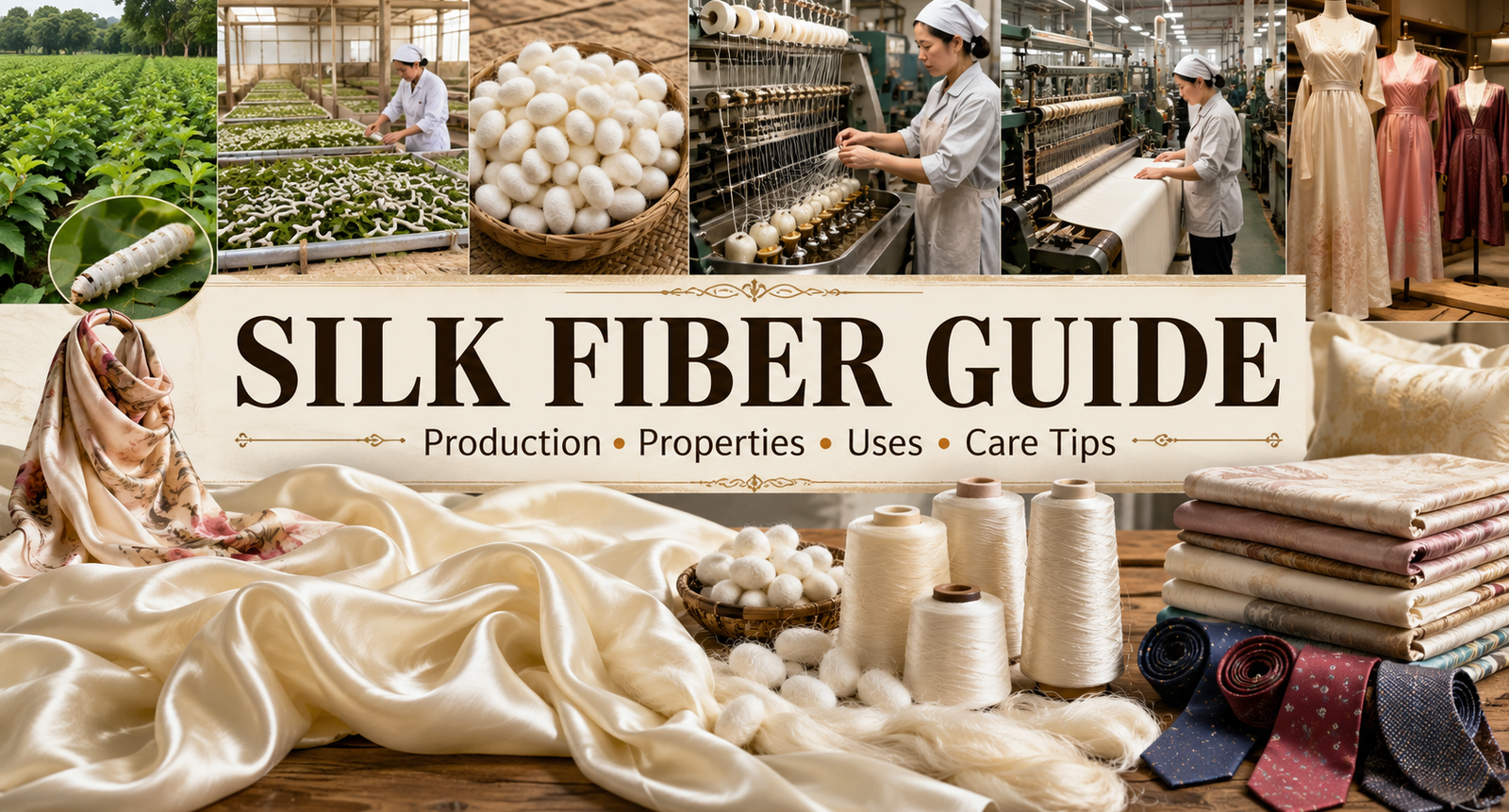
Introduction
Silk has been admired for thousands of years and continues to be one of the most luxurious natural fibers used in the textile industry. Known for its soft texture, natural sheen, lightweight feel, and elegant drape, silk has remained a symbol of quality and sophistication across cultures and generations.
Unlike cotton, linen, or synthetic fibers, silk is a natural protein fiber produced by silkworms. Its unique filament structure allows it to be spun into exceptionally smooth and fine yarns, making it ideal for premium garments, home furnishings, accessories, and decorative textiles.
From ancient Chinese dynasties to modern fashion houses, silk has maintained its reputation as one of the world’s most valuable textile materials. Its combination of beauty, comfort, strength, and versatility makes it a preferred choice for both luxury apparel and specialty textile products.
In this detailed guide, we will explore everything you need to know about silk fiber, including its history, production process, physical and chemical properties, applications, advantages, limitations, and proper care methods.
What Is Silk Fiber?
Silk is a natural animal-based protein fiber produced primarily by the larvae of the silkworm moth. It is the only natural textile fiber that occurs naturally in continuous filament form, which is one of the reasons it possesses such remarkable smoothness and strength.
The most commercially important silk comes from the domesticated silkworm known as Bombyx mori. These silkworms feed almost exclusively on mulberry leaves and spin protective cocoons made from long, continuous silk filaments.
Chemically, silk is composed of proteins formed from amino acids. The primary structural protein found in silk is fibroin, which gives the fiber its strength and durability. A second protein called sericin acts as a natural adhesive, binding the silk filaments together within the cocoon.
What makes silk truly unique is its combination of characteristics:
- Exceptional natural luster
- Smooth and soft hand feel
- High tensile strength
- Excellent drape and flexibility
- Lightweight structure
- Good moisture absorption
- Natural temperature regulation
Because of these properties, silk remains one of the most desirable fibers in the textile and fashion industries.
History and Origin of Silk
The story of silk begins in ancient China, where it was first discovered more than 4,000 years ago. China remained the world’s exclusive producer of silk for centuries and carefully guarded the secrets of silk production.
According to Chinese legend, Empress Si Ling Chi discovered silk when a cocoon accidentally fell into her cup of hot tea. As she attempted to remove it, she noticed that the cocoon could be unwound into a long, delicate thread. This discovery eventually led to the development of sericulture, the organized cultivation of silkworms for silk production.
For hundreds of years, the Chinese monopoly on silk created one of history’s most valuable trade routes: the Silk Road. Merchants transported silk from China across Asia, the Middle East, and Europe, where the fabric became a prized luxury item among royalty and wealthy families.
Today, silk production has expanded globally, with major producing countries including:
- China
- India
- Japan
- Brazil
- Thailand
- Vietnam
Among these nations, China remains the largest producer and exporter of raw silk in the world.
How Silk Is Produced
The process of producing silk is known as sericulture. It involves the cultivation of silkworms and the extraction of silk filaments from their cocoons.
1. Egg Production
Selected silk moths lay hundreds of eggs, which are carefully stored under controlled environmental conditions until incubation begins.
2. Silkworm Rearing
After hatching, the young silkworms are fed fresh mulberry leaves several times a day. During this stage, they grow rapidly and molt multiple times before reaching full maturity.
3. Cocoon Formation
Once fully grown, the silkworm begins spinning a cocoon around itself. It secretes liquid silk from specialized glands and wraps itself in a continuous filament that can extend for hundreds or even thousands of meters.
The cocoon is completed within two to three days and serves as protection during the insect’s transformation into a moth.
4. Harvesting the Cocoons
To preserve the continuous filament structure, most cocoons are collected before the moth emerges. The cocoons are then exposed to heat, which prevents the moth from breaking the silk strands.
5. Reeling the Silk
The cocoons are soaked in warm water to soften the sericin coating. Skilled operators locate the filament ends and unwind several filaments simultaneously to create a single silk yarn.
This process is known as reeling and is one of the most important stages in silk manufacturing.
6. Degumming
The natural sericin gum is removed through a washing process called degumming. This reveals the smooth, lustrous silk fiber that is commonly used in textile production.
7. Spinning and Weaving
The silk yarn is then twisted, spun, dyed, and woven into fabrics that are later used in garments, furnishings, and various luxury textile products.
Leave a Reply