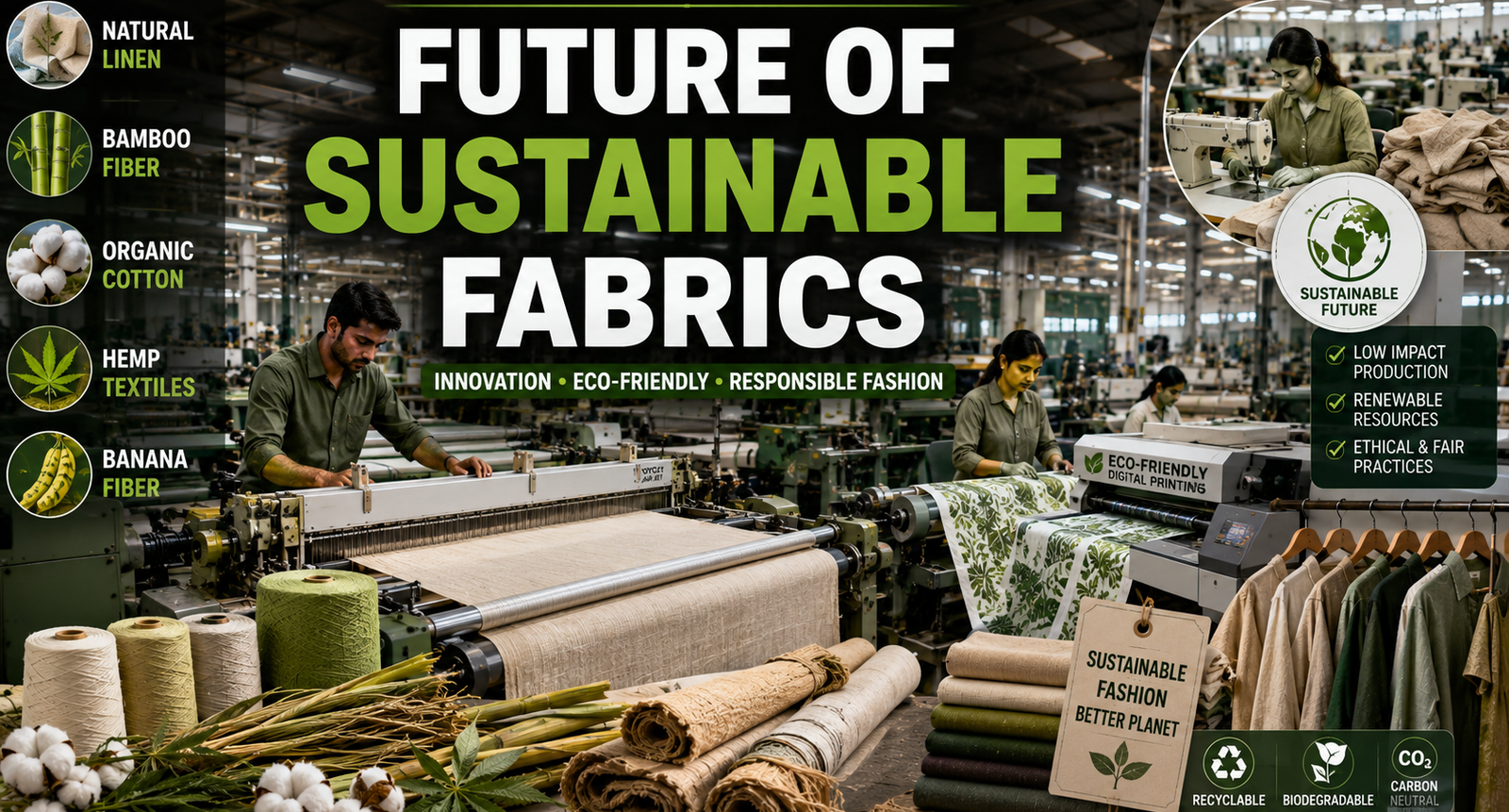
Sustainable Fabrics in Textile Industry | Linen, Bamboo & Plant-Based Fiber Guide
Discover how linen, bamboo, hemp, organic cotton, and plant-based fibers are transforming the textile industry with sustainable and eco-friendly fabric solutions
- Sustainable fabrics
- Bamboo fabric textile industry
- Linen fabric uses
- Plant based textile fibers
- Organic cotton fabrics
- Eco friendly textile industry
- Hemp fabric manufacturing
- Textile sustainability India
- Natural fiber fabrics
- Future textile materials
- Sustainable textile manufacturing
- Textile industry trends 2026
Sustainable Fabrics Are Changing the Future of Textile Industry
The global textile industry is rapidly moving toward sustainable and eco-friendly fabric production. Modern consumers, international brands, and fashion manufacturers are increasingly demanding natural, biodegradable, and environmentally responsible textile materials.
Traditional synthetic fabrics continue dominating mass production, but sustainable fibers such as:
- Linen,
- Bamboo,
- Hemp,
- Organic Cotton,
- Banana Fiber,
- and Plant-Based Textiles
are becoming the future of modern textile manufacturing.
Countries like India are now focusing heavily on sustainable textile development because global buyers increasingly prefer eco-friendly sourcing partners.
Why Sustainable Fabrics Are Growing Rapidly
Several factors are driving the growth of sustainable textiles:
Environmental Awareness
Consumers now care about:
- water usage,
- chemical pollution,
- carbon emissions,
- and biodegradable materials.
Global Fashion Industry Pressure
International brands are demanding:
- organic fabrics,
- recycled materials,
- and sustainable certifications.
Government Regulations
Many countries are introducing stricter environmental compliance standards for textile manufacturing.
Export Market Demand
USA and European buyers increasingly prefer sustainable textile suppliers.
Linen Fabric: One of the Oldest Sustainable Textiles
Linen is made from the flax plant and is considered one of the most eco-friendly textile fibers in the world.
Benefits of Linen Fabric
- Highly breathable
- Strong and durable
- Biodegradable
- Natural cooling effect
- Premium luxury appearance
- Low water consumption during farming
Linen fabrics are widely used in:
- luxury apparel,
- summer garments,
- home textiles,
- hotel linens,
- and premium fashion products.
The global luxury fashion industry continues increasing demand for linen because of its natural texture and premium feel.
Bamboo Fabric: The Fast-Growing Eco Textile
Bamboo fabric is becoming one of the fastest-growing sustainable materials in textile manufacturing.
Bamboo plants grow quickly with:
- less water,
- minimal pesticides,
- and faster regeneration compared to traditional cotton farming.
Advantages of Bamboo Fabric
- Soft texture
- Antibacterial properties
- Moisture absorption
- Breathability
- Eco-friendly production
- Skin-friendly comfort
Bamboo textiles are now used heavily in:
- activewear,
- towels,
- bedsheets,
- undergarments,
- and premium fashion garments.
Organic Cotton Still Dominates Sustainable Fashion
Organic cotton remains the most recognized sustainable textile material globally.
Unlike traditional cotton farming, organic cotton avoids:
- harmful pesticides,
- toxic chemicals,
- and genetically modified seeds.
Why Organic Cotton Is Popular
- Skin-safe material
- Eco-friendly farming
- Export demand
- Sustainable fashion branding
- Better global acceptance
Many international fashion brands now require:
- GOTS-certified cotton,
- traceable supply chains,
- and environmentally responsible sourcing.
India continues playing a major role in global organic cotton production.
Hemp Fabric: Strong Future Potential
Hemp fabric is gaining attention because of:
- extremely strong fibers,
- low environmental impact,
- and durable textile performance.
Hemp requires:
- less water,
- minimal fertilizers,
- and fewer pesticides.
Uses of Hemp Fabrics
- industrial textiles,
- sustainable fashion,
- bags,
- denim blends,
- upholstery,
- and technical textile products.
Experts believe hemp textiles may become a major segment in future sustainable apparel markets.
Banana Fiber & Plant-Based Textile Innovation
The textile industry is also experimenting with:
- banana fiber,
- pineapple fiber,
- corn-based fibers,
- soybean fabrics,
- and agricultural waste textiles.
These plant-based materials help:
- reduce waste,
- improve sustainability,
- and create biodegradable alternatives.
Fashion innovation companies are investing heavily in next-generation plant-based fabrics.
Sustainable Textile Manufacturing in India
India has strong potential to become a global leader in sustainable textile manufacturing because of:
- agricultural resources,
- cotton production,
- skilled workforce,
- and growing textile infrastructure.
Modern Indian textile companies are investing in:
- recycled polyester,
- organic cotton,
- digital printing,
- water-saving dyeing,
- and eco-friendly processing systems.
Textile hubs such as:
- Ichalkaranji,
- Surat,
- Tiruppur,
- and Ahmedabad
are rapidly modernizing production capabilities.
Certifications Becoming Important in Textile Industry
Global buyers now increasingly demand sustainable certifications such as:
- GOTS
- GRS
- OEKO-TEX
- BCI Cotton
Without proper certifications, many manufacturers may struggle in export markets.
Future of Sustainable Fashion Industry
Experts predict sustainable fabrics will dominate future textile production because:
- younger consumers prefer eco-friendly products,
- governments are increasing environmental regulations,
- and brands are under pressure to reduce pollution.
The future textile market will focus heavily on:
- biodegradable fabrics,
- recyclable textiles,
- circular fashion,
- and ethical manufacturing.
Final Thoughts
Sustainable fabrics are no longer a niche segment. They are becoming the foundation of the future textile industry.
Materials such as:
- Linen,
- Bamboo,
- Organic Cotton,
- Hemp,
- and Plant-Based Fibers
are transforming how the world produces and consumes textiles.
Manufacturers who adapt early to sustainable textile trends will likely gain stronger export opportunities, better brand value, and long-term business growth.
About the Author
Priyansh Mehta is a textile industry researcher and content writer focused on sustainable fabrics, textile manufacturing innovation, eco-friendly production systems, and global textile market trends.
Credit & References
This article is created for educational and informational purposes using publicly available textile sustainability research and industry reports.
Reference Sources:
- Textile Today
- Fibre2Fashion
- Sustainable Apparel Coalition
- Organic Cotton Accelerator
- Global Textile Reports
Leave a Reply