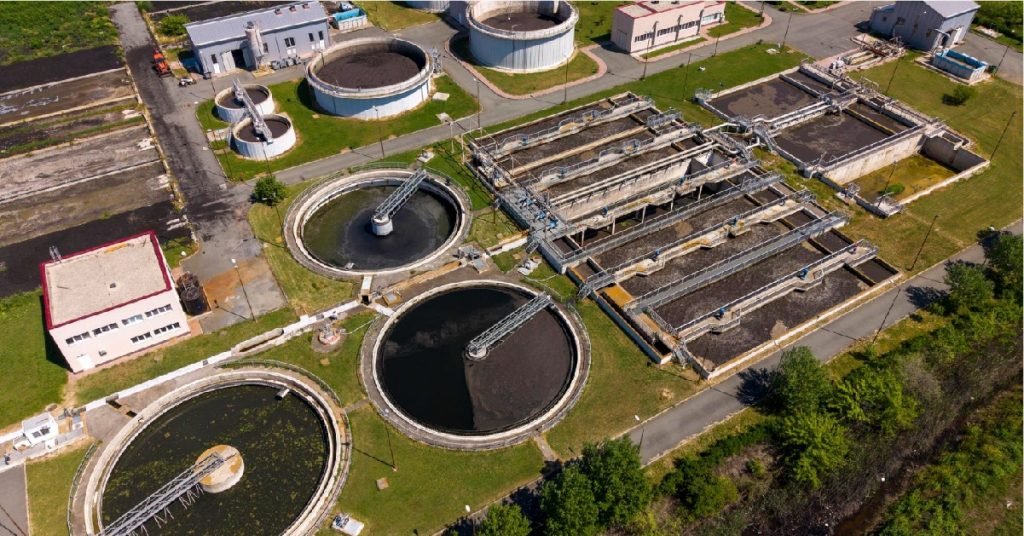
ETP, CETP, ZLD, MEE, MBR, RO, ATFD — the textile industry throws these acronyms around constantly, but rarely explains what each one actually does, or what setting one up actually costs. This is the plain-language, cost-by-cost breakdown.
Costs cited here are drawn from published project reports, government scheme documents, vendor listings, and industry sources, and vary significantly by effluent characteristics, location, and vendor. Treat every figure as a planning range, not a quotation — get a site-specific assessment from a certified environmental engineer before budgeting a project.
Start with the terms
ETP, CETP, ZLD and the rest: what each acronym actually means
If you’ve ever sat in a meeting where someone said “we need to upgrade the CETP to ZLD with MEE and ATFD” and nodded along without fully following it, this section is for you.
Effluent Treatment Plant
A treatment system owned and operated by a single factory, treating only that factory’s own wastewater before discharge or reuse.
Common Effluent Treatment Plant
A shared treatment facility serving multiple factories in an industrial estate or cluster — the standard model for small and medium textile processing units that can’t justify an individual ETP.
Zero Liquid Discharge
A treatment standard, not a single machine — the end goal of recovering essentially all water for reuse and leaving only solid waste, with no liquid effluent discharged externally.
Reverse Osmosis
A membrane filtration stage that removes dissolved salts and most dissolved solids, usually the first major step in getting effluent clean enough to reuse.
Multi-Effect Evaporator
Uses steam across several chambers (“effects”) to concentrate the leftover brine from RO into a smaller, more concentrated liquid — the most energy-intensive stage in a typical ZLD chain.
Agitated Thin Film Dryer
The final stage — evaporates the remaining moisture from MEE concentrate to produce a dry, disposable salt cake, completing the “zero liquid” part of ZLD.
Membrane Bioreactor
Combines biological treatment with membrane filtration in one step, increasingly used to replace a conventional secondary clarifier in textile CETPs.
Mechanical Vapor Recompression
A newer evaporator technology that reuses its own vapor for heating instead of burning fresh steam — cuts energy cost sharply compared to conventional MEE.
The three numbers that decide your treatment cost
Total Dissolved Solids, Biochemical Oxygen Demand, and Chemical Oxygen Demand are the core water-quality metrics regulators check. Higher values in your raw effluent mean a more expensive treatment train to reach compliant discharge levels.
The textile wastewater treatment process, step by step
How a textile effluent treatment plant actually works
Whether it’s a small factory’s own ETP or a large CETP serving hundreds of units, textile wastewater treatment follows broadly the same sequence — what changes is scale, and how far along the chain you go.
EQUALIZATION→
PRIMARY TREATMENT→
BIOLOGICAL (SECONDARY)→
TERTIARY / RO→
MEE→
ATFD
Screening and equalization
Raw textile effluent first passes through screens to remove rags, lint, and large solids, then into an equalization tank that balances out the wide swings in pH and pollutant concentration a dye-house produces batch to batch. Skipping this step is one of the most common reasons downstream biological treatment fails — a sudden acidic or alkaline batch can kill the bacteria doing the biological treatment work.
Primary treatment: coagulation, flocculation, and clarification
Chemical coagulants are dosed to destabilize the fine, often intensely coloured particles typical of dye effluent, which then clump together (flocculate) and settle out in a clarifier as sludge. This stage alone removes a large share of colour and suspended solids before the water ever reaches biological treatment.
Secondary (biological) treatment
An aeration tank promotes bacterial growth that consumes dissolved organic matter, reducing BOD and COD substantially. A secondary clarifier — or, in newer plants, an MBR membrane — separates the biological solids (sludge) from the treated water.
Tertiary treatment and reverse osmosis
For a plant discharging into a river or sewer, tertiary filtration (sand or activated carbon) may be the final step. For a plant working toward ZLD, this is where Reverse Osmosis enters — RO membranes reject most remaining dissolved salts, producing clean permeate water for reuse and a concentrated reject stream (brine) that carries forward to evaporation.
Evaporation and solid waste recovery: MEE and ATFD
The RO reject brine still contains a high concentration of dissolved salts and can’t simply be discharged. A Multi-Effect Evaporator boils this down in stages, recovering additional distilled water and concentrating the remainder further. What’s left goes to an Agitated Thin Film Dryer, which drives off essentially all remaining moisture, leaving a dry salt cake that’s disposed of as solid waste — completing the “zero liquid” loop.
Cost breakdown, part 1
Individual ETP cost for a single textile unit
An individual ETP makes sense for a standalone unit — typically a larger processing house that isn’t part of an organised industrial estate, or one whose effluent characteristics don’t suit a shared CETP.
Small to mid-size ETP
₹10 lakh – ₹1 crore
Covers basic physico-chemical plus biological treatment for a small-to-medium unit discharging into a sewer or watercourse under standard (non-ZLD) norms. The wide range reflects capacity (KLD — kilolitres per day of effluent handled) and the complexity of the effluent, since dyeing effluent needs more chemical dosing and colour removal than simple washing or sizing effluent.
Operating cost for a conventional ETP (chemicals, power, labour, sludge disposal) is far lower than a ZLD system — typically a fraction of the ₹180–350 per kilolitre operating cost quoted for full ZLD trains below — but a standalone ETP alone usually isn’t sufficient where regulators mandate ZLD, which is now the case across most major textile clusters covered in pollution enforcement action (Tirupur, Balotra, Pali, Panipat, Bhilwara, and Tarapur among them).
Cost breakdown, part 2
CETP cost, and the subsidy scheme that changes the math
A Common Effluent Treatment Plant is the standard model for clusters of small and medium textile units — it pools capital and operating cost across hundreds of factories rather than requiring each to build its own plant. Real historical project costs illustrate the range well:
| CETP | Capacity | Units served | Capital cost |
|---|---|---|---|
| Jasol (Rajasthan) | 2.5 MLD | 60 dyeing & printing units | ₹2.89 crore (100% grant) |
| Balotra original CETP | 6 MLD | ~319 processing units | ₹2.95 crore |
| Bithuja (Rajasthan) | 30 MLD | 161 bleaching & mercerizing units | ~₹11.5 crore |
| Jodhpur (Sangaria) | 20 MLD | 150 textile + 100 steel units | ₹10 crore |
| Tirupur — 18 CETPs with ZLD | Cluster-wide | Knitwear & garment cluster | ₹703.29 crore total (₹300 cr. as direct subsidy) |
The government subsidy that makes CETPs viable for MSMEs
Because individual small-scale textile units usually can’t self-fund treatment infrastructure, the Ministry of Environment, Forest and Climate Change runs a centrally sponsored CETP scheme specifically for clusters of small-scale industrial units. Under this scheme:
- Central and state governments together fund up to 50% of project cost for a CETP without ZLD, and up to a higher ceiling for projects that include ZLD provisions.
- The ceiling is ₹20 crore for a non-ZLD project and ₹40 crore for a ZLD-enabled project, with central funding capped at roughly ₹1.5 crore per MLD of capacity for non-ZLD projects.
- 30% of project cost can be financed as a loan from financial institutions, meaning the industry cluster’s own cash contribution is typically a much smaller share of the total.
- Assistance is released in four installments tied to project milestones — implementing body identified, financing tied up, State Pollution Control Board consent obtained, and State Government contribution committed.
Several states layer additional support on top of the central scheme — Gujarat’s industrial policy offers up to 75% assistance (inclusive of central funding) for CETPs within self-sustained industrial parks, and Karnataka’s industrial policy offers a one-time capital subsidy of up to 50% of CETP cost, capped at ₹5 crore.
Operating cost reality check
Subsidy covers capital cost — not day-to-day running cost
The scheme funds construction, not operations. CETPs are meant to be self-supporting for loan repayment and operating expenses through per-member charges based on effluent volume or bales processed — historically in the ₹6–7 per cubic metre range for treatment up to secondary level in Rajasthan’s textile clusters, though this rises substantially where ZLD-level treatment is required.
Cost breakdown, part 3
Zero Liquid Discharge (ZLD) plant cost in India
ZLD is where cost jumps sharply, because you’re adding RO, MEE, and ATFD stages on top of everything a conventional ETP or CETP already does. Quoted capital costs vary widely by source and by the underlying technology, but converge around a few clear bands:
| Capacity | Typical capital cost | Notes |
|---|---|---|
| Small (≈50 KLD) | ₹15 lakh – ₹40 lakh | Entry-level ZLD packages marketed to small processing units |
| Medium (100 KLD) | ₹1 crore – ₹1.5 crore (conventional) | Rises toward ₹3–3.5 crore for full RO+MEE+ATFD trains depending on effluent complexity |
| Large industrial-scale | ₹1 crore – ₹5 crore+ | Scales with capacity, effluent TDS, and automation level |
| Very large (1,000+ m³/day) | Multi-crore to tens of crore | Comparable global benchmarks run into several million USD at this scale |
Why ZLD operating cost is the real budget item
Unlike capital cost, which is a one-time number, ZLD operating cost compounds every single day of production — and this is where most cost-planning mistakes happen. Typical figures:
- ₹180–350 per kilolitre treated for a conventional RO + MEE + ATFD train, driven overwhelmingly by steam energy consumption in the evaporation stages.
- Energy intensity of 80–100 kWh/m³ for ZLD, compared to just 0.5–1.5 kWh/m³ for conventional (non-ZLD) treatment — a 50 to 100x difference that explains why ZLD is unpopular with smaller units even where mandated.
- Steam consumption alone can be 40–60% of total ZLD operating cost, making the evaporation stage the single highest-leverage point for cost reduction.
The real five-year cost comparison
Conventional MEE vs. MVR-based evaporation
For a 100 KLD ZLD plant, a conventional steam-based system may start around ₹3 crore in capital cost, while a Mechanical Vapor Recompression (MVR) based system costs more upfront — roughly ₹3.5 crore — but eliminates most external steam demand. Over five years, cumulative cost of ownership for the conventional system can reach roughly ₹21 crore, while the MVR-based system stays closer to ₹7.5 crore — a lifecycle cost roughly 65% lower, with payback on the higher upfront investment in as little as 1.5 years from steam savings alone.
This is the single most important number in this article for anyone actually budgeting a ZLD project: the cheapest plant to build is very often not the cheapest plant to run, and evaluating ZLD purely on capital cost — which is how most vendor quotes are framed — routinely leads buyers to the more expensive option over any realistic operating horizon.
What drives ZLD cost up or down for a specific project
- Raw effluent TDS level — higher salt content means more evaporation load, directly increasing both capital sizing and steam/power operating cost.
- Effluent volume (KLD/MLD) — cost doesn’t scale linearly; larger plants achieve better per-kilolitre economics than very small individual-unit ZLD systems.
- Technology choice — MVR/LTE-based evaporation vs. conventional steam-fed MEE, discussed above.
- Automation and monitoring level — the Supreme Court’s 2026 order on the Jojari river cluster (covered in our companion article on textile water pollution) now mandates real-time SCADA/IoT monitoring for that region’s CETPs, which adds to capital cost but reduces compliance risk and, per vendor-reported data, can cut operating cost by roughly 20% through predictive maintenance and optimisation.
- Land availability — ZLD-compatible plants need meaningfully more land than conventional treatment, which is a genuine constraint for small and medium units on sub-10,000 square yard plots, sometimes forcing a shared CETP-based ZLD approach instead of an individual one.
Real numbers in context
What the cost debate looks like on the ground
Tirupur’s ₹703 crore CETP-ZLD program
Tirupur’s knitwear cluster — one of India’s longest-running ZLD case studies, dating to a 2008 Tamil Nadu High Court mandate — illustrates both the cost and the payoff at scale. The Union and State governments jointly sanctioned ₹703.29 crore to establish 18 CETPs with ZLD systems and upgrade existing plants, with ₹300 crore of that as direct capital subsidy split between the Centre and State. The result, per industry case studies, has been water recycling rates of 92–95% with salt recovery for reuse in the dyeing process itself — turning part of what would otherwise be pure treatment cost into a partially offsetting recovery stream.
The counter-example is just as instructive: in the Balotra/Jodhpur cluster covered in our companion pollution article, CETPs built decades ago at costs as low as ₹2.89–2.95 crore have proven undersized and, per 2026 court-appointed committee findings, poorly maintained relative to today’s effluent volumes — a reminder that the cheapest compliant CETP today can become tomorrow’s non-compliant liability if industry growth outpaces the plant’s design capacity.
Which one is right for your business
ETP, CETP, or ZLD: a practical decision framework
Choose an individual ETP if…
You’re a standalone unit not part of an organised industrial estate, your effluent volume doesn’t justify shared infrastructure, and your local discharge norms don’t yet mandate ZLD.
Join or push for a CETP if…
You’re a small or medium unit in an established industrial cluster — this is almost always the lower-cost route per unit, and the one central/state subsidy schemes are actually designed to fund.
Budget for ZLD if…
You operate in a cluster under an active NGT, court, or pollution board mandate (Tirupur, Balotra, Pali, Jodhpur, Panipat, Bhilwara, Tarapur, and increasingly others) — ZLD compliance here isn’t optional, only the technology choice within it is.
Evaluate MVR over conventional MEE if…
You’re planning a 5+ year operating horizon and can secure the higher upfront capital — the lifecycle cost advantage is substantial enough to change the entire economics of the decision.
One point worth stating plainly, since it’s easy to miss in vendor conversations: ZLD adoption is generally estimated to raise the cost of dyeing and coloring operations specifically by 6–10%, since that’s the part of the textile value chain generating the effluent load ZLD is designed to handle. Weaving-only operations (like Ichalkaranji’s powerloom base) carry a far smaller share of this cost burden directly, since their own effluent load is comparatively low — the cost falls mainly on the processing and dyeing stage of the chain.
Straight answers
Frequently asked questions
?What is the difference between ETP and CETP?
An ETP is built and operated by a single factory for its own effluent. A CETP is a shared facility serving multiple factories in an industrial estate or cluster, splitting both capital and operating cost across all member units — the standard model for MSME-heavy textile clusters.
?What is the ZLD full form and what does it actually require?
Zero Liquid Discharge. It requires that essentially no liquid effluent leaves the plant — water is recovered and reused, and only solid waste (dried salts) is generated for disposal. It’s a discharge standard, achieved using a combination of RO, MEE, and ATFD technology rather than a single machine.
?How much does a ZLD plant cost per KLD in India?
Roughly ₹1–3 lakh in capital cost per KLD of capacity is a reasonable planning range for conventional systems, though this varies significantly with effluent TDS and technology choice. Operating cost separately runs ₹180–350 per kilolitre treated, driven mainly by evaporation-stage energy consumption.
?Is there government subsidy for setting up a CETP?
Yes — the Ministry of Environment, Forest and Climate Change’s centrally sponsored CETP scheme funds up to 50% of project cost (higher with state top-ups in states like Gujarat), with a ceiling of ₹20 crore for non-ZLD projects and ₹40 crore for ZLD-enabled projects. A further 30% can be financed through institutional loans, meaning industry’s direct cash contribution is often a minority share of total cost.
?Why is ZLD operating cost so much higher than a conventional ETP?
Energy. Conventional treatment uses roughly 0.5–1.5 kWh per cubic metre; ZLD’s evaporation stages (MEE and ATFD) push that to 80–100 kWh per cubic metre — a difference driven almost entirely by the steam or electricity needed to evaporate water rather than just filter or biologically treat it.
?Is MVR-based ZLD actually worth the higher upfront cost?
For most operations running continuously over several years, yes — published lifecycle comparisons show roughly 65% lower total cost of ownership over five years versus conventional steam-fed MEE, with payback periods as short as 1.5 years from steam savings alone. It’s a better fit for units planning long-term operation than for short-horizon or seasonal facilities.
?Can a small textile unit avoid ZLD cost entirely?
Only by joining a CETP that already provides ZLD-level treatment rather than building individual ZLD infrastructure — this is specifically why the government’s CETP subsidy ceiling is higher for ZLD-enabled cluster projects, to make shared ZLD financially reachable for units that could never afford it individually.
Leave a Reply