Author: Kunal Shah
Published on: TextileERPGuide.com
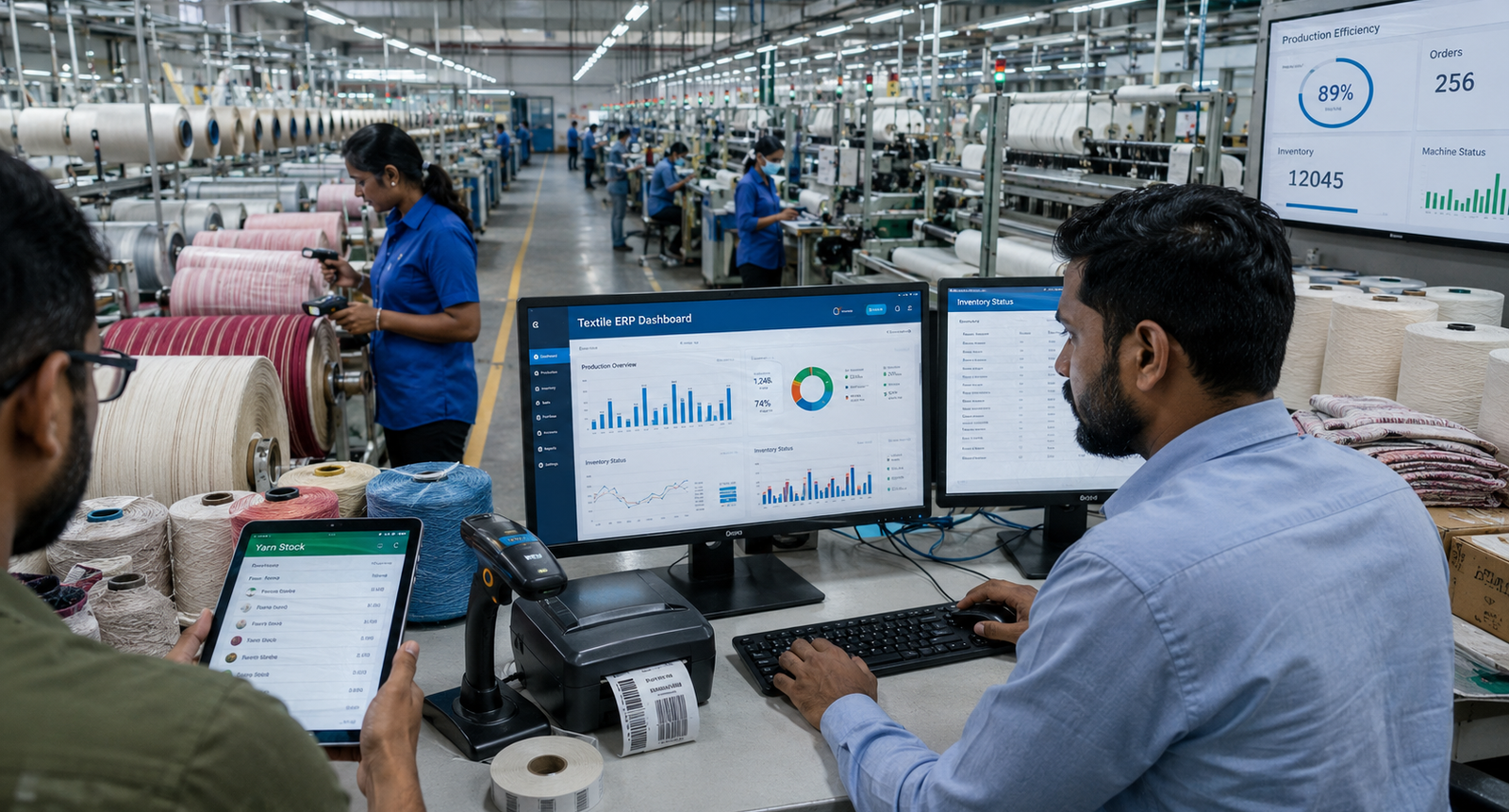
Textile ERP Software Demand Growing Rapidly in 2026
The textile and garment industry is changing faster than ever before. From fabric manufacturing units to garment exporters and wholesale textile traders, businesses are now moving toward Textile ERP Software solutions to improve efficiency, reduce wastage, manage inventory, and increase profits.
In 2026, searches related to:
- Textile ERP Software
- Garment ERP System
- Fabric Inventory Management
- Textile Production Software
- Textile Business Automation
- ERP for Garment Industry
- Textile Manufacturing ERP
- Textile Stock Management
have increased significantly across Google and business platforms.
Textile manufacturers are now realizing that manual Excel sheets and traditional accounting systems are no longer enough to handle modern production complexity.
What Is Textile ERP Software
Textile ERP Software is a complete business management system specially designed for textile mills, garment factories, fabric traders, dyeing units, and apparel manufacturers.
ERP stands for:
Enterprise Resource Planning
It helps businesses manage:
- Fabric inventory
- Yarn stock
- Purchase orders
- Sales management
- Production planning
- Dyeing process
- Dispatch tracking
- GST billing
- Accounting
- Warehouse management
all from one centralized software dashboard.
Why Textile Businesses Need ERP in 2026
The textile industry operates on:
- High stock movement
- Multiple fabric qualities
- Different GSM and widths
- Bulk orders
- Production deadlines
- Complex costing
Managing all these processes manually creates:
- Stock confusion
- Order delays
- Fabric wastage
- Incorrect billing
- Production errors
This is why textile businesses are rapidly adopting textile ERP solutions.
Major Problems Faced Without Textile ERP
1. Inventory Mismatch
Many textile businesses struggle with:
- incorrect stock reports
- missing fabric rolls
- yarn balance confusion
- dispatch mismatches
ERP software provides real-time inventory tracking.
2. Production Delay
Without proper planning:
- machines stay idle
- orders get delayed
- buyers become unhappy
Production planning modules help optimize workflow.
3. Incorrect Costing
Many factories still calculate:
- GSM costing
- yarn consumption
- processing cost
- weaving cost
manually.
This leads to profit loss.
Modern textile ERP systems automate costing calculations accurately.
4. Fabric Traceability Issues
Export buyers increasingly demand:
- batch tracking
- roll traceability
- quality records
ERP systems simplify compliance management.
Features of Modern Textile ERP Software
Fabric Inventory Management
Track:
- fabric rolls
- GSM
- width
- shade
- lot number
- stock balance
in real time.
Yarn Management
Manage:
- yarn inward
- yarn consumption
- party-wise stock
- count-wise inventory
efficiently.
Production Planning
ERP software helps:
- assign machine schedules
- monitor weaving progress
- track processing stages
- reduce downtime
Purchase & Sales Management
Manage:
- supplier records
- buyer orders
- GST invoices
- payment status
- dispatch challans
in one dashboard.
Textile Costing Calculator
Advanced textile ERP systems include:
- GSM calculator
- yarn costing calculator
- weaving cost calculator
- dyeing cost analysis
- profit margin reports
These tools help businesses improve pricing accuracy.
Why Garment Manufacturers Prefer ERP Systems
Garment factories face daily challenges like:
- fabric shortage
- stitching delays
- inventory leakage
- labour management
- order tracking issues
Garment ERP software helps improve:
- production efficiency
- order tracking
- cutting planning
- barcode management
- shipment coordination
This improves profitability and buyer satisfaction.
Textile ERP and Automation Trends in 2026
Modern textile ERP platforms now use:
- Artificial Intelligence
- Cloud Technology
- Mobile Dashboard Access
- Barcode Tracking
- Automated Reporting
- Real-Time Analytics
Many software providers are also integrating:
- WhatsApp notifications
- AI production forecasting
- automated stock alerts
- cloud backup systems
into ERP platforms.
Benefits of Textile ERP Software
Increased Productivity
Automation reduces manual workload and improves operational speed.
Better Inventory Control
Real-time stock visibility reduces wastage and theft.
Faster Order Processing
Orders move faster from production to dispatch.
Improved Profitability
Accurate costing and production efficiency improve margins.
Better Decision Making
Analytics dashboards provide valuable business insights.
Why Textile ERP Is Important for Exporters
Textile exporters must manage:
- bulk fabric inventory
- production timelines
- buyer compliance
- export documentation
ERP software helps simplify:
- export order management
- packing details
- shipment tracking
- quality inspection records
which improves international business operations.
Textile ERP for Small and Medium Businesses
Many small textile traders think ERP is only for large factories.
That is outdated thinking.
Modern cloud-based textile ERP software is now affordable even for:
- wholesalers
- fabric traders
- garment shops
- small dyeing units
- local manufacturers
Businesses using ERP often scale faster because they operate more systematically.
Best SEO Keywords for Textile ERP Websites
Trending SEO keywords include:
- Textile ERP Software
- Garment ERP System
- Textile Inventory Management
- Textile Production Software
- Fabric ERP Solution
- Textile Business Automation
- Textile Stock Management
- ERP for Textile Industry
- Garment Manufacturing Software
- Textile ERP India
Using these keywords naturally improves ranking opportunities in Google search.
Why Textile ERP Content Performs Well in SEO
Textile businesses actively search for:
- software solutions
- production calculators
- inventory management tools
- textile automation systems
This creates strong long-term SEO demand.
Unlike viral entertainment traffic, textile ERP traffic often has:
- higher commercial intent
- better CPC
- stronger conversion potential
This makes textile ERP websites more valuable for long-term organic growth.
Future of Textile Industry Automation
The future textile industry will heavily depend on:
- smart factories
- AI-driven planning
- automated inventory systems
- cloud ERP solutions
- digital production monitoring
Businesses still depending entirely on manual systems may struggle to compete in coming years.
Factories adopting automation early will gain:
- better efficiency
- lower operational cost
- faster production cycles
- improved buyer trust
Final Thoughts
Textile ERP Software is no longer optional for modern textile businesses. It is becoming a necessity for survival and growth in a highly competitive market.
From fabric inventory management to garment production planning and export tracking, ERP systems help textile businesses operate smarter, faster, and more profitably.
For textile manufacturers, wholesalers, and exporters looking to scale efficiently, investing in the right textile ERP solution can become a major competitive advantage in 2026 and beyond.
Reference Sources
- Textile industry automation reports
- Garment manufacturing software studies
- ERP technology trend analysis
- Textile production management discussions
- Industry workflow optimization research
SEO Meta Title
Textile ERP Software 2026: Smart Automation for Garment & Fabric Industry
SEO Meta Description
Discover how Textile ERP Software helps garment manufacturers and fabric businesses automate inventory, production, costing, and textile management efficiently in 2026.
Focus Keywords
Textile ERP Software, Garment ERP System, Textile Inventory Management, Textile Production Software, ERP for Textile Industry, Textile Business Automation
Leave a Reply