Author: Manav Kulkarni
Published on: TextileERPGuide.com
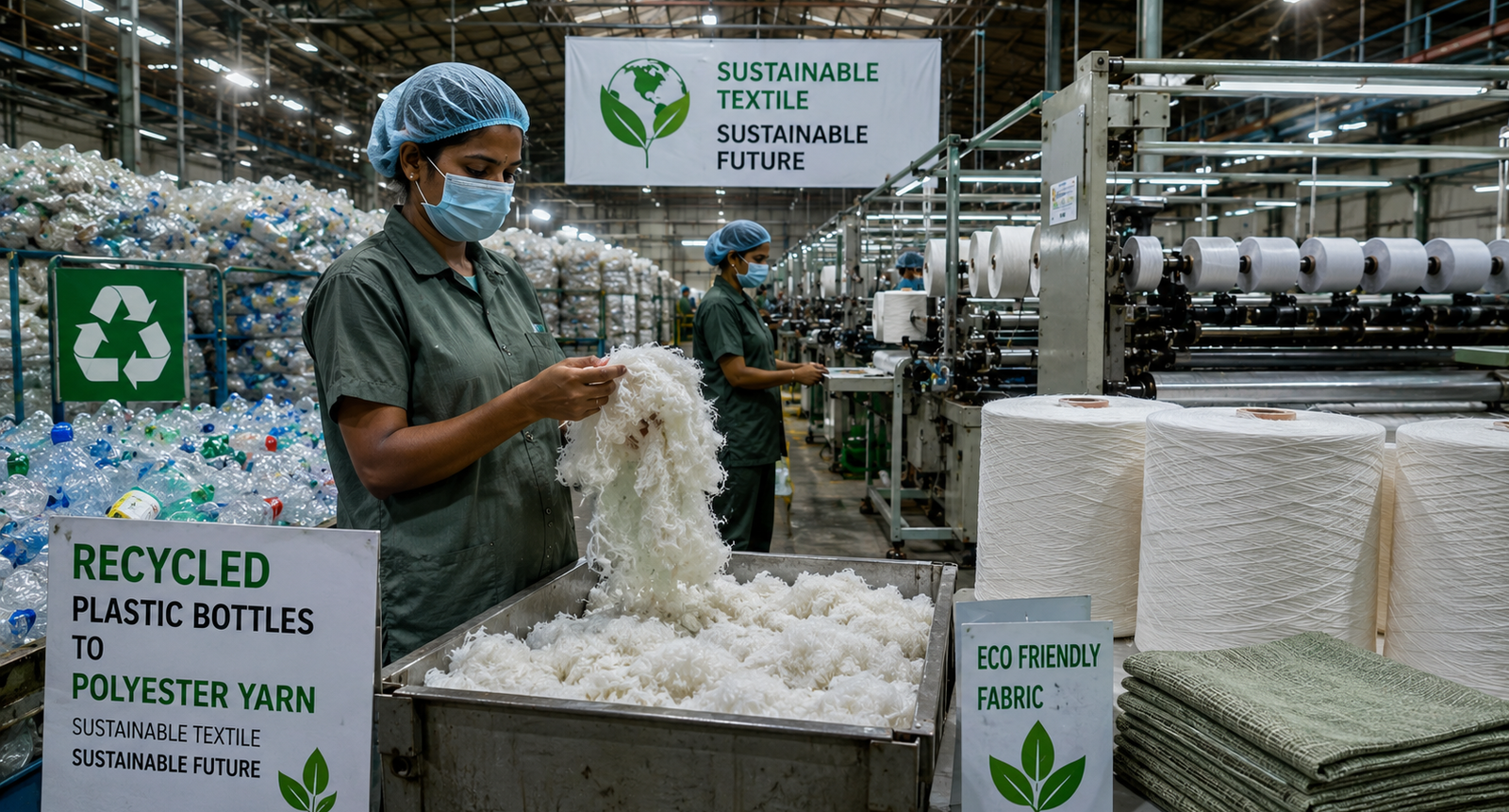
Recycled Polyester Yarn Industry Growing Rapidly in India
India’s textile industry is witnessing a major shift toward sustainability as recycled polyester yarn made from plastic waste is becoming one of the fastest-growing segments in textile manufacturing.
With rising global demand for eco-friendly fabrics, sustainable garments, and recycled textile materials, Indian textile manufacturers are increasingly investing in:
- Recycled Polyester Yarn
- PET Bottle Recycling
- Sustainable Textile Manufacturing
- Recycled Fabric Production
- Eco-Friendly Textile Innovation
- GRS Certified Yarn
- Sustainable Fashion Materials
Searches related to:
- Recycled polyester yarn India
- PET bottle yarn manufacturing
- Sustainable textile industry
- Eco-friendly fabric production
- Recycled yarn manufacturers
- GRS polyester yarn
- Plastic waste textile innovation
are trending strongly across Google and textile business platforms.
Global buyers are now actively demanding sustainable textile sourcing, making recycled polyester one of the biggest textile opportunities in 2026.
What Is Recycled Polyester Yarn
Recycled polyester yarn, often called rPET yarn, is manufactured using recycled plastic waste such as:
- PET bottles
- Plastic packaging waste
- Industrial polyester waste
- Textile scrap materials
Instead of producing virgin polyester from petroleum-based chemicals, manufacturers recycle existing plastic waste into usable textile fibres.
The process helps:
- reduce plastic pollution
- lower carbon emissions
- minimize landfill waste
- improve sustainable textile production
This innovation is becoming highly important for the future of global textile manufacturing.
How Plastic Bottles Become Polyester Yarn
The recycling process involves multiple industrial stages.
Collection of Plastic Waste
Used PET bottles and plastic materials are collected from:
- recycling centers
- waste management systems
- industrial scrap channels
Cleaning & Sorting
Plastic waste is:
- cleaned
- separated
- sorted by quality and color
to ensure proper yarn manufacturing quality.
Crushing & Flake Production
The bottles are crushed into small plastic flakes.
Melting & Fiber Extrusion
The flakes are melted and converted into polyester fibres.
Yarn Spinning
The fibres are spun into:
- recycled polyester yarn
- filament yarn
- staple fiber yarn
which can later be used for fabric manufacturing.
Why Global Fashion Brands Prefer Recycled Polyester
International fashion brands are aggressively shifting toward sustainable textile sourcing.
Brands now focus heavily on:
- ESG compliance
- sustainability targets
- carbon footprint reduction
- eco-friendly manufacturing
Because of this, recycled polyester fabric demand is increasing rapidly in:
- sportswear
- activewear
- fashion apparel
- bags
- footwear
- uniforms
- home textiles
Many buyers now specifically request:
- GRS Certified Recycled Polyester Yarn
- sustainable textile traceability
- recycled fabric documentation
from textile suppliers.
India Becoming a Major Recycled Yarn Manufacturing Hub
India has strong potential in recycled textile manufacturing because of:
- large textile infrastructure
- polyester manufacturing capacity
- growing recycling ecosystem
- export-oriented textile industry
Major textile clusters including:
- Surat
- Ichalkaranji
- Panipat
- Tiruppur
- Ludhiana
are increasingly exploring recycled polyester production opportunities.
Surat especially is emerging as a major hub for:
- polyester processing
- filament yarn production
- recycled textile innovation
due to its strong synthetic textile ecosystem.
Benefits of Recycled Polyester Yarn
Reduces Plastic Waste
Recycling PET bottles helps reduce environmental pollution significantly.
Lower Carbon Emissions
Compared to virgin polyester production, recycled polyester often consumes less energy.
Growing Export Demand
International buyers increasingly prefer sustainable textile suppliers.
Better Brand Value
Textile businesses using recycled materials improve their sustainability image.
Future Industry Growth
Eco-friendly textiles are expected to become one of the fastest-growing textile categories globally.
Challenges in Recycled Textile Manufacturing
Despite strong growth potential, several challenges still exist.
Quality Consistency
Maintaining consistent yarn quality remains difficult in recycled materials.
Certification Requirements
Export buyers increasingly demand:
- GRS certification
- sustainability audits
- traceability systems
Higher Processing Complexity
Recycling operations require:
- advanced machinery
- quality control systems
- specialized production management
Cost Pressure
Recycled yarn pricing can fluctuate depending on:
- plastic waste availability
- energy cost
- processing technology
Technical Textiles and Recycled Polyester Growth
Recycled polyester is also gaining popularity in technical textile applications.
Industries using recycled polyester fabrics include:
- automotive textiles
- industrial fabrics
- sportswear
- safety garments
- luggage materials
- outdoor products
Technical textile demand is expected to increase rapidly in coming years, creating more opportunities for recycled polyester manufacturers.
Sustainable Fashion Becoming a Global Trend
Consumers are becoming more environmentally conscious.
Fashion buyers now actively search for:
- sustainable clothing
- recycled fabrics
- eco-friendly garments
- ethical fashion brands
Social media platforms are also heavily promoting:
- sustainable fashion trends
- eco-friendly lifestyle content
- recycled textile innovation
This shift is pushing brands and manufacturers toward greener textile production methods.
Why Textile ERP Software Is Important for Recycled Textile Units
Recycled textile manufacturing involves complex inventory and traceability management.
Textile ERP Software helps manufacturers manage:
- recycled raw material stock
- yarn lot tracking
- production planning
- GRS compliance records
- inventory traceability
- fabric dispatch tracking
- costing calculations
Modern ERP systems are becoming essential for sustainable textile businesses because buyers increasingly demand transparency and documentation.
SEO Keywords Trending in Sustainable Textile Industry
Popular SEO keywords currently include:
- Recycled Polyester Yarn
- PET Bottle Recycled Yarn
- Sustainable Textile Industry
- Eco-Friendly Fabric Manufacturing
- Recycled Fabric Production
- GRS Certified Polyester Yarn
- Sustainable Fashion Materials
- Textile Recycling Innovation
- Recycled Yarn Manufacturers India
- Sustainable Textile Manufacturing
Using these keywords naturally improves search ranking opportunities for textile websites.
Why Sustainable Textile Content Performs Well in SEO
Sustainability-related textile content performs strongly because:
- global buyers actively search eco-friendly suppliers
- fashion brands prioritize sustainability
- textile businesses follow industry innovation
- environmental topics receive high engagement
Unlike general textile traffic, sustainable textile searches often carry:
- higher business intent
- stronger export relevance
- better long-term SEO value
This makes recycled textile content highly valuable for textile blogs and B2B websites.
Future of Recycled Polyester in India
Industry experts believe recycled polyester production will continue expanding rapidly due to:
- environmental regulations
- export demand
- sustainable fashion growth
- government sustainability initiatives
- global ESG pressure
Future textile manufacturing may increasingly depend on:
- circular economy systems
- waste recycling technology
- low-carbon textile production
- sustainable supply chains
Textile manufacturers investing early in sustainable innovation may gain major competitive advantages globally.
Final Thoughts
Recycled polyester yarn from plastic waste is no longer just an environmental experiment. It is becoming a major business opportunity for the Indian textile industry.
As global brands move toward sustainable sourcing and eco-friendly manufacturing, recycled textile production is expected to play a crucial role in the future of textile exports and fabric innovation.
For Indian textile businesses, sustainability is no longer optional. It is rapidly becoming a core requirement for long-term growth, export competitiveness, and global market relevance.
Reference Sources
- Textile sustainability industry reports
- GRS certification guidelines
- Recycled textile manufacturing studies
- Sustainable fashion market research
- Indian textile industry innovation reports
SEO Meta Title
Recycled Polyester Yarn from Plastic Waste: India Textile Industry Innovation 2026
SEO Meta Description
Discover how recycled polyester yarn made from plastic waste is transforming India’s textile industry through sustainable fabric manufacturing and eco-friendly textile innovation.
Focus Keywords
Recycled Polyester Yarn, PET Bottle Recycled Yarn, Sustainable Textile Industry, Eco-Friendly Fabric Manufacturing, Recycled Fabric Production, Textile Recycling Innovation
Leave a Reply