Author: Vivek Desai
Published on: TextileERPGuide.com
Indian Textile Industry Showing Strong Growth in 2026
India’s textile industry is once again becoming one of the most discussed manufacturing sectors in 2026. Rising textile exports, new government incentives, increasing global demand, and expansion of textile manufacturing investments are creating major opportunities for Indian textile businesses.
Recently, keywords like:
- India textile industry news
- Textile exports India 2026
- Textile PLI scheme
- Indian garment industry growth
- Textile manufacturing India
- MMF textile production
- Textile export update
- Textile business news India
have started trending heavily across Google search and textile business platforms.
According to recent government data, India’s textile exports registered steady growth during FY 2025–26, showing resilience despite global market challenges.
India Textile Exports Register Growth in FY 2025–26
India’s textile exports, including handicrafts, increased from approximately ₹3.09 lakh crore to ₹3.16 lakh crore during FY 2025–26, registering growth of around 2.1%.
The major export contributors included:
- Ready-Made Garments (RMG)
- Cotton Textiles
- Man-Made Fibre Textiles
- Handloom Products
- Technical Textiles
Ready-made garments remained the largest export category for India’s textile industry.
This growth is important because global textile markets are still facing:
- supply chain instability
- freight fluctuations
- rising manufacturing competition
- changing sourcing strategies
Despite these challenges, India continues strengthening its global textile position.
Why Global Buyers Are Focusing on India
Many international buyers are shifting sourcing strategies away from overdependence on single-country manufacturing.
India is becoming attractive because of:
- strong cotton production
- large workforce
- textile manufacturing ecosystem
- improving infrastructure
- government textile incentives
Industry experts believe India is gaining opportunities from:
- China+1 sourcing strategy
- global supply chain diversification
- Free Trade Agreements (FTAs)
- growing technical textile demand
Recent India-EU and India-UK trade developments are also expected to improve textile export competitiveness significantly.
PLI Scheme Driving Textile Investments
One of the biggest developments in India’s textile industry is the expansion of the Production Linked Incentive (PLI) Scheme.
The government recently approved multiple new textile applications under the scheme involving investments worth thousands of crores.
The PLI scheme mainly focuses on:
- MMF apparel
- technical textiles
- man-made fabrics
- high-value textile manufacturing
The objective is to:
- increase exports
- improve manufacturing scale
- generate employment
- strengthen India’s global competitiveness
According to reports, approved textile companies are expected to invest over ₹6,700 crore under the new phase of textile PLI expansion.
PM MITRA Parks Creating New Textile Opportunities
Another major development is the PM MITRA mega textile park initiative.
The PM MITRA scheme aims to create integrated textile manufacturing ecosystems including:
- spinning
- weaving
- processing
- dyeing
- garmenting
- logistics
all within a single industrial zone.
Benefits of PM MITRA parks include:
- lower logistics cost
- faster production cycles
- improved export efficiency
- better infrastructure
- integrated textile supply chain
This initiative is expected to help India compete more effectively with global textile manufacturing hubs.
Technical Textiles Becoming a Major Growth Segment
India’s technical textile sector is growing rapidly due to increasing industrial and infrastructure demand.
Technical textiles are now being used in:
- healthcare
- automotive
- construction
- agriculture
- defense
- sportswear
- industrial filtration
Reports suggest India’s technical textile market may continue expanding strongly over the next few years.
This creates opportunities for:
- fabric manufacturers
- exporters
- machinery suppliers
- textile automation companies
Cotton and MMF Both Becoming Important
Traditionally, India has been heavily cotton-focused. However, global demand for:
- polyester fabrics
- synthetic blends
- performance fabrics
- activewear textiles
is increasing rapidly.
Because of this, MMF (Man-Made Fibre) production is becoming strategically important for Indian textile manufacturers.
Government support through PLI schemes is mainly focused on:
- MMF apparel
- MMF fabrics
- technical textiles
to improve India’s competitiveness in high-growth global textile categories.
Challenges Still Facing Indian Textile Industry
Despite positive growth, several major challenges remain.
Rising Competition
Countries like:
- Bangladesh
- Vietnam
- China
- Turkey
continue competing aggressively in global textile exports.
High Logistics Cost
Indian exporters still face:
- freight cost pressure
- port delays
- logistics inefficiencies
Power and Labour Cost
Manufacturing costs continue increasing in several textile clusters.
Compliance Pressure
International buyers increasingly demand:
- sustainable manufacturing
- ESG compliance
- traceability systems
- environmental certifications
This is forcing textile businesses to modernize operations rapidly.
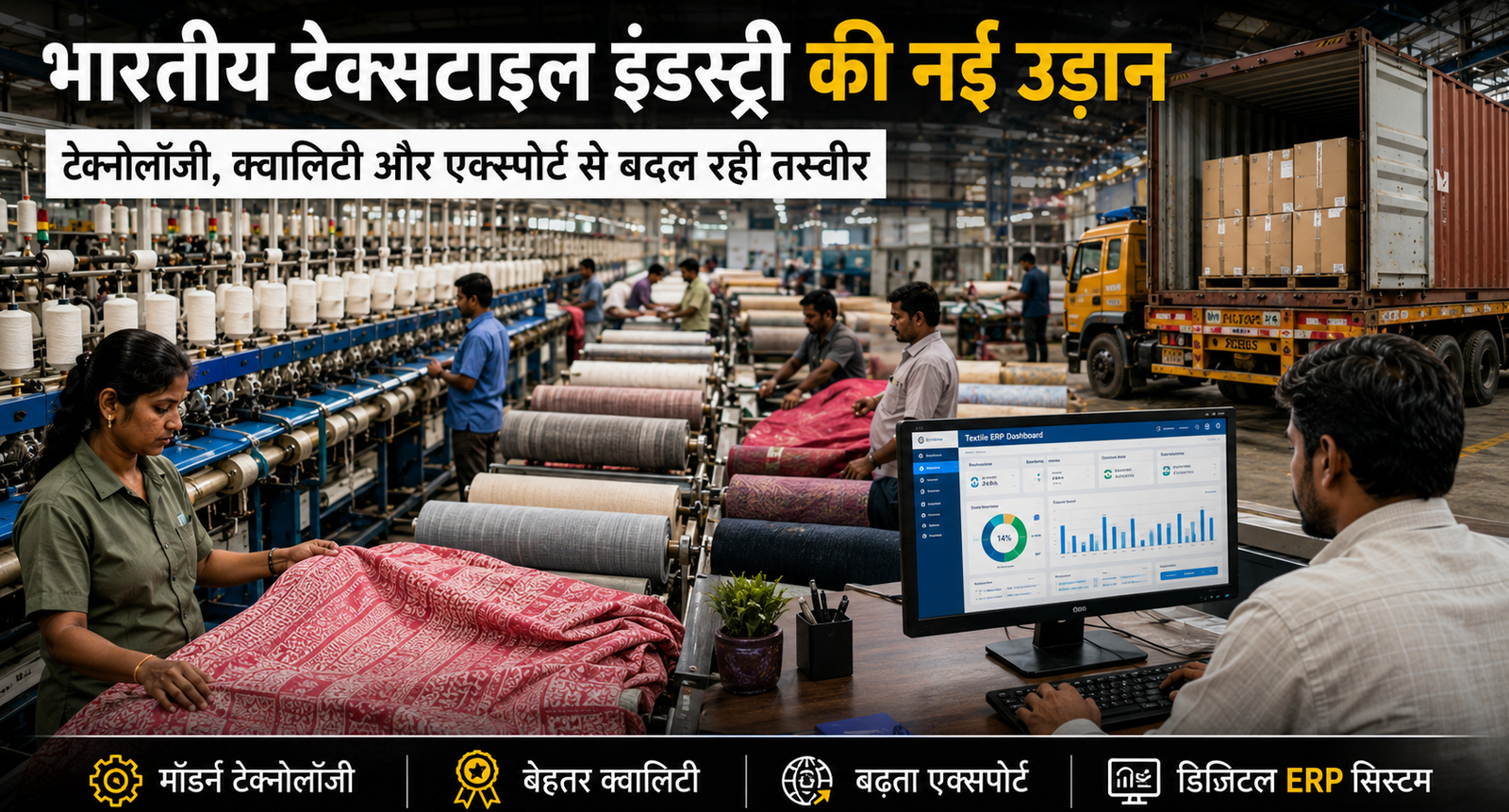
Why Textile ERP Software Is Becoming Important
As textile operations become more complex, businesses are increasingly adopting Textile ERP Software systems.
ERP solutions help manufacturers manage:
- fabric inventory
- yarn stock
- order tracking
- production planning
- weaving management
- dyeing process
- costing calculations
- export documentation
Textile automation is now becoming necessary rather than optional.
Factories depending only on manual systems may struggle with:
- inventory mismatch
- delayed orders
- incorrect costing
- production inefficiency
Textile Industry SEO Keywords Trending in 2026
Popular textile SEO keywords currently include:
- India textile industry news
- Textile exports India 2026
- Textile PLI scheme
- Textile manufacturing India
- Technical textile market
- Garment industry growth
- Textile ERP software
- MMF textile production
- Textile automation India
- Indian textile export update
Using these keywords naturally helps textile websites improve Google rankings.
Why Textile News Blogs Perform Well in SEO
Textile industry content performs strongly because:
- manufacturers actively search for updates
- exporters follow policy changes
- buyers track sourcing trends
- factories look for automation solutions
Unlike entertainment traffic, textile industry traffic often has:
- high business intent
- stronger CPC rates
- better long-term value
This makes textile blogs highly valuable for B2B SEO growth.
Future of Indian Textile Industry
Industry experts believe India’s textile sector may witness significant expansion over the next few years due to:
- government support
- global sourcing shifts
- export opportunities
- manufacturing modernization
- textile automation
The industry is expected to increasingly focus on:
- technical textiles
- sustainable fabrics
- digital manufacturing
- ERP integration
- AI-based production planning
Businesses investing early in modernization and automation may gain major long-term advantages.
Final Thoughts
India’s textile industry is entering an important transformation phase in 2026.
Rising exports, expanding PLI investments, PM MITRA parks, and increasing global sourcing opportunities are creating strong momentum for textile manufacturers and exporters.
However, future growth will depend heavily on:
- automation
- production efficiency
- supply chain modernization
- sustainability
- technology adoption
Textile businesses that adapt quickly to changing global demands are likely to emerge as long-term winners in the competitive international market.
Reference Sources
- Ministry of Textiles India
- PIB Textile Export Reports
- Textile industry trade reports
- Economic Times textile industry coverage
- Fibre2Fashion industry updates
SEO Meta Title
India Textile Industry 2026: Exports Growth, PLI Scheme & Latest Textile News
SEO Meta Description
India textile industry sees export growth in 2026 with rising PLI investments, PM MITRA parks, MMF expansion, and strong global textile demand.
Focus Keywords
India Textile Industry News, Textile Exports India 2026, Textile PLI Scheme, Textile Manufacturing India, Technical Textile Market, Textile ERP Software
Leave a Reply